1. Oil removal and equalization
Segregated receiving, emergency containment, oil separation and equalization protect the downstream oxidation and biological stages.
- Reference outlet
- Free oil below 50 mg/L
 CHINA BENTEINDUSTRY GROUP
Ethylene and petrochemical spent-caustic wastewater treatment with documented capacity, influent, operating and treated-water ranges.
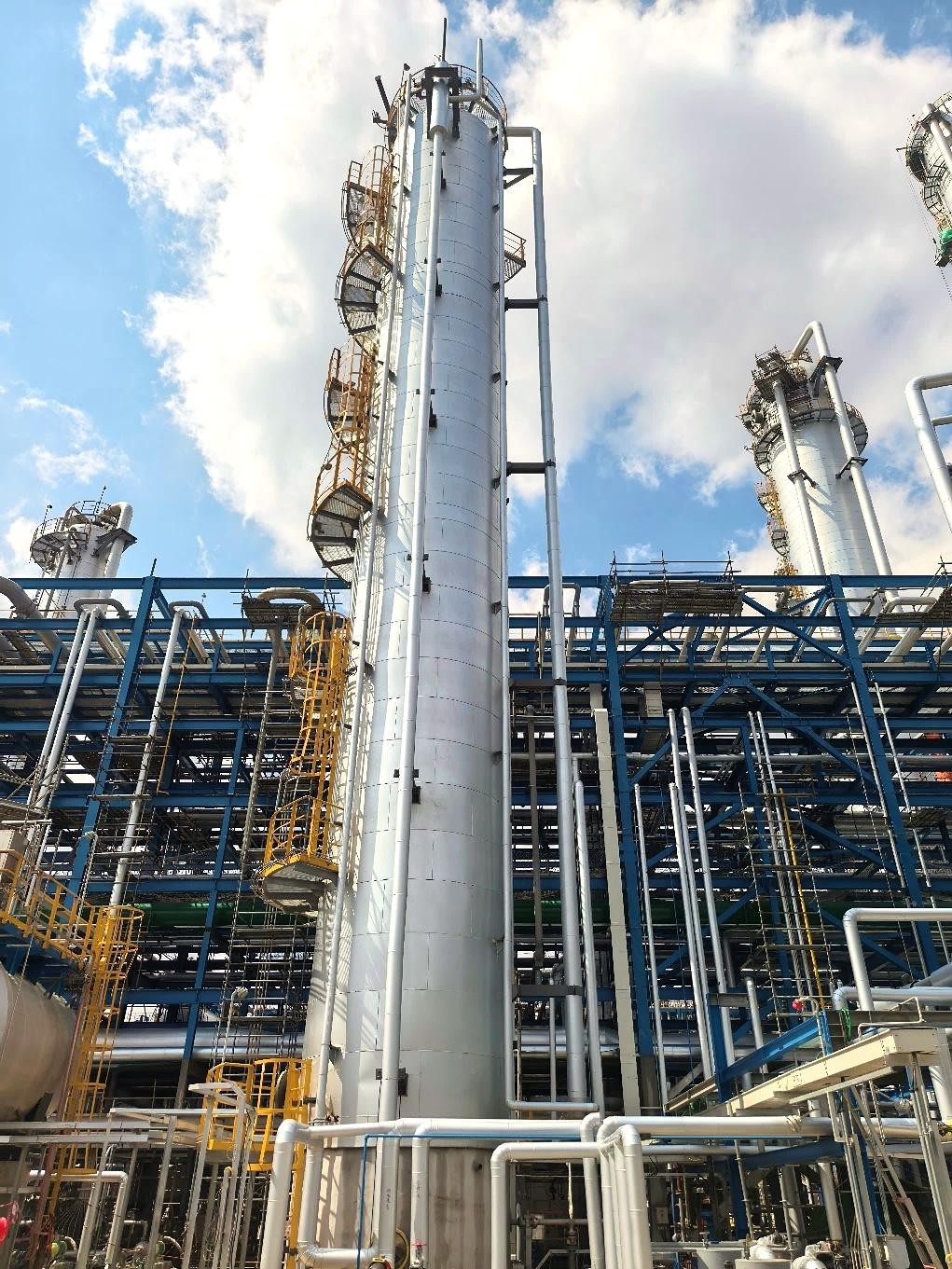
Engineering route for ethylene cracking, quench, caustic washing, oily drains and high-salinity side streams. Final configuration is based on representative sampling, treatability evidence and the agreed discharge or reuse target.
This engineering envelope is based on the supplied spent-caustic technical dossier and the stated China Bente treatment capability. Final guarantees require representative sampling, wastewater speciation, treatability confirmation and an agreed acceptance protocol.
| Design item | Reference range / target | Engineering condition |
|---|---|---|
| Wastewater types | Ethylene spent caustic, refinery spent caustic, sulfide-rich alkaline wastewater and combined high-salinity petrochemical wastewater | Streams are characterized and segregated before the final treatment train is fixed. |
| Spent-caustic treatment capacity | Approx. 1–30.5 t/h | Reference range from industrial installations; project capacity is selected from average, peak and batch discharge. |
| Combined wastewater system capacity | Up to approx. 300 m³/h | Subject to feed composition, equalization duty and required outlet. |
| Influent COD | Up to approx. 150,000 mg/L | Requires confirmed COD fractions, biodegradability and inhibitory-compound testing. |
| Sulfide / sulfur-bearing load | Documented reference streams approx. 500–37,000 mg/L sulfide; stated design evaluation up to approx. 50,000 mg/L sulfur-containing contaminants | Total sulfur and sulfide are not interchangeable; the laboratory method and species must be stated. |
| High-salinity advanced-treatment feed | TDS approx. 15,000–20,000 mg/L | Scaling, corrosion, biological salt tolerance and concentrate outlet must be assessed. |
| Final treated-water target | COD below 50 mg/L; sulfide below 1 mg/L (1 ppm) | Applies only within the approved influent envelope and agreed sampling/analysis basis. |
Patented technology is available within the treatment route; the page does not disclose proprietary implementation details.
Ethylene cracking, quench, caustic washing, oily drains and high-salinity side streams. The design basis must describe normal, peak and upset conditions rather than a single grab sample.
Relevant process drains, production washwater, utility blowdown and segregated side streams are mapped at source before combining treatment duties.
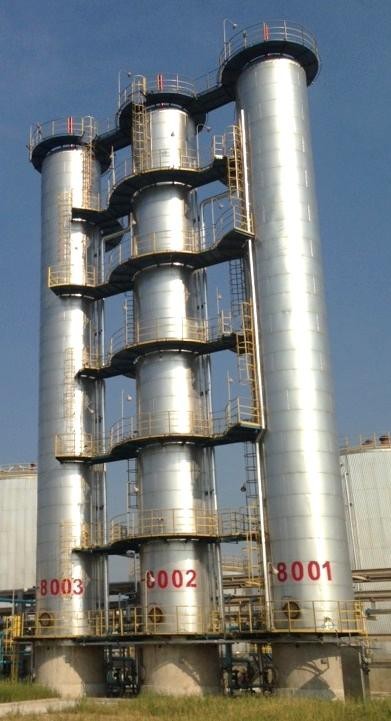
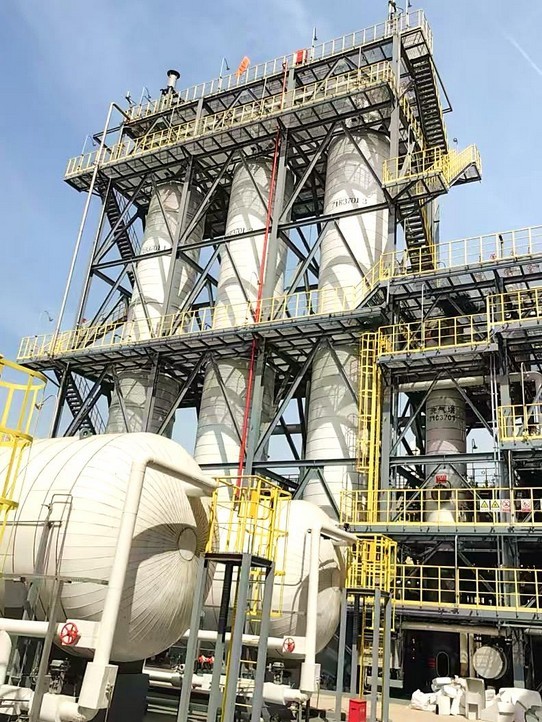
Provide hourly and daily flow, peaks, pH, temperature, COD/TOC and biodegradability, suspended solids, conductivity/TDS, priority pollutants, toxicity indicators, production cycles and current chemical use. Composite and event samples should cover normal and upset operation.
Selection begins with source segregation and treatability tests, then balances biological, physicochemical, membrane and thermal boundaries against residue outlets and acceptance requirements.
Segregated receiving, emergency containment, oil separation and equalization protect the downstream oxidation and biological stages.
A controlled gas–liquid oxidation stage reduces the concentrated sulfide load before downstream biological treatment.
Biological protection and acclimation are designed for the residual organic load, salinity and possible inhibitory compounds.
Oxidation, adsorption, membrane or other polishing is selected according to the final water-quality duty and concentrate outlet.
Heat-pump evaporation/crystallization can be evaluated where water recovery or near-ZLD duty is required.
Reference operating indicators: energy consumption approximately 5–7 kg standard-oil-equivalent per tonne of spent caustic; carbon indicator approximately 6–10 kg CO₂ per tonne. These are reference values, not an unconditional project guarantee.


Main equipment: API/CPI separators, equalization and emergency tanks, DAF, reaction systems, biological reactors, oxidation and membrane packages.
Waste oil, flotation scum, sulfur-bearing residues, biological sludge, RO concentrate and VOC/odor interfaces require coordinated handling.
Power, air, water, thermal utilities, chemical storage and consumption are calculated from the agreed flow and quality envelope. Off-gas, odor and ventilation controls are incorporated where the selected process requires them.
PLC/SCADA integrates critical instruments, alarms, interlocks, trends and operator controls. Capacity is defined by average, peak and batch flows, equalization strategy, production availability and redundancy requirements.
Major drivers include contaminant load and variability, materials of construction, footprint, redundancy, chemical and energy duties, sludge/concentrate outlet, automation level and the required discharge or reuse quality.
Customer inputs include verified analyses, process inventory, site layout, utility conditions, hazardous-area requirements, local codes and the acceptance sampling protocol. Outputs are agreed as treated water, recovered materials and managed residues at defined battery limits.
Related capabilities: Turnkey process plants, factory modernization, residue recovery, renewable energy and SMART monitoring.
A representative sampling program should cover flow, peaks, pH, temperature, COD/TOC, suspended solids, salts, priority pollutants, toxicity indicators and the intended discharge or reuse target.
The route is selected from wastewater characterization, treatability testing, flow variability, site constraints, residue outlets and the agreed acceptance basis.
Source segregation, emergency containment, equalization, controlled transfer and online monitoring are defined before downstream treatment.
Interfaces are selected from pretreatment, biological, physicochemical, membrane and thermal processes according to the wastewater-specific duty.
Sludge, flotation scum, spent media, concentrates and recovered materials are characterized, dewatered or contained, and routed to an approved recovery or disposal outlet.
Power, process water, air, steam or thermal energy, chemical storage, ventilation and drainage are calculated from the confirmed design basis rather than assumed values.
PLC/SCADA integration and online instruments are selected for critical parameters, alarms, interlocks, trend recording and controlled operation.
Performance criteria are agreed against the approved influent envelope, capacity, operating conditions, sampling method, analysis standard and discharge or reuse target.
Cracking, quench, caustic wash, oily drains, utility blowdown and concentrated side streams can require different containment and pretreatment before controlled combination.
The treatment train is selected from characterization and treatability work, with targeted oil removal, toxicity control, physicochemical reaction and biological protection as required.
Area classification, corrosion materials, ventilation, VOC or odor control, fire protection, gas detection and process interlocks are coordinated with the plant safety basis.
Emergency storage, equalization, controlled feed, online monitoring and staged biological commissioning are used to protect downstream systems.