
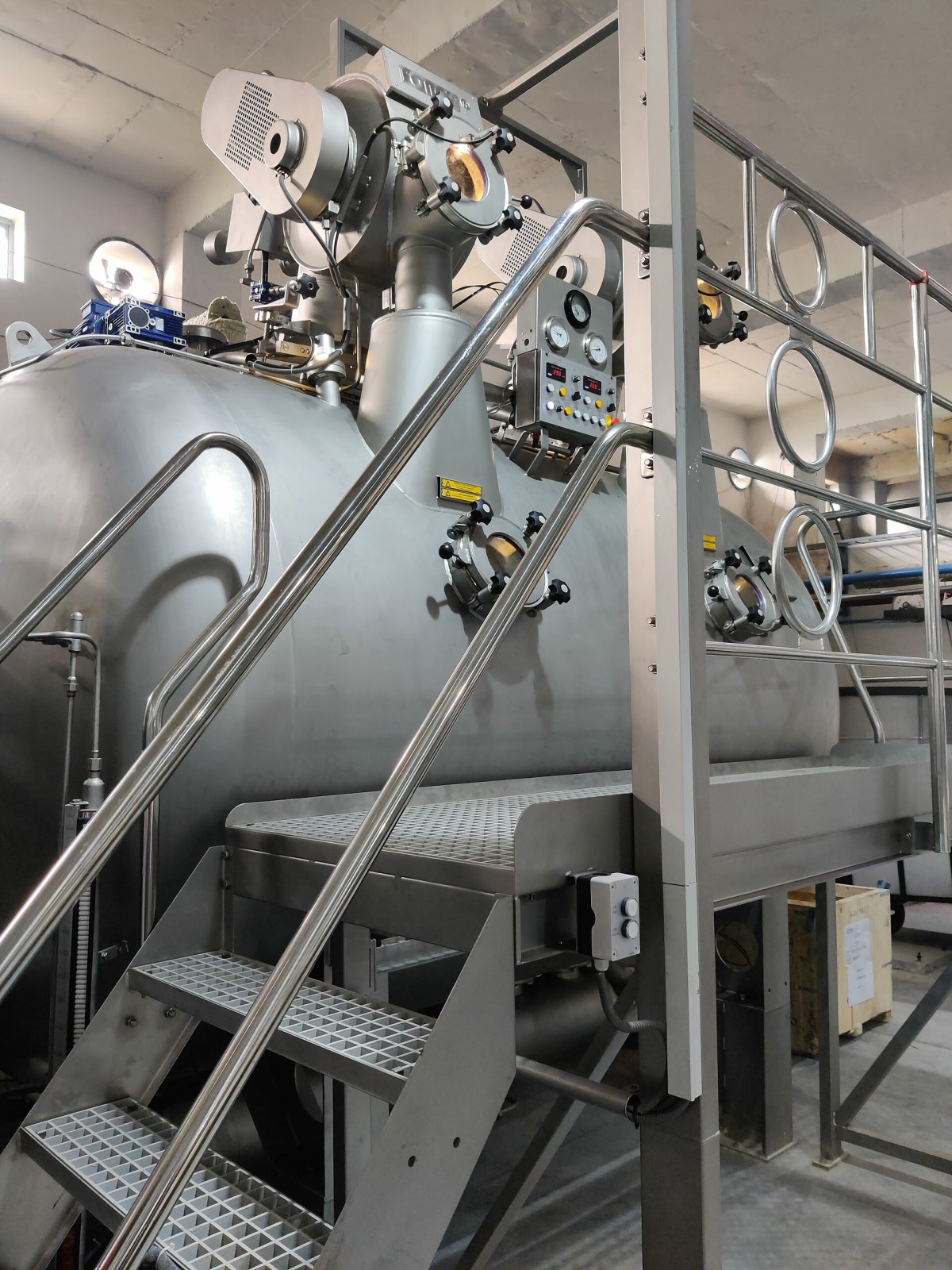
Engineering route for color, dyes, sizing agents, surfactants, salts and variable ph. Final configuration is based on representative sampling, treatability evidence and the agreed discharge or reuse target.
Dye-Bath Segregation, Color and Reuse Basis
| Design item | Unit / reference | Engineering basis |
|---|---|---|
| Hydraulic and production schedule | m³/hour; m³/day; batch timing | List dye-bath dumps, rinses, printing washes and finishing discharges by recipe and batch time. Cooling and relatively clean streams are measured separately before treatment and reuse design. |
| Feed analysis | Laboratory units and named test methods | Recipe-specific flow, pH, temperature, COD, BOD5, color spectrum, TDS/conductivity, chloride/sulfate, surfactants, AOX and relevant metals. |
| Batch pattern | m³/dye batch; batches/day; discharge hours | Equalization must receive short dye-bath dumps without passing shock loads downstream. |
| Color | Spectral absorption m⁻¹ at defined wavelengths | Specify the method and wavelength; visual appearance alone is not an acceptance test. |
| Salt content | TDS, chloride and sulfate; mg/L | Separate salt removal/reuse from color removal; decolorized water may remain saline. |
| Organic fraction | COD, BOD5 and TOC; mg/L | Check biological treatability after coagulation and the remaining oxidation demand. |
| Reuse quality | Conductivity, hardness, color and individual ions | Set limits for each intended washing, dyeing or utility use. |
Capacity calculation and design boundary
Worked COD-load example: 500 m³/day at 2,000 mg/L COD carries 1,000 kg COD/day. Equalization volume also depends on when dye baths and rinses are discharged.
Outlet and acceptance schedule
Selected IFC textile direct-discharge references are shown below. Color is also specified in that guideline by wavelength; the project acceptance schedule must state the actual test method and receiving-water conditions.
Selected IFC industry guideline references for direct surface-water discharge are listed for comparison. Local permits, receiving-water conditions and the full source guideline define applicability and the agreed project acceptance basis.
| Parameter | IFC guideline reference |
|---|---|
| pH | 6–9 |
| BOD / COD | 30 / 160 mg/L |
| TSS | 50 mg/L |
| Oil and grease | 10 mg/L |
| Sulfide | 1 mg/L |
| Total nitrogen / total phosphorus | 10 / 2 mg/L |
Engineering reference: IFC EHS Guidelines for Textile Manufacturing (2007), Table 2.
What It Is / Wastewater Characteristics
Color, dyes, sizing agents, surfactants, salts and variable pH. The design basis must describe normal, peak and upset conditions rather than a single grab sample.
Typical Sources and Applications
Relevant process drains, production washwater, utility blowdown and segregated side streams are mapped at source before combining treatment duties.
Required Influent Data and Sampling Basis
Provide hourly and daily flow, peaks, pH, temperature, COD/TOC and biodegradability, suspended solids, conductivity/TDS, priority pollutants, toxicity indicators, production cycles and current chemical use. Composite and event samples should cover normal and upset operation.
Process Selection Logic
Selection begins with source segregation and treatability tests, then balances biological, physicochemical, membrane and thermal boundaries against residue outlets and acceptance requirements.
Wastewater-Specific Process Flow

- 1. Stream segregation
- 2. Equalization
- 3. Coagulation / DAF
- 4. Biological treatment
- 5. Color oxidation
- 6. Filtration / reuse
System and Equipment Architecture

Main equipment: Screens, equalization, coagulant dosing, DAF/clarifier, biological reactor, oxidation and membrane filtration.
Residues, Utilities and Environmental Interfaces
Dye sludge, membrane concentrate, spent chemicals and recovered water quality are managed by the reuse target.
Power, air, water, thermal utilities, chemical storage and consumption are calculated from the agreed flow and quality envelope. Off-gas, odor and ventilation controls are incorporated where the selected process requires them.
Monitoring and Operating Records
Trend batch discharge, pH, temperature and conductivity; correlate online color/TOC signals with the agreed laboratory spectral and COD methods.
CAPEX / OPEX Drivers
Major drivers include contaminant load and variability, materials of construction, footprint, redundancy, chemical and energy duties, sludge/concentrate outlet, automation level and the required discharge or reuse quality.
Customer Engineering Inputs and Acceptance
Customer inputs include verified analyses, process inventory, site layout, utility conditions, hazardous-area requirements, local codes and the acceptance sampling protocol. Outputs are agreed as treated water, recovered materials and managed residues at defined battery limits.
Related capabilities: Turnkey process plants, factory modernization, residue recovery, renewable energy and SMART monitoring.
Frequently Asked Questions
Which feed analyses are needed for textile dyeing wastewater?
Recipe-specific flow, pH, temperature, COD, BOD5, color spectrum, TDS/conductivity, chloride/sulfate, surfactants, AOX and relevant metals.
How is textile dyeing wastewater treatment capacity sized?
List dye-bath dumps, rinses, printing washes and finishing discharges by recipe and batch time. Cooling and relatively clean streams are measured separately before treatment and reuse design.
Does decolorization make textile wastewater suitable for dyeing reuse?
Not by itself. Dissolved salts, hardness, residual organics and recipe-sensitive ions may remain after color removal. Reuse is validated against the intended textile process.
Should concentrated dye baths be mixed with all rinse water?
Recipe mapping identifies streams that can be recovered, segregated or released at a controlled rate. Segregation can reduce peak color, salt and treatment loads.
What residues must a textile dyeing wastewater project handle?
Account for color-bearing chemical sludge, biological sludge, spent carbon, membrane reject and cleaning solutions; define the salt outlet where reuse produces concentrate.
Which operating records matter for textile dyeing wastewater?
Trend batch discharge, pH, temperature and conductivity; correlate online color/TOC signals with the agreed laboratory spectral and COD methods.
How does the worked sizing example for textile dyeing wastewater apply?
Worked COD-load example: 500 m³/day at 2,000 mg/L COD carries 1,000 kg COD/day. Equalization volume also depends on when dye baths and rinses are discharged.
What outlet quality must be agreed for textile dyeing wastewater?
Selected IFC textile direct-discharge references are shown below. Color is also specified in that guideline by wavelength; the project acceptance schedule must state the actual test method and receiving-water conditions.