
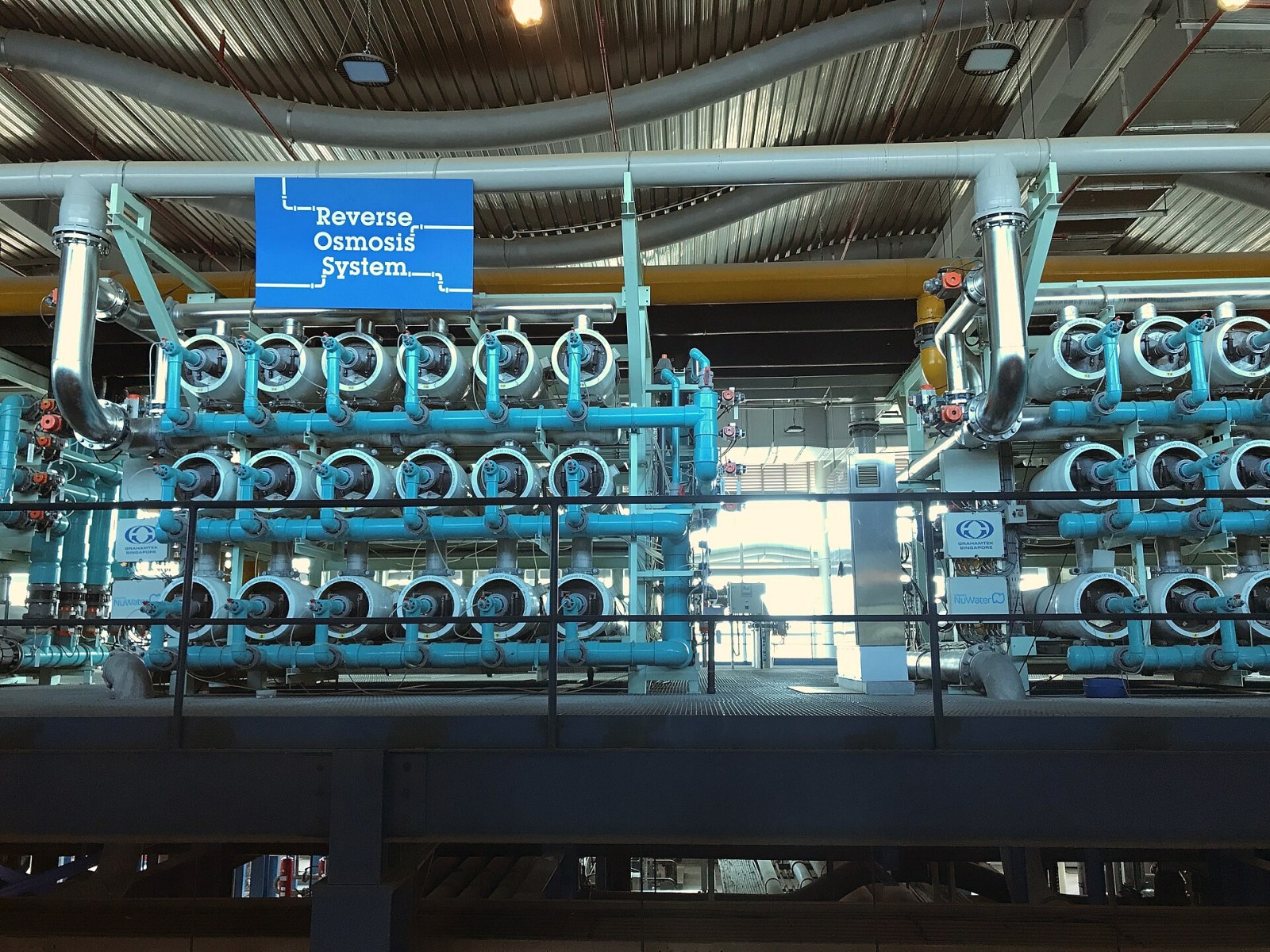
Engineering route for residual cod, suspended solids, nutrients, pathogens and reuse-specific contaminants. Final configuration is based on representative sampling, treatability evidence and the agreed discharge or reuse target.
Reuse Demand, Product Quality and Net Recovery
| Design item | Unit / reference | Engineering basis |
|---|---|---|
| Hydraulic and production schedule | m³/hour; m³/day; batch timing | Start with hourly and daily reuse demand, then calculate treatment feed, product storage, reject and backwash/cleaning losses. Include the demand schedule and backup-water supply. |
| Feed analysis | Laboratory units and named test methods | Secondary-effluent variability, turbidity/TSS, COD/TOC, conductivity, hardness, silica, microbiology and the quality limits at each reuse destination. |
| Product demand | m³/hour; m³/day; storage hours | Size the system from the customer’s usable-water demand, not only inlet wastewater volume. |
| Reuse specification | Cooling, washing, boiler make-up or process duty | Create separate quality schedules for each destination. |
| Membrane performance | Flux; differential pressure; normalized permeability | Match pretreatment and operating conditions to the selected membrane system. |
| Disinfection | Dose/contact or UV validation; microbiology | Choose verification appropriate to the actual exposure and reuse application. |
| Net recovery | Usable product/feed %; all losses | Include backwash, cleaning, off-spec diversion and concentrate in the plant balance. |
Capacity calculation and design boundary
Worked demand example: delivering 300 m³/day at an assumed overall recovery of 75% requires 400 m³/day feed and leaves 100 m³/day in other water streams. Actual recovery is established from the complete treatment balance.
Outlet and acceptance schedule
Acceptance is based on water delivered to the specified reuse point: flow, pressure, ionic/organic quality, microbiology and availability. A discharge-standard result alone does not establish fitness for reuse.
What It Is / Wastewater Characteristics
Residual COD, suspended solids, nutrients, pathogens and reuse-specific contaminants. The design basis must describe normal, peak and upset conditions rather than a single grab sample.
Typical Sources and Applications
Relevant process drains, production washwater, utility blowdown and segregated side streams are mapped at source before combining treatment duties.
Required Influent Data and Sampling Basis
Provide hourly and daily flow, peaks, pH, temperature, COD/TOC and biodegradability, suspended solids, conductivity/TDS, priority pollutants, toxicity indicators, production cycles and current chemical use. Composite and event samples should cover normal and upset operation.
Process Selection Logic
Selection begins with source segregation and treatability tests, then balances biological, physicochemical, membrane and thermal boundaries against residue outlets and acceptance requirements.
Wastewater-Specific Process Flow

- 1. Secondary effluent control
- 2. Coagulation / filtration
- 3. UF
- 4. RO or selective polishing
- 5. Disinfection
- 6. Reuse distribution
System and Equipment Architecture

Main equipment: Clarifier/DAF, media filters, UF, RO, ozone/UV, activated carbon and reuse storage/distribution.
Residues, Utilities and Environmental Interfaces
Backwash water, spent media, membrane concentrate and disinfection by-products are addressed by the reuse duty.
Power, air, water, thermal utilities, chemical storage and consumption are calculated from the agreed flow and quality envelope. Off-gas, odor and ventilation controls are incorporated where the selected process requires them.
Monitoring and Operating Records
Record delivered product flow and quality, storage level, conductivity and turbidity; monitor disinfection performance and application-specific microbiology.
CAPEX / OPEX Drivers
Major drivers include contaminant load and variability, materials of construction, footprint, redundancy, chemical and energy duties, sludge/concentrate outlet, automation level and the required discharge or reuse quality.
Customer Engineering Inputs and Acceptance
Customer inputs include verified analyses, process inventory, site layout, utility conditions, hazardous-area requirements, local codes and the acceptance sampling protocol. Outputs are agreed as treated water, recovered materials and managed residues at defined battery limits.
Related capabilities: Turnkey process plants, factory modernization, residue recovery, renewable energy and SMART monitoring.
Frequently Asked Questions
Which feed analyses are needed for industrial water reuse?
Secondary-effluent variability, turbidity/TSS, COD/TOC, conductivity, hardness, silica, microbiology and the quality limits at each reuse destination.
How is industrial water reuse treatment capacity sized?
Start with hourly and daily reuse demand, then calculate treatment feed, product storage, reject and backwash/cleaning losses. Include the demand schedule and backup-water supply.
Can one reuse-water specification serve every factory application?
Cooling, boiler make-up, washing and process water can have different limits for salts, hardness, silica, organics and microorganisms. Treatment is selected against the intended use.
Why can net plant recovery be lower than RO recovery?
Pretreatment backwash, cleaning, off-spec diversion and other plant losses occur outside the membrane recovery calculation. Report useful water delivered across the complete plant boundary.
What residues must a industrial water reuse project handle?
Identify backwash solids, membrane reject, spent filters/carbon and cleaning solutions; define their return points without overloading upstream wastewater treatment.
Which operating records matter for industrial water reuse?
Record delivered product flow and quality, storage level, conductivity and turbidity; monitor disinfection performance and application-specific microbiology.
How does the worked sizing example for industrial water reuse apply?
Worked demand example: delivering 300 m³/day at an assumed overall recovery of 75% requires 400 m³/day feed and leaves 100 m³/day in other water streams. Actual recovery is established from the complete treatment balance.
What outlet quality must be agreed for industrial water reuse?
Acceptance is based on water delivered to the specified reuse point: flow, pressure, ionic/organic quality, microbiology and availability. A discharge-standard result alone does not establish fitness for reuse.