
REMOTE INSPECTION
Air-ground integrated inspection combining industrial UAVs, wheeled robots, sensors and central monitoring for difficult, elevated or hazardous assets.
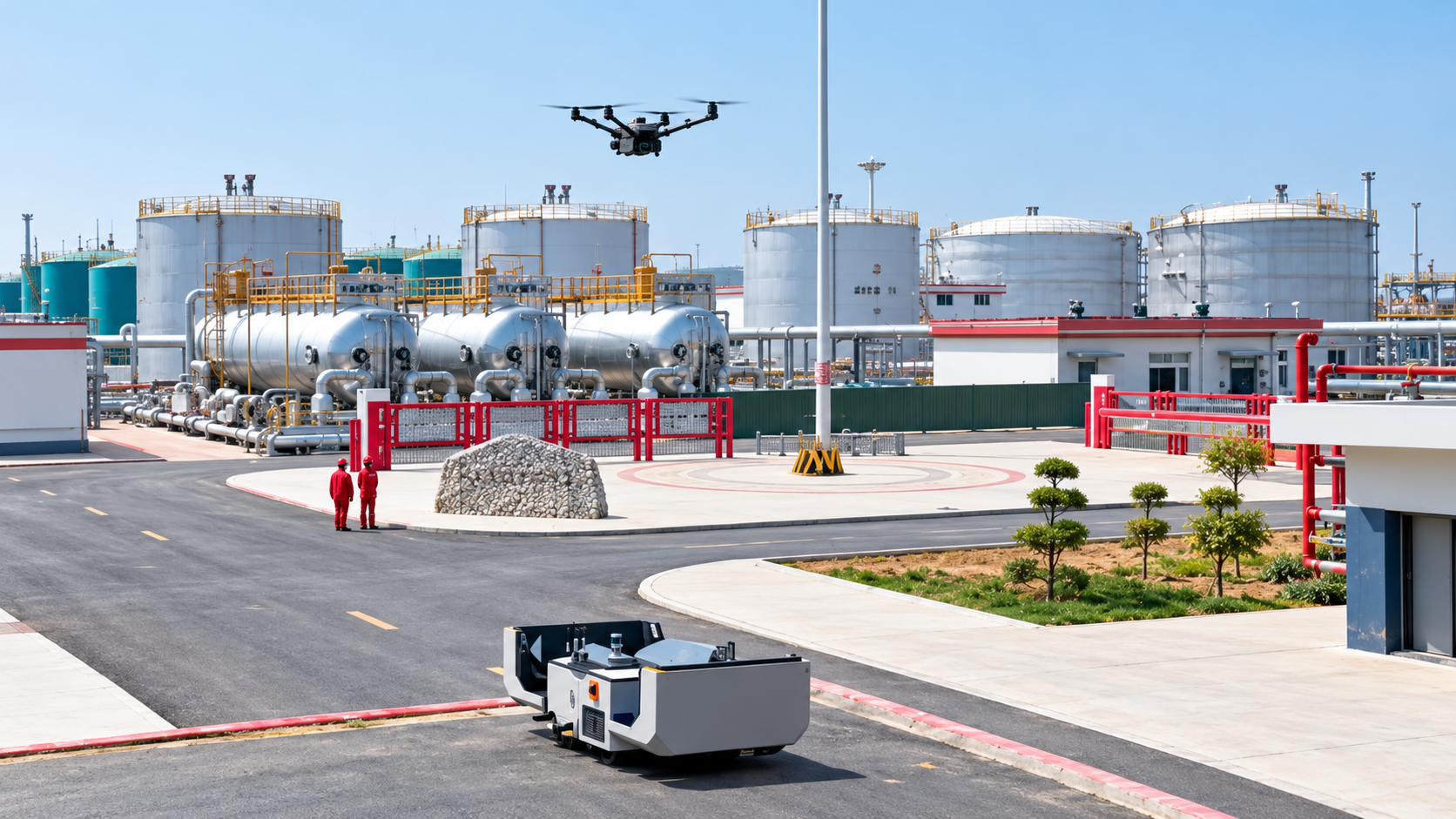
Air-ground integrated intelligent inspection
The drone covers large outdoor areas, elevated structures, tank tops and long-distance corridors. Wheeled robots enter workshops, electrical rooms, pump areas and pipe corridors for close-range inspection. Images and sensor data return to the central platform for alarms, evidence review and maintenance action.
- Wide-area aerial patrol plus close-range ground inspection
- RGB, thermal and gas-detection payloads selected for the asset
- Unified data, alarm, evidence and work-order workflow
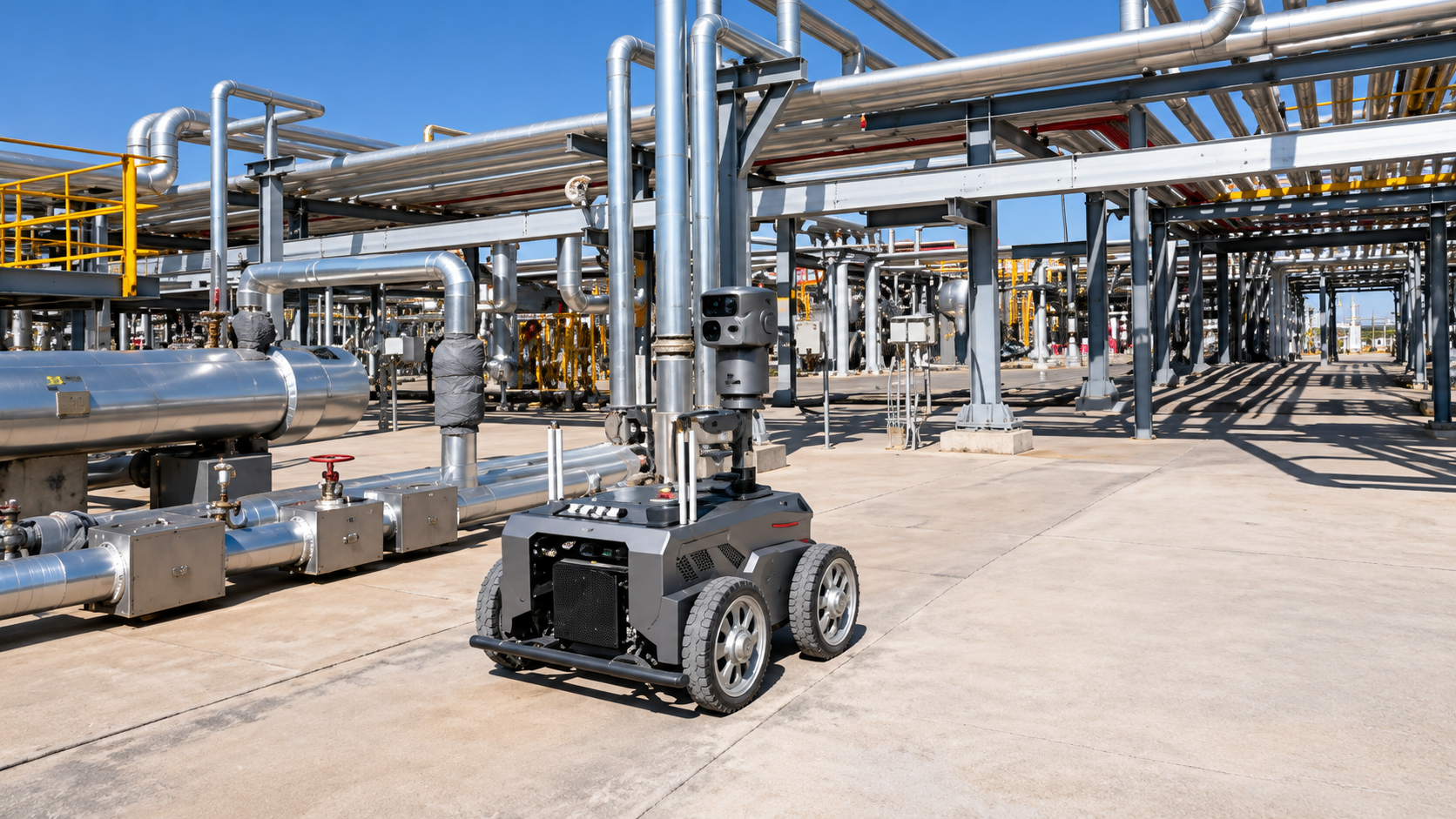
Industrial inspection UAV
Industrial inspection drones are suited to plant perimeters, tank roofs, long-distance pipelines and elevated structures. They provide rapid wide-area scanning, thermal imaging, initial leak screening and long-distance real-time video transmission.
- Plant perimeter, tank roofs and elevated structures
- Thermal imaging and visible-light evidence
- Large-area route planning and real-time transmission
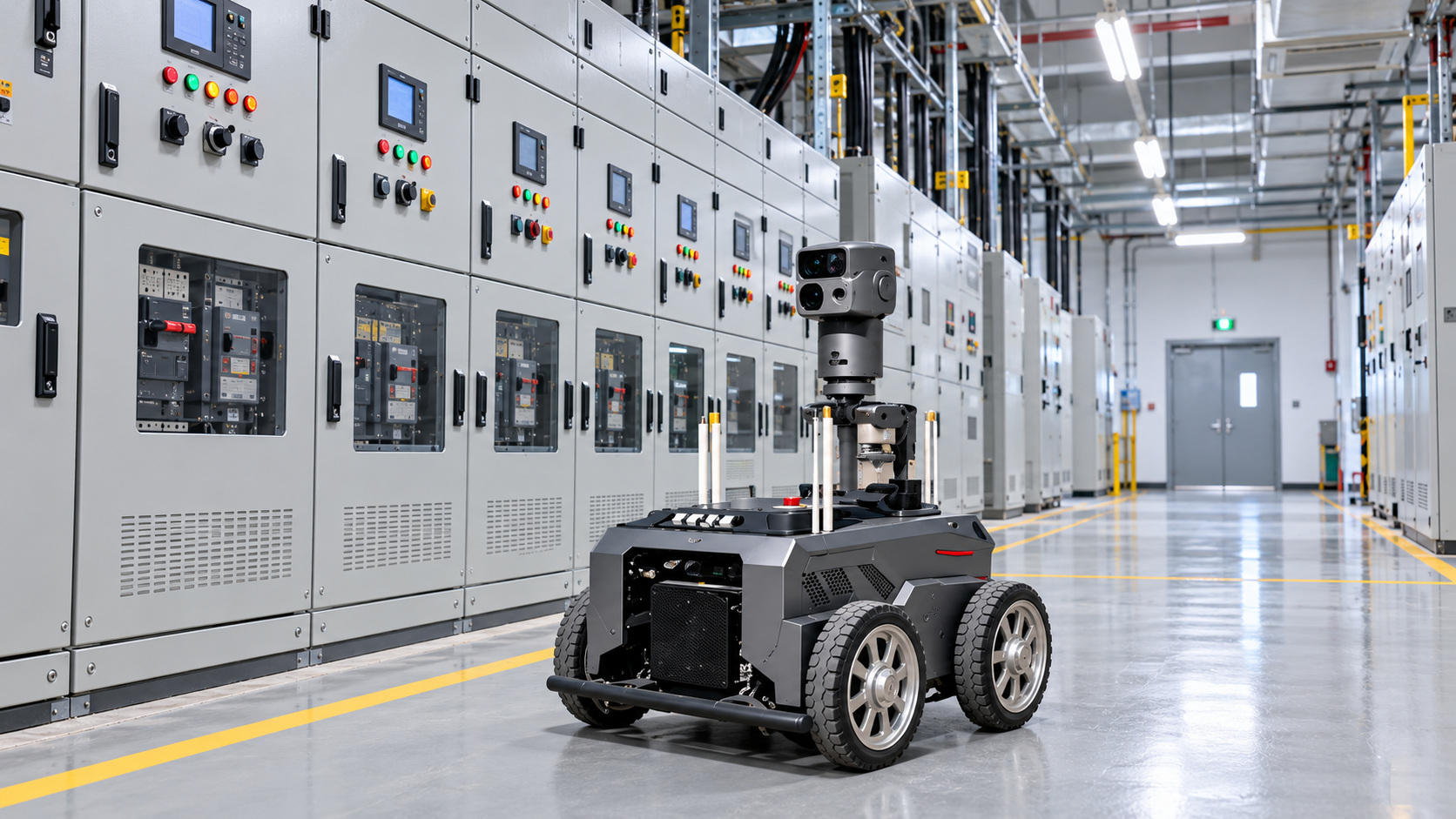
Wheeled inspection robot
Wheeled inspection robots serve pump rooms, electrical rooms, pipe corridors and equipment-level spaces that drones cannot enter. They support close-range gauge reading, noise monitoring, methane leak detection and continuous scheduled inspection.
- Gauge reading and thermal inspection
- Noise and methane-leak detection interfaces
- Scheduled routes, charging and 24-hour duty planning
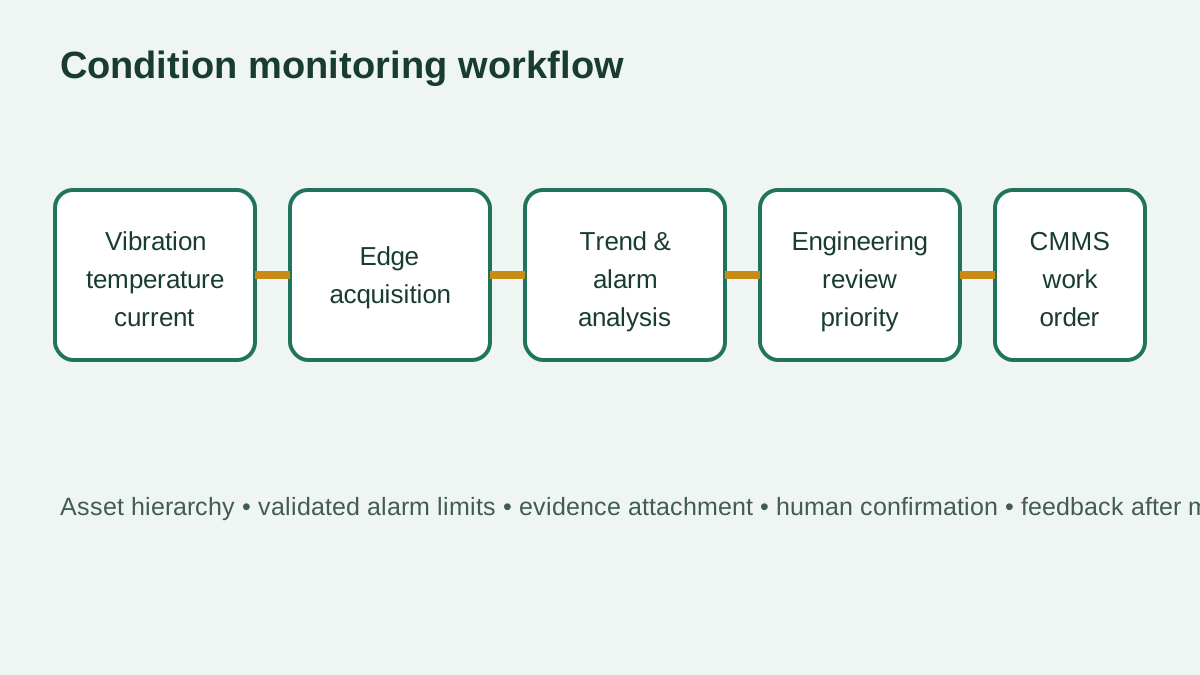
Verified findings and maintenance workflow
Observations become useful only when linked to asset identity, evidence, severity, human review and a maintenance action. AI may assist screening but does not replace engineering confirmation.
- Asset hierarchy and defect classes
- Evidence attachment and review responsibility
- CMMS or EAM work-order closure
Equipment, applications and core capabilities
| Equipment | Applicable scenarios | Core capabilities |
|---|---|---|
| Industrial inspection UAV | Plant perimeter, tank roofs, long-distance pipelines and elevated structures | Rapid wide-area scanning, infrared thermography, initial leak screening and long-distance real-time video transmission; suited to large outdoor areas. |
| Wheeled inspection robot | Pump rooms, electrical rooms, pipe corridors and equipment-level enclosed areas that drones cannot enter | Close-range gauge reading, noise monitoring, methane-leak detection and continuous scheduled inspection. |
Frequently asked questions
Is a cleaning robot an inspection robot?
No. Cleaning equipment and inspection platforms have different purposes, payloads and acceptance criteria.
Can drones inspect hazardous areas?
Only when the selected platform, operating procedure and local rules permit the specific environment.
Does AI make the final defect decision?
No. AI may assist screening; engineering or authorized human review confirms findings and actions.
What data can be collected?
Depending on the platform: RGB imagery, thermal data, gas or environmental readings, mapping and geotagged records.
How are findings connected to maintenance?
Through asset IDs, severity rules, evidence records and CMMS or EAM work-order integration.
Define the system from the operating requirement
Share the site, process, equipment, users, data interfaces, constraints and acceptance objectives.
Request Project Evaluation →