
A completed 200 t/day waste-aluminum recycling and aluminum-ingot production plant in Foshan, China. Approved real project media is retained; alloy grade, recovery, melting loss, energy consumption and emission values are not invented.
- Country / Location
- Foshan, China
- Capacity / Scale
- 200 t/day
- Project Status
- COMPLETED
- Related Solution
- Waste Recycling / Waste Treatment & Resource Recovery
Project Background and Engineering Challenge
Waste aluminum varies by alloy family, coating, attachments, moisture and contamination. Producing controlled ingot output requires feed classification, suitable pretreatment, coordinated melting and responsible management of dross, residues and exhaust interfaces.
Feed / Input Conditions
A similar plant needs an accepted-scrap catalogue, representative composition data, contamination limits, piece-size range and moisture controls. Desired ingot chemistry and downstream use must be confirmed by the customer.
Process / System Architecture
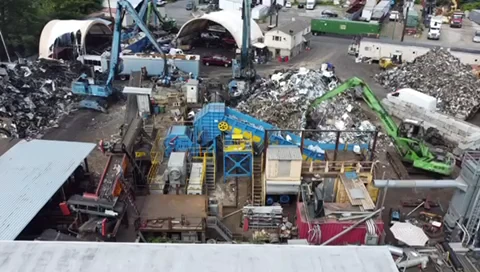
- Scrap receiving, inspection and classification by the agreed feed categories
- Pretreatment and preparation selected for actual dimensions and contamination
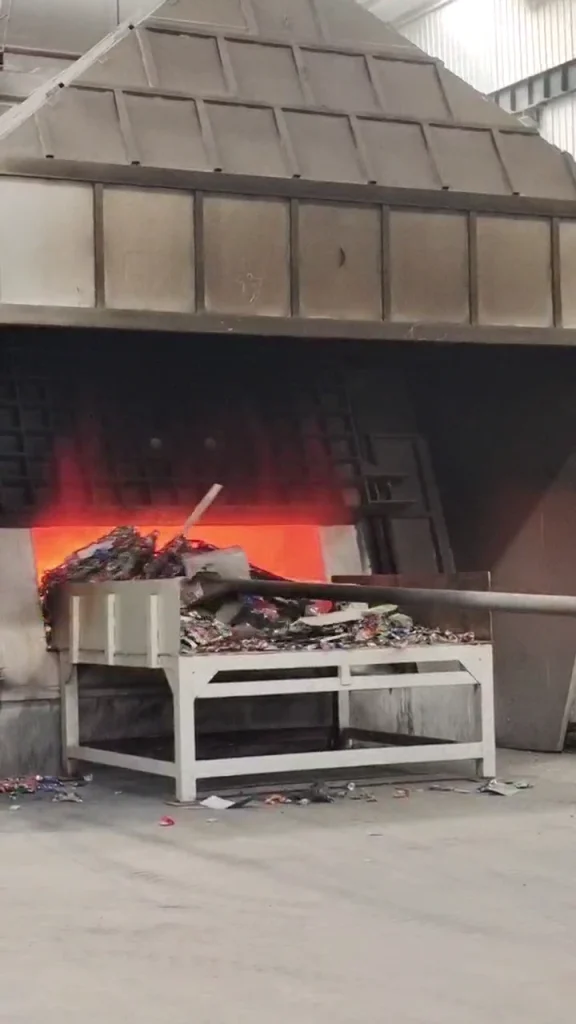
- Melting and metal handling integrated with composition checks and operating practice
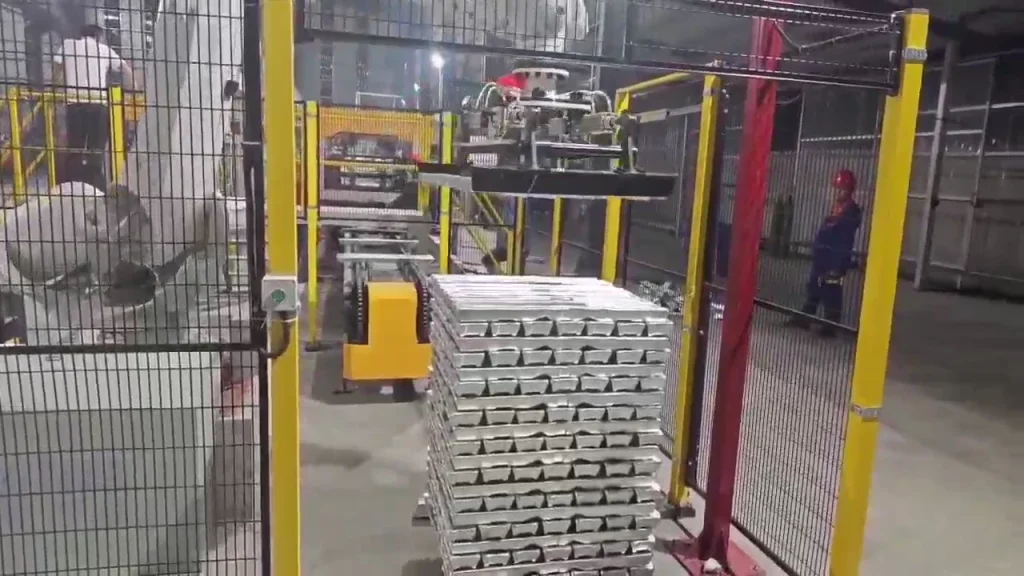
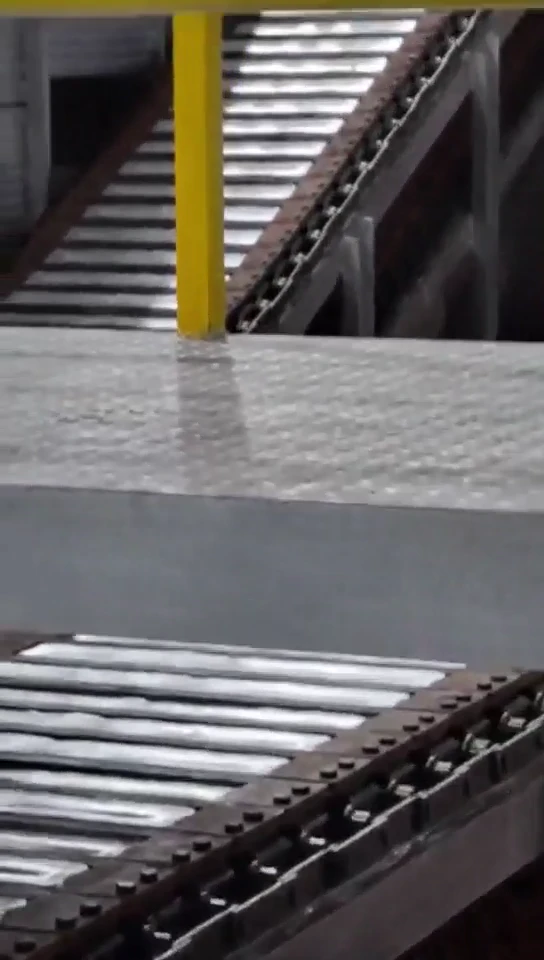
- Casting and ingot handling coordinated with cooling, storage and dispatch
Equipment, Utilities, Controls and Interfaces
- Furnace energy supply and controls defined by the selected melting configuration
- Exhaust collection and treatment interfaces matched to feed and local requirements
- Dross and other residues segregated for safe, compliant downstream handling
- Material flow, lifting, hot-zone separation and emergency access built into the layout
Operating Considerations
Feed segregation, dryness control, furnace charging practice, sampling and temperature discipline affect safe and repeatable operation. Dross handling and hot-metal movement require dedicated procedures and trained operators.
Installation, Commissioning and Acceptance
Commissioning should verify utilities, interlocks, exhaust routing, refractory or furnace readiness, handling systems and controlled heat-up. Acceptance should use agreed feed and ingot criteria against the 200 t/day design basis without publishing unsupported recovery or energy values.
Project Evidence
Verified public evidence confirms Foshan, China, COMPLETED status and 200 t/day. Four approved real project images remain attached.
Verified Project Gallery
Engineering Lessons
Feed classification and target chemistry should be resolved before furnace operation is optimized; mixed scrap without clear controls makes composition and residue management harder.
Customer Inputs for Similar Projects
- Scrap categories, composition and contamination
- Piece size, coatings, attachments and moisture controls
- Target ingot form and verified chemistry requirements
- Energy supply, exhaust and site utility conditions
- Dross, residue, hot-metal and safety procedures
Related China Bente Capability
Related Projects
Frequently Asked Questions
What capacity is verified?
The approved project capacity is 200 t/day.
Where is the plant located?
The completed plant is in Foshan, China.
Which aluminum alloy is produced?
The public record does not verify an alloy grade, so none is claimed.
Why must scrap be classified?
Different alloy families, coatings, attachments and contamination affect preparation, melting practice and target composition.
What pretreatment is required?
Pretreatment depends on actual piece size, moisture, attachments and contamination; it cannot be selected from tonnage alone.
How is dross handled?
Dross and other residues require segregated, safe downstream handling based on their measured properties and local requirements.
What exhaust interfaces are needed?
Collection and treatment must be engineered for the selected furnace, actual feed and applicable local requirements.
How is ingot quality controlled?
The customer must define target chemistry and sampling criteria; operating checks and casting practice are then aligned to that specification.
Are recovery, melting-loss or energy figures published?
No. The approved evidence does not support those values.
What should site acceptance verify?
It should verify safe integrated operation, utilities, controls, exhaust routing, material handling and agreed product checks against the 200 t/day basis.