
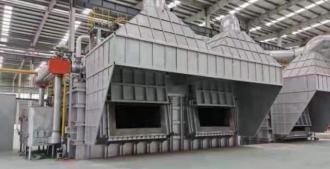
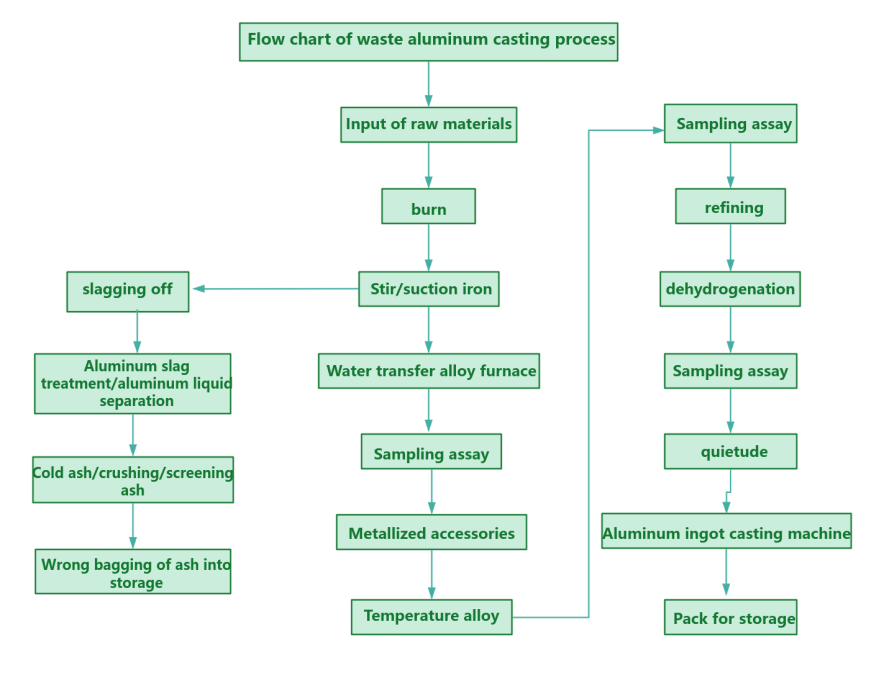
This dedicated recycled-aluminum plant follows the supplied process: scrap sorting and pretreatment, melting, alloy adjustment, degassing and refining, ingot casting, robotic or manual palletizing, aluminum-dross recovery and compliant flue-gas collection.
Capacity and Technical Parameters
Preliminary engineering selection range: The standard line below follows the supplied 174 t/day, 288-day/year example. Compact and expanded ranges are planning bands derived from the same modular equipment route; final yield and fuel use require scrap analysis and heat-balance confirmation. Final guaranteed values require confirmed feed/product data, utility quality, operating schedule, site conditions and acceptance protocol.
| Parameter | Compact line | Supplied reference line | Expanded / parallel line |
|---|---|---|---|
| Finished alloy-ingot output | 30–80 t/day | 174 t/day | 200–350+ t/day |
| Annual operating basis | Project-specific | 288 days/year; about 50,112 t/year | Project-specific parallel operation |
| Main melting furnace | 30–60 t twin-chamber furnace | 1 × 100 t twin-chamber furnace | 2 × 100 t or equivalent parallel furnaces |
| Alloy / holding furnaces | 1–2 × 20–35 t | 2 × 35 t single-chamber alloy furnaces | Multiple 35–60 t alloy / holding furnaces |
| Ingot casting | 1–2 lines | 4 × 20 m spray-type ingot casting machines | 4–8 lines sized to casting cycle |
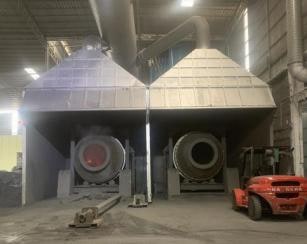
| Dross / aluminum-ash recovery | 1 × 3–5 t rotary furnace | 2 × 8 t rotary furnaces + Φ1900 cold-ash buckets | Parallel hot-dross and cold-ash treatment trains |
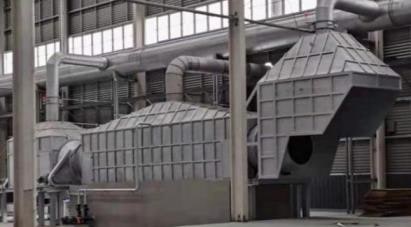
| Dust collection | Sized by hood and gas volume | 355 kW pulse-bag dust collector in supplied example | Multiple zones / duty trains based on emissions study |
Process Configuration Flow
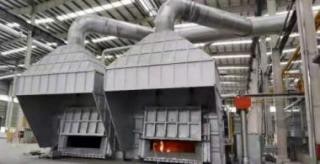
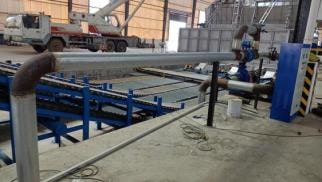
Factory Route Reference Images
Main Equipment and Systems
- Scrap receiving, sorting and non-metal removal
- Twin-chamber scrap-melting furnace
- Single-chamber alloy / holding furnaces
- Degassing, refining, filtration and launders
- Spray-cooled ingot casting machines
- Robotic or manual ingot palletizing
- Rotary furnace and cold-ash screening bucket
- Fume hoods, ducting and pulse-bag dust collection
Customer Engineering Inputs
Provide scrap categories and contamination limits, monthly chemistry and moisture data, target alloy grades, daily and annual output, fuel and electrical data, cooling-water conditions, emissions limits, building/plot plan, local codes and required automation.
Utilities and Environmental Interfaces
Engineering covers scrap contamination control, enclosed fume capture, bag filtration, aluminum-dross handling, hot-material safety, cooling-water circulation, noise, fire protection, residue outlets and occupational exposure. Any salt-flux or hazardous-residue route must be confirmed separately.
Frequently Asked Questions
Is this primary aluminum electrolysis?
No. This page is based on the supplied recycled-aluminum scrap melting and alloy-ingot casting proposal.
What is the supplied reference capacity?
The source proposal uses 174 tonnes of aluminum-alloy ingots per day and 288 operating days per year.
What is the main furnace configuration?
The supplied example uses one 100-ton twin-chamber melting furnace and two 35-ton single-chamber alloy furnaces.
How is ingot casting configured?
The supplied example lists four 20-meter spray-type ingot casting machines and two robotic ingot-palletizing systems.
How is aluminum dross treated?
The supplied example uses two 8-ton rotary furnaces and two Φ1900 screening-type cold-ash buckets to recover residual metal.
Are compact and expanded outputs guaranteed?
No. Only the 174 t/day example comes directly from the supplied proposal; other bands are preliminary modular planning ranges.
Process, equipment images and the 174 t/day reference configuration are taken from the aluminum document supplied by the client. Company-logo pages and visibly branded images were not used.