
What it is
Equipment replacement succeeds when the new machine is engineered into the existing process, utilities, controls, building and operating system.
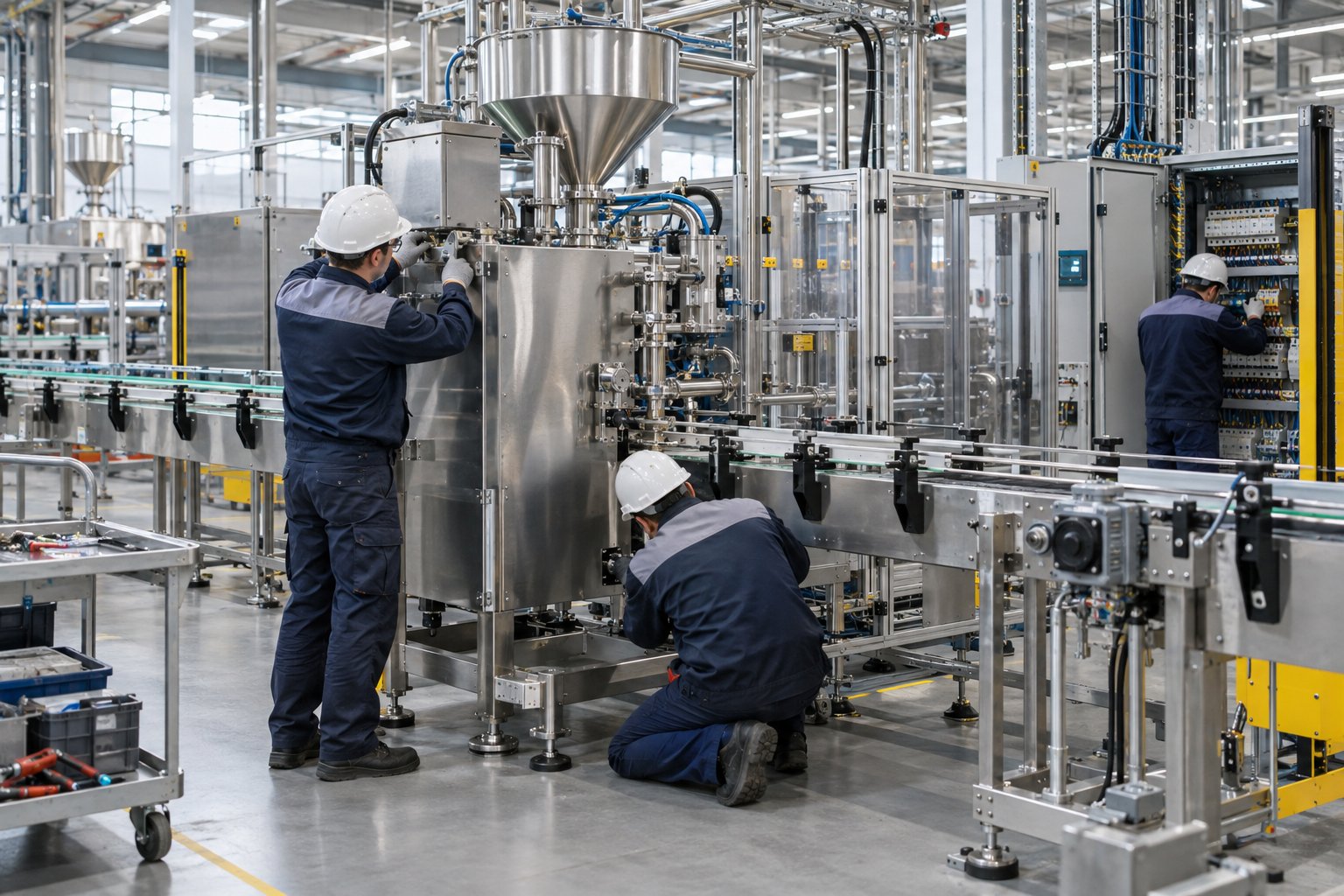
The work verifies the old equipment, target duty, product interfaces and available space, then manages specification, removal, foundations, utilities, controls, guarding, installation, testing and restart. Replacement is not treated as a standalone purchase.
Typical applications
- Obsolete or unsupported production equipment
- Reliability or quality-driven replacement
- Capacity or product-range change
- Machine relocation and integration
Representative engineering sequence. Final shutdown, cutover and performance criteria are agreed from verified plant data.
Main equipment and system architecture
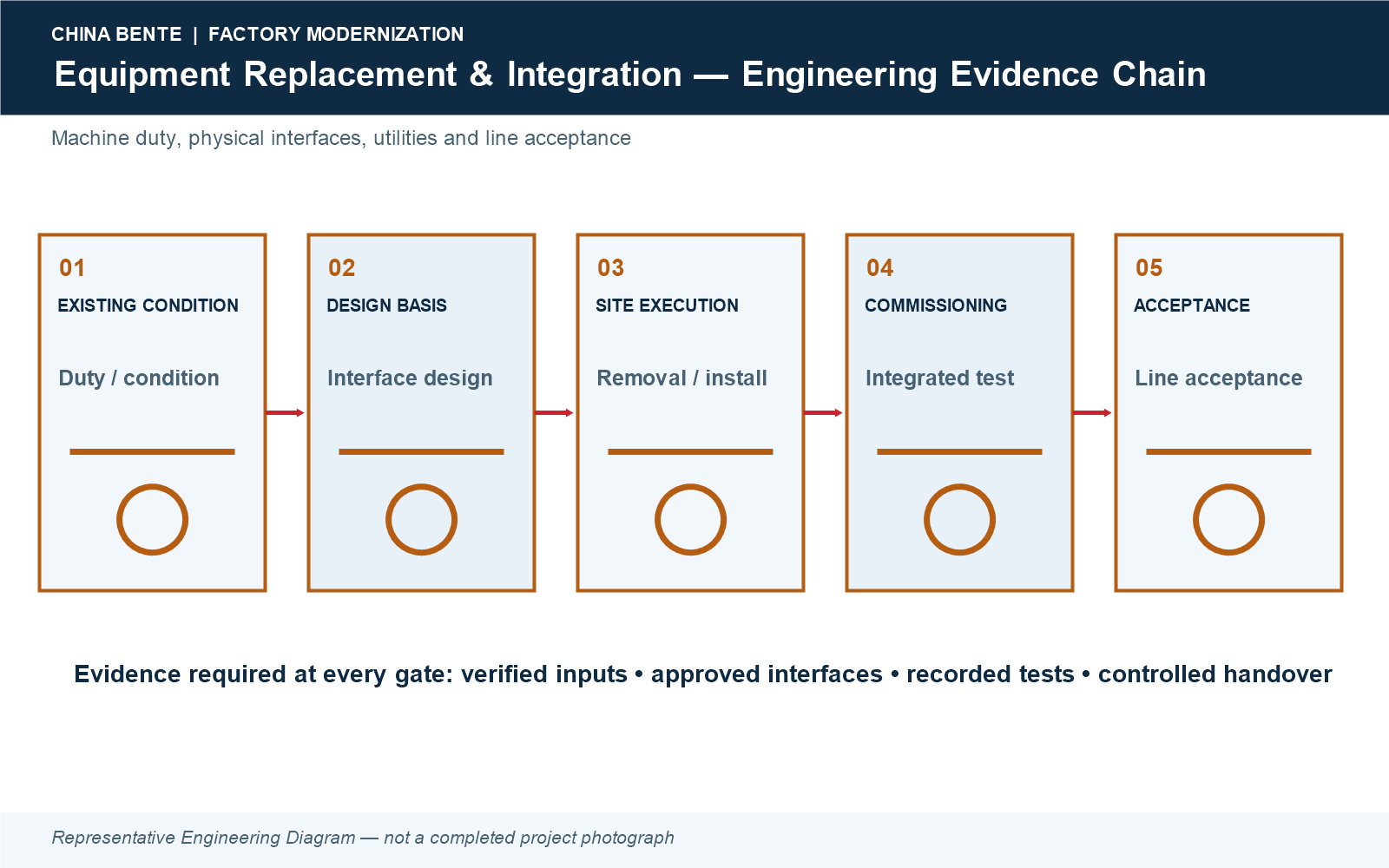
- Replacement process or packaging equipment
- Foundations, platforms and access
- Conveyors, feeders and product-transfer interfaces
- Electrical, piping and utility tie-ins
- Controls, networks and safety circuits
- Lifting, removal and commissioning equipment
Capacity balance and design basis
Selection uses actual product range, sustainable capacity, changeover, utilities, environmental conditions, maintenance access, lifecycle support and the surrounding line balance.
Retained / replaced / interface matrix
| Category | Engineering basis |
|---|---|
| Retained | Surrounding line assets that remain safe, capable and compatible after interface verification. |
| Replaced | The approved equipment plus directly dependent items that cannot meet target duty or compatibility. |
| Interfaces | Product geometry and timing, elevations, loads, foundations, utilities, controls, guarding, data, access and documentation. |
Utilities and site infrastructure
- Load and quality check for each utility
- Tie-in locations and isolation capability
- Foundations and structural loads
- Ventilation, drainage or extraction as required
- Temporary utilities and production continuity
Customer engineering inputs
- Current machine data and failure history
- Product samples/drawings and performance needs
- Existing layout, utilities and controls
- Maintenance and spare-parts requirements
- Installation and outage constraints
Quality, automation and control
The integration preserves inspection points, recipes, change control, traceability and data. Supplier tests are mapped to site acceptance and product trials.
CAPEX and OPEX drivers
CAPEX includes machine, engineering, foundations, services, guarding, removal, lifting and downtime-related work. OPEX includes consumables, maintenance, spares, utilities and training.
Safety, environmental and compliance
The project controls demolition/removal, lifting, structural work, isolations, new guarding, stored energy, access and commissioning hazards.
Outputs and acceptance basis
Acceptance uses agreed product trials, capacity conditions, quality, safety, utility performance, controls, documentation and training.
Shutdown, changeover and commissioning
Activities are prefabricated where possible; the cutover plan covers removal, foundations, tie-ins, alignment, energization, testing, rollback and ramp-up.
Before / after evidence
No replacement result is claimed without a verified baseline. Approved project references remain at Projects & Cases.
Frequently asked questions
Can new equipment fit an existing line?
Only after product, layout, elevation, timing, utilities, controls and safety interfaces are verified.
Should surrounding equipment also be replaced?
Only if condition, capacity or compatibility evidence justifies it.
How are foundations checked?
Using equipment loads, dynamic requirements, existing construction and surveyed conditions.
Can FAT reduce shutdown risk?
Yes, by testing functions and interfaces before site work, though site tests remain required.
How are spare parts planned?
Criticality, lead time, supplier support and maintenance strategy define initial spares.
What is included in SAT?
Installed equipment, utilities, safety, controls, product trials and agreed performance checks.
How is old equipment removed?
With isolation, decontamination where needed, lifting and approved reuse/disposal arrangements.
Can installation be phased?
Yes if temporary interfaces and safe operating boundaries are engineered.
Request a Project Evaluation
Share current drawings, operating records, constraints and the required future state. Any missing baseline or target remains TBC until verified.