
What it is
A production-line retrofit changes an operating line while protecting safe restart, product quality and controlled production continuity.
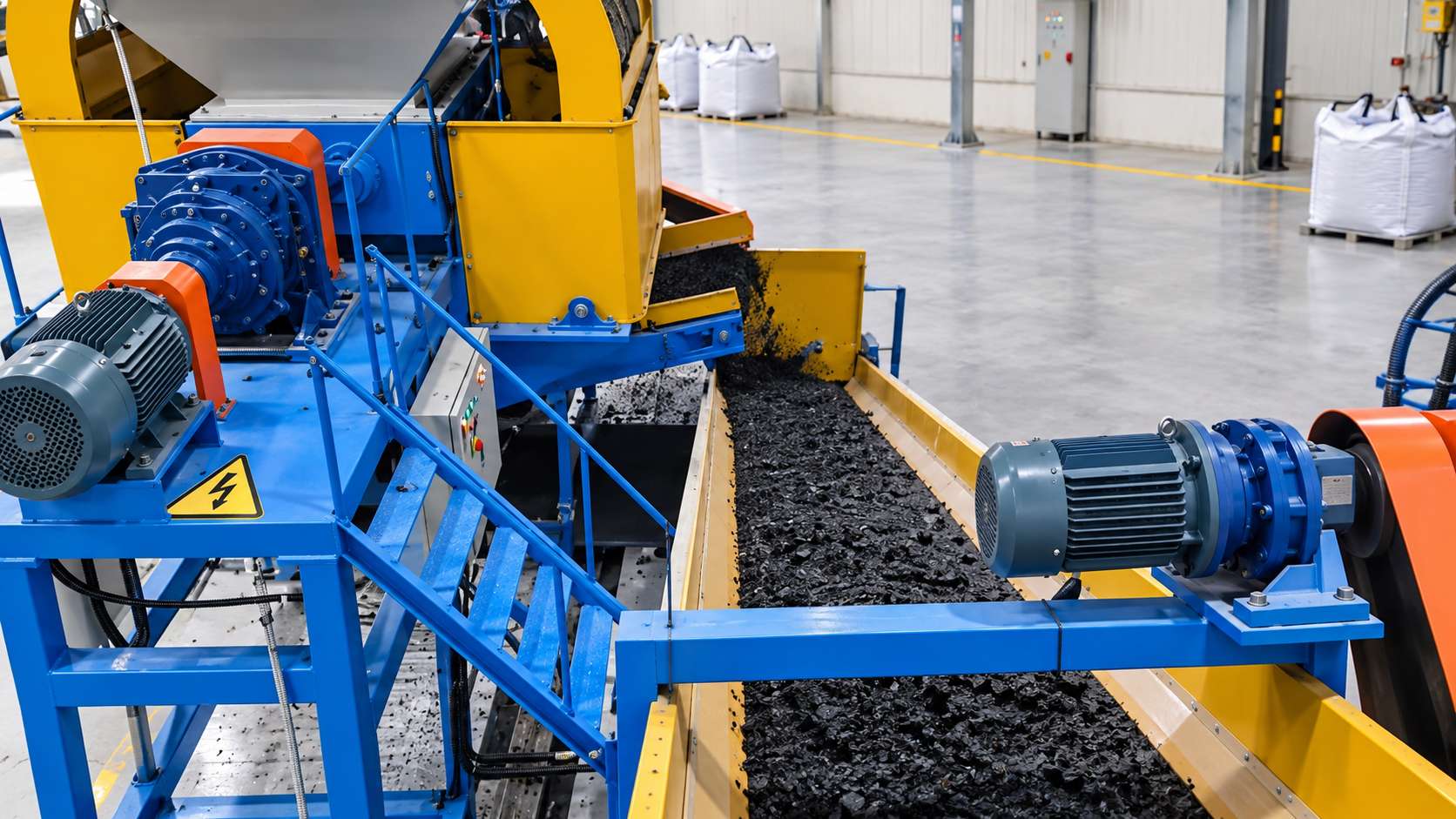
The work begins with as-built verification, equipment condition, production losses and target-state definition. The retrofit can change process equipment, material handling, guarding, instrumentation, layout or control logic while retaining assets that remain fit for purpose.
Typical applications
- Obsolete or unreliable production lines
- Throughput, changeover or quality constraints
- New product introduction on existing assets
- Safety, maintainability or controls modernization
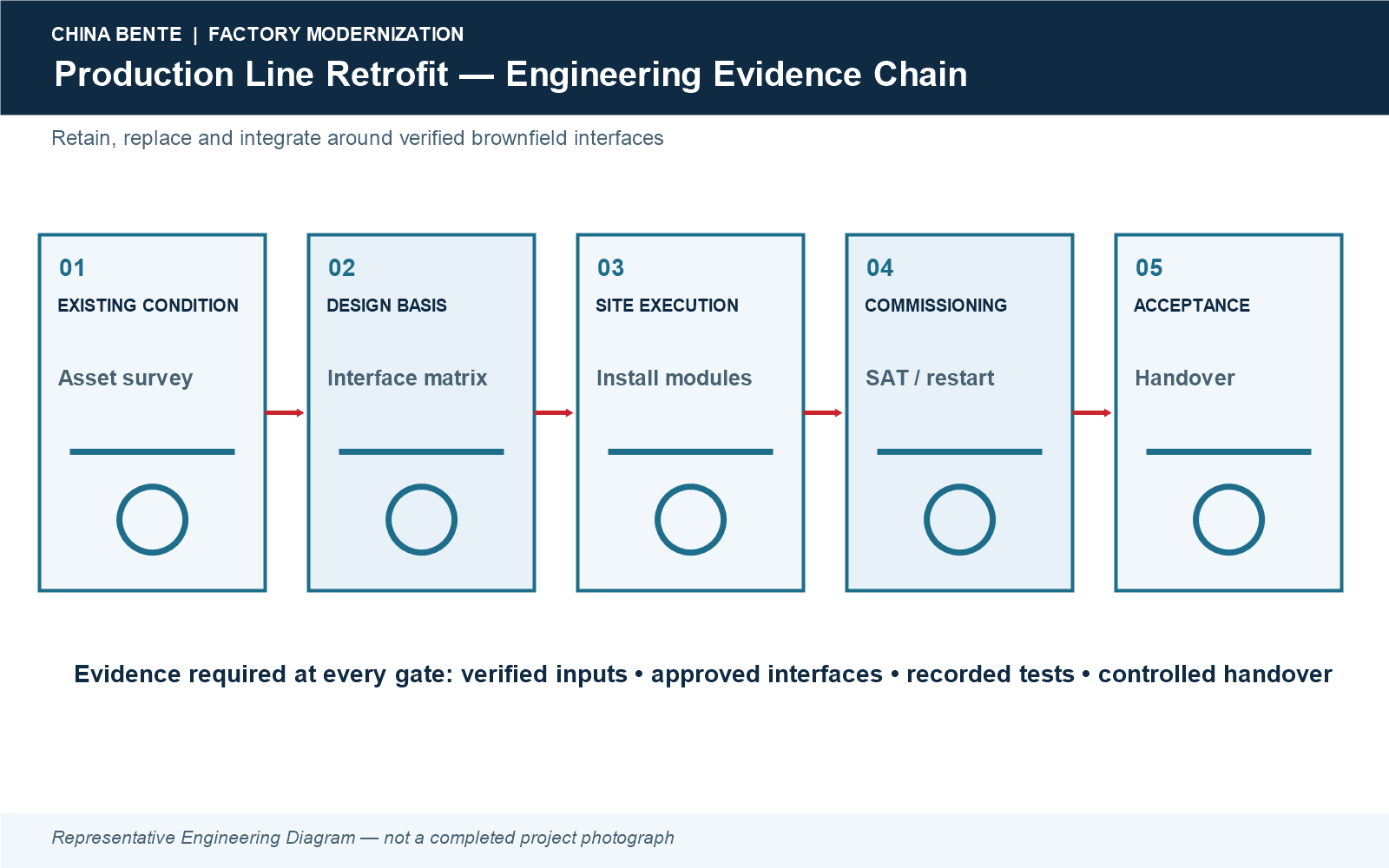
Representative engineering sequence. Final shutdown, cutover and performance criteria are agreed from verified plant data.
Main equipment and system architecture
- Existing and replacement process equipment
- Modified conveyors, buffers and material handling
- Mechanical, electrical and control interfaces
- Guarding, access and maintenance improvements
- Instrumentation and data collection
- Temporary works and commissioning tools
Capacity balance and design basis
The basis uses measured cycle times, stops, product mix, yield, utility loads, condition findings and shutdown constraints. Sustainable output is distinguished from nameplate capacity, and no improvement KPI is claimed without a verified baseline.
Retained / replaced / interface matrix
| Category | Engineering basis |
|---|---|
| Retained | Assets with verified condition, capacity, safety, documentation and lifecycle support suitable for the target duty. |
| Replaced | Equipment or subsystems proven to constrain safety, capacity, quality, reliability or supportability. |
| Interfaces | Mechanical tie-ins, elevations, product transfer, utilities, controls, networks, safety circuits, access and documentation. |
Utilities and site infrastructure
- Connected and coincident load review
- Air, steam, cooling, water or extraction balance as applicable
- Cable, pipe and support routes
- Temporary services for shutdown work
- Future expansion allowance where approved
Customer engineering inputs
- As-built drawings and equipment records
- Production, downtime, reject and maintenance data
- Product mix and future requirements
- Condition inspection and spare-parts status
- Permitted shutdown and restart windows
Quality, automation and control
The retrofit retains or improves required quality gates, recipes, traceability and alarm/interlock behavior. Control changes are documented and tested against an approved functional specification.
CAPEX and OPEX drivers
CAPEX depends on retained asset condition, replacement scope, integration complexity, temporary works and outage duration. OPEX effects depend on maintenance, yield, labor, utilities and spare-parts strategy and are not presumed.
Safety, environmental and compliance
Isolation, machine safety, temporary access, lifting, hot work, stored energy, contractor interfaces and restart readiness are controlled through project-specific plans.
Outputs and acceptance basis
Acceptance uses approved products, measured line conditions, safety and quality checks, agreed trial duration, documentation and operator handover.
Shutdown, changeover and commissioning
The shutdown plan defines pre-work, prefabrication, isolations, removal, installation, testing, rollback points and controlled restart. Open issues are recorded before ramp-up.
Before / after evidence
No generic retrofit KPI is claimed. Published brownfield evidence, where approved, is available at Projects & Cases; project-specific before/after records require customer approval.
Frequently asked questions
Can a line be retrofitted without full replacement?
Yes, if retained assets are verified against the target duty and interface risks.
How are bottlenecks confirmed?
Using operating data, observation, cycle balance, buffers, utilities and maintenance history.
What is an as-built survey?
It verifies actual dimensions, equipment, interfaces and services rather than relying only on old drawings.
How is shutdown risk reduced?
Through prefabrication, FAT, detailed sequencing, isolation plans, spare parts and rollback criteria.
Can controls be upgraded separately?
Yes when process, safety and I/O interfaces are clearly documented.
How is performance accepted?
Against a pre-agreed baseline, product mix, test duration, quality and operating conditions.
What happens to replaced equipment?
Removal, reuse, storage or disposal is defined in the approved scope and site rules.
Can future capacity be reserved?
Yes, where layout, utilities and controls include approved expansion interfaces.
Request a Project Evaluation
Share current drawings, operating records, constraints and the required future state. Any missing baseline or target remains TBC until verified.