
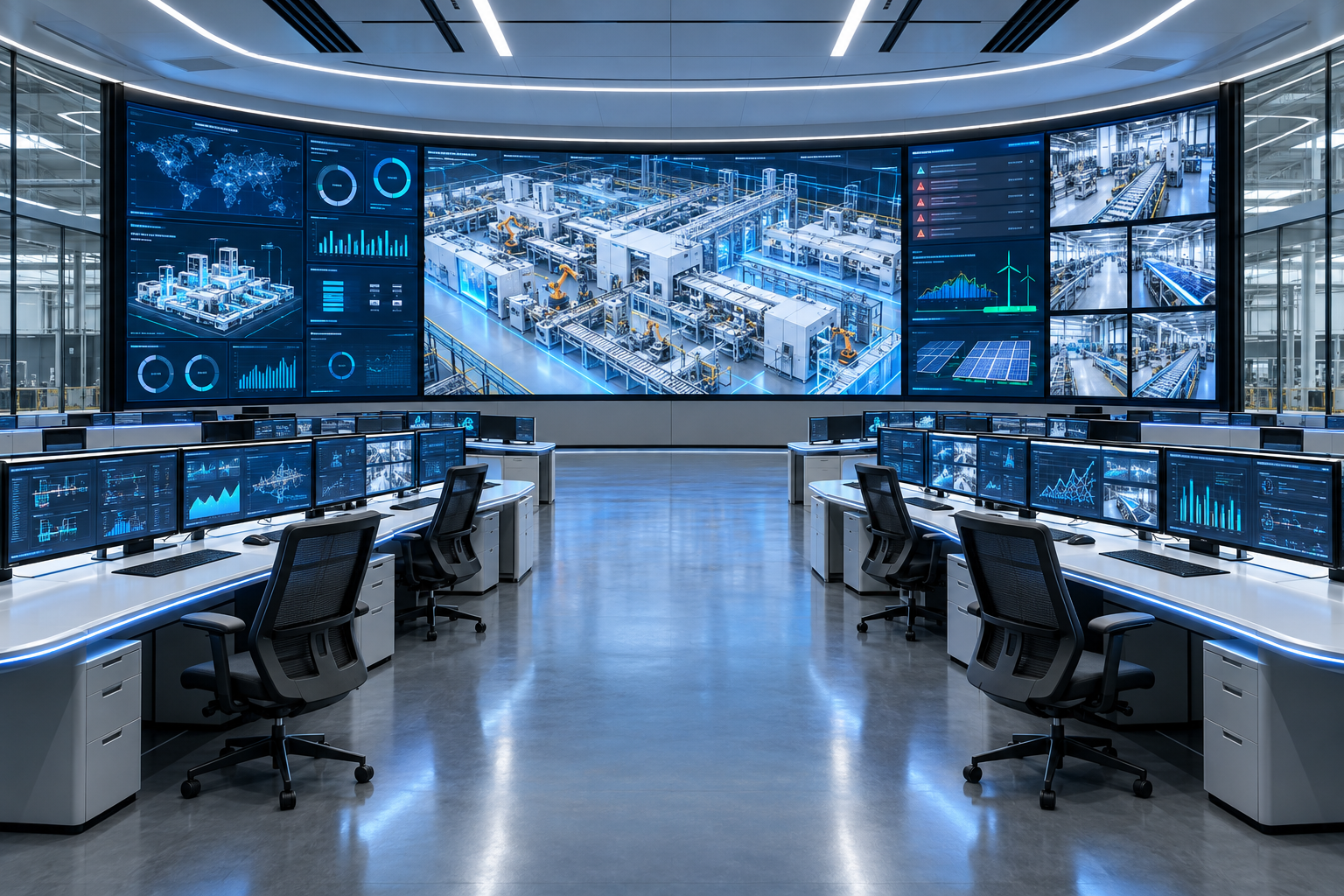
Factory central control room
The central control system is the operating core. It consolidates production status, utilities, alarms, quality, energy and maintenance information so authorized teams can coordinate the whole factory from one governed operating view.
- Unified operating overview and alarm priorities
- Role-based workstations, trends and reports
- Shift handover and event records
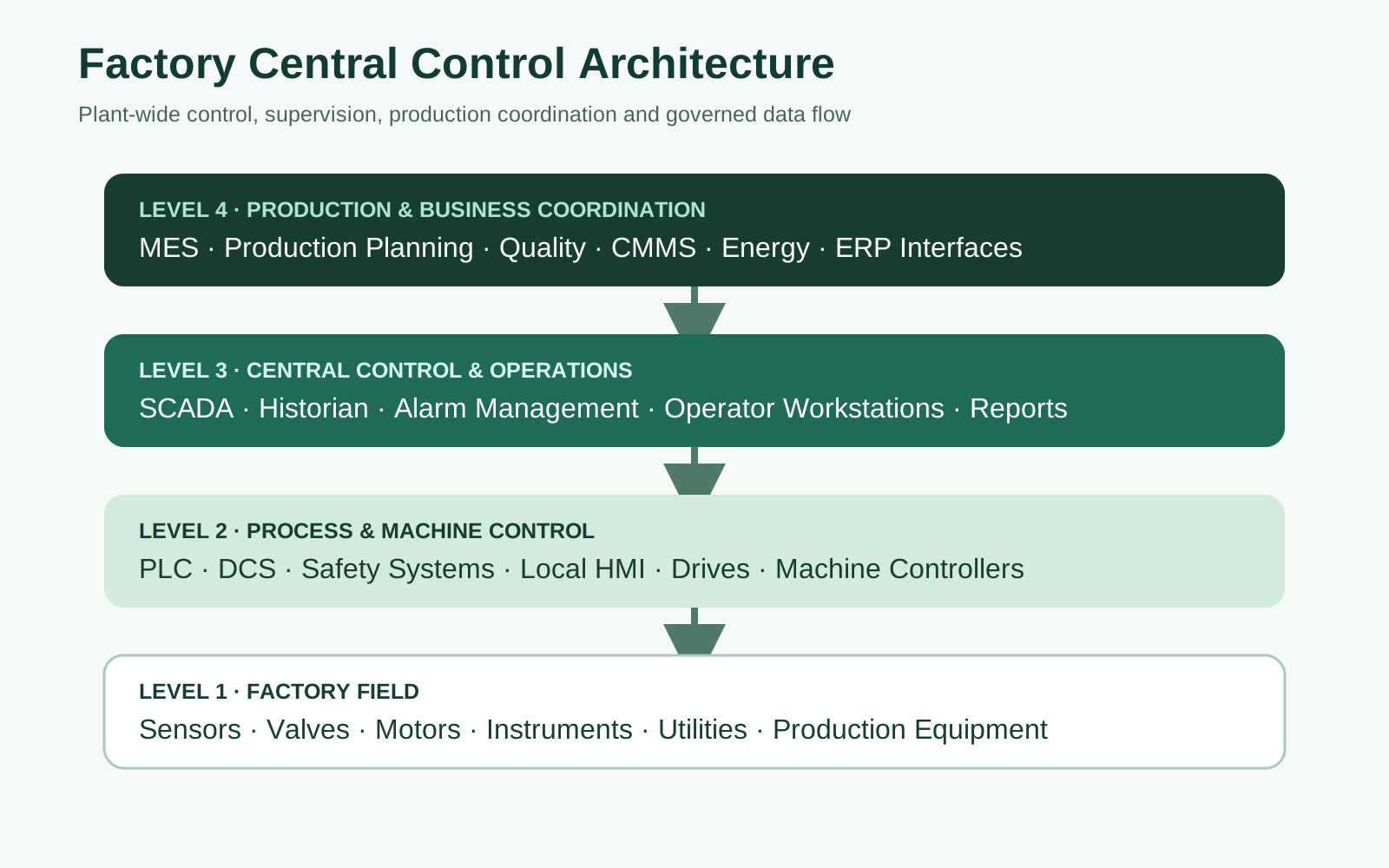
Control hierarchy from field to management
Sensors and actuators connect to PLC or DCS control; SCADA coordinates plant-wide supervision; MES and approved enterprise interfaces add production, quality and resource context. Local safety and interlocks remain available when upper systems are unavailable.
- Field instruments, drives and machine interfaces
- PLC, DCS, safety and local HMI layers
- SCADA, historian, MES, energy and CMMS interfaces
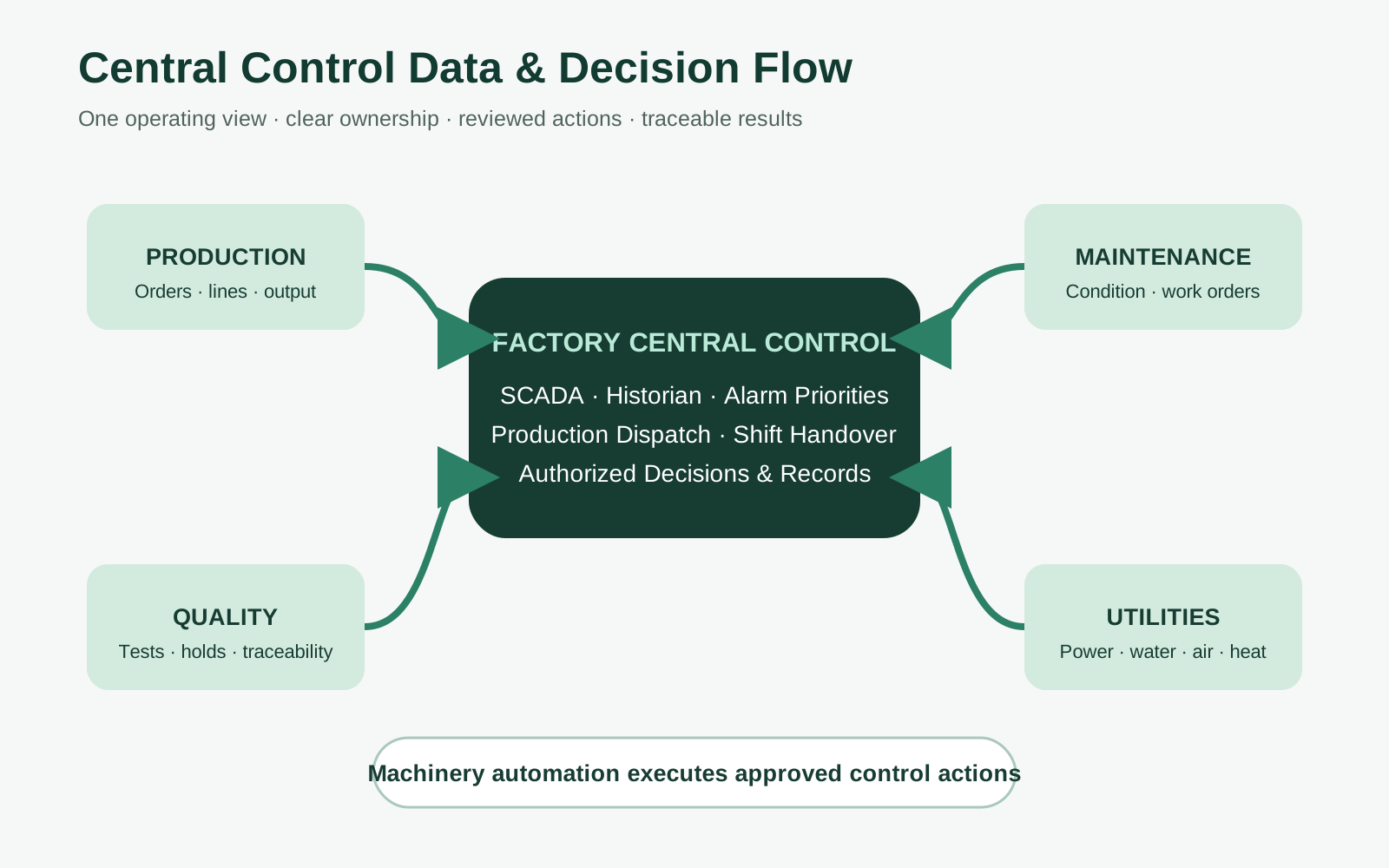
Production coordination and dispatch
Production orders, line status, material movement, quality results, utility constraints and maintenance conditions are coordinated through defined ownership and exception workflows. Machinery automation executes approved commands; it is one layer of the wider factory control system.
- Order-to-line dispatch and status confirmation
- Constraint, downtime and exception handling
- Traceability from material to finished product
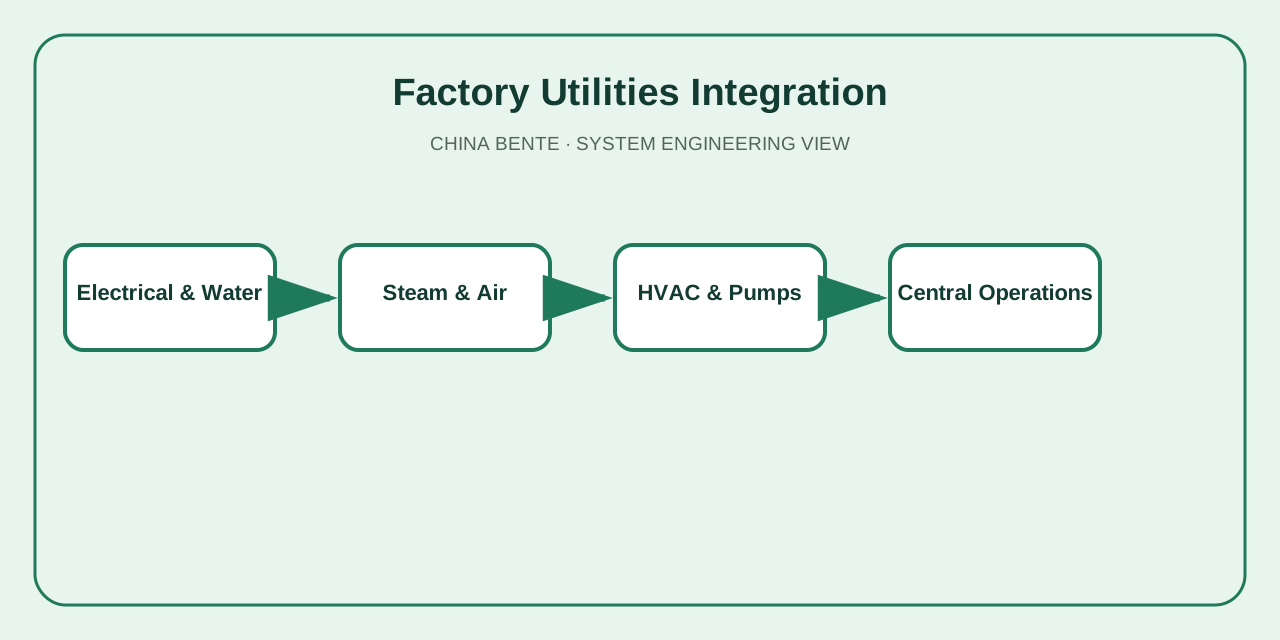
Utilities, energy and environmental integration
Electrical distribution, water, gas, steam, compressed air, HVAC, pumping and treatment systems are brought into the same operating hierarchy where the project boundary permits.
- Utility availability and consumption context
- Loss, leakage and abnormal-use alarms
- Coordinated production and utility decisions
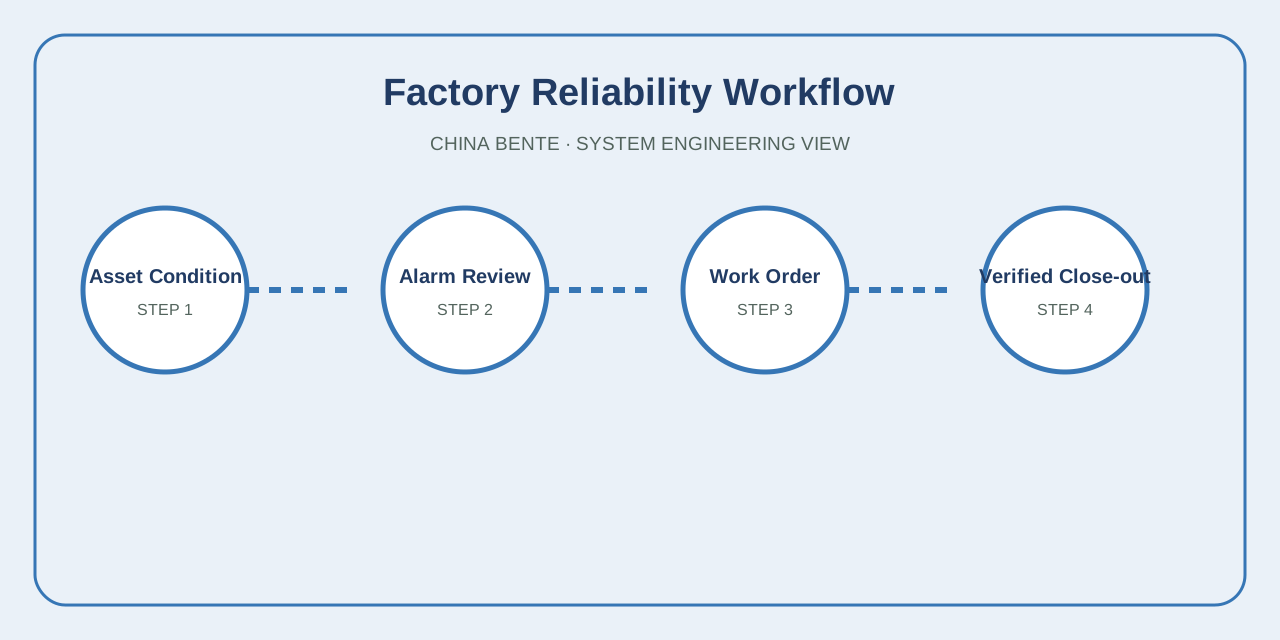
Reliability, maintenance and inspection
Equipment condition, inspection observations and alarm history are converted into reviewed work orders and traceable maintenance actions instead of isolated dashboard warnings.
- Condition and alarm rules
- CMMS or maintenance interface
- Close-out evidence and recurring-fault review
Cybersecurity, resilience and acceptance
The system is engineered around network zones, least privilege, approved remote access, time synchronization, backups and recovery tests. Acceptance verifies normal operation, failures, communications loss, alarm handling and controlled recovery.
- OT network zones and access control
- Backup, restore and change management
- FAT, SAT, failure and recovery testing
Frequently asked questions
What is the core of a smart factory?
The core is the governed central control architecture that coordinates production, utilities, quality, maintenance, alarms and authorized operating decisions.
Is machinery automation the same as factory automation?
No. Machine automation controls individual equipment or cells; factory automation connects those assets through plant-wide control, supervision, production and data layers.
How do PLC, DCS and SCADA work together?
PLC or DCS executes process control and interlocks, while SCADA provides plant-wide supervision, alarms, trends, operator interaction and records.
What does MES add?
MES adds production-order, material, quality, genealogy, status and performance context between plant control and approved enterprise systems.
Can existing machines connect to central control?
Often yes, after their condition, protocols, available signals, control ownership, cybersecurity and failure behavior are verified.
Does central control replace local safety systems?
No. Safety, interlocks and essential local control remain in validated layers and are not bypassed by dashboards or management systems.
How is the system accepted?
FAT and SAT verify normal operation, alarms, permissions, interfaces, communication loss, backup, recovery and agreed production scenarios.
What information starts the design?
Process descriptions, production routes, equipment and PLC inventory, I/O and network drawings, utilities, quality workflow, user roles and acceptance objectives.
Define the system from the operating requirement
Share the site, process, equipment, users, data interfaces, constraints and acceptance objectives.
Request Project Evaluation →