
What it is
Brownfield expansion adds capacity or capability around an operating factory while managing unknown conditions, live interfaces and production continuity.
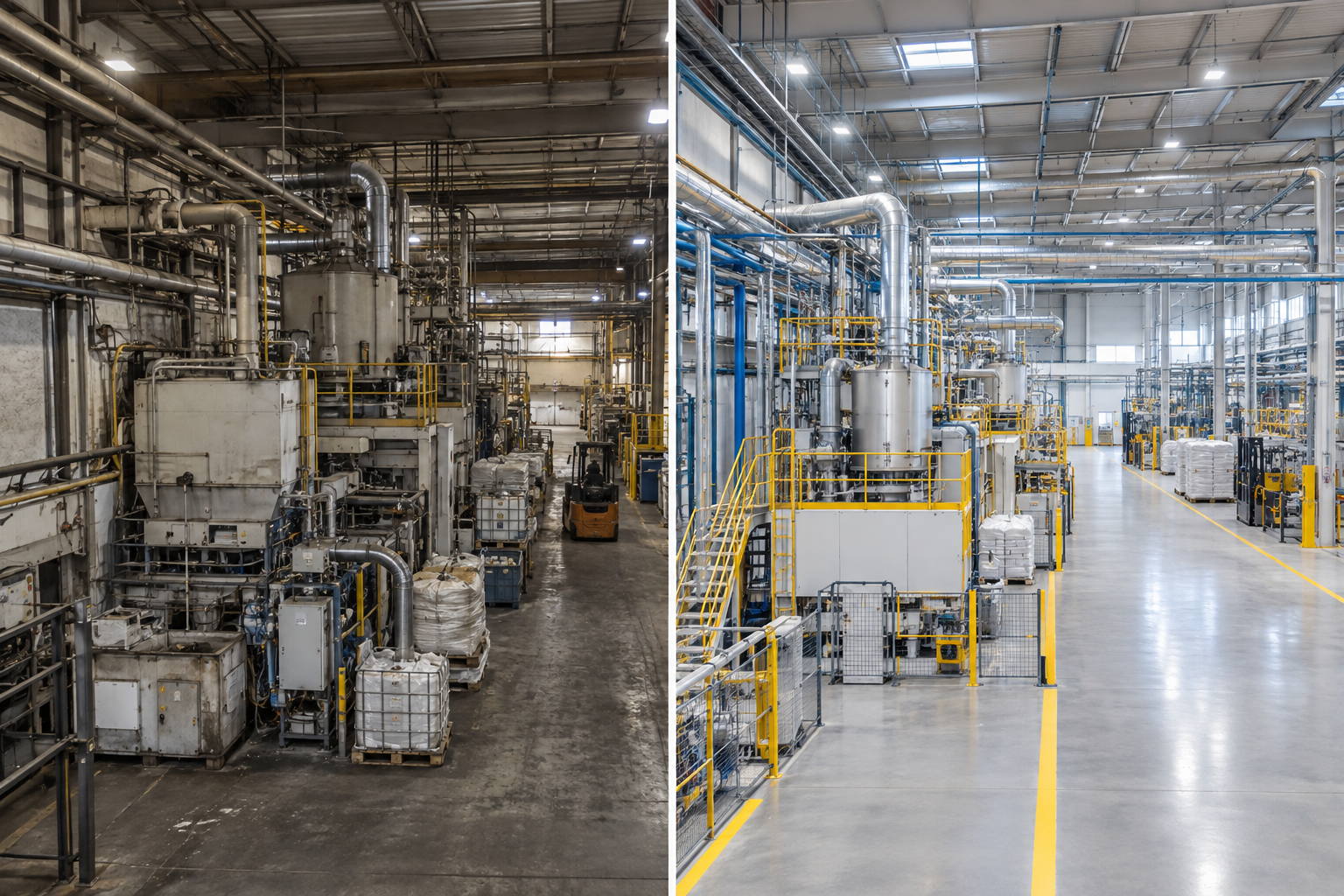
The project combines as-built surveys, master planning, process layout, building/civil work, utilities, logistics, controls and phased tie-ins. The target design distinguishes new, retained and modified systems and protects safe operation during construction.
Typical applications
- New production area beside an operating plant
- Warehouse, utility or process-capacity expansion
- New product line connected to existing systems
- Phased building and infrastructure extension
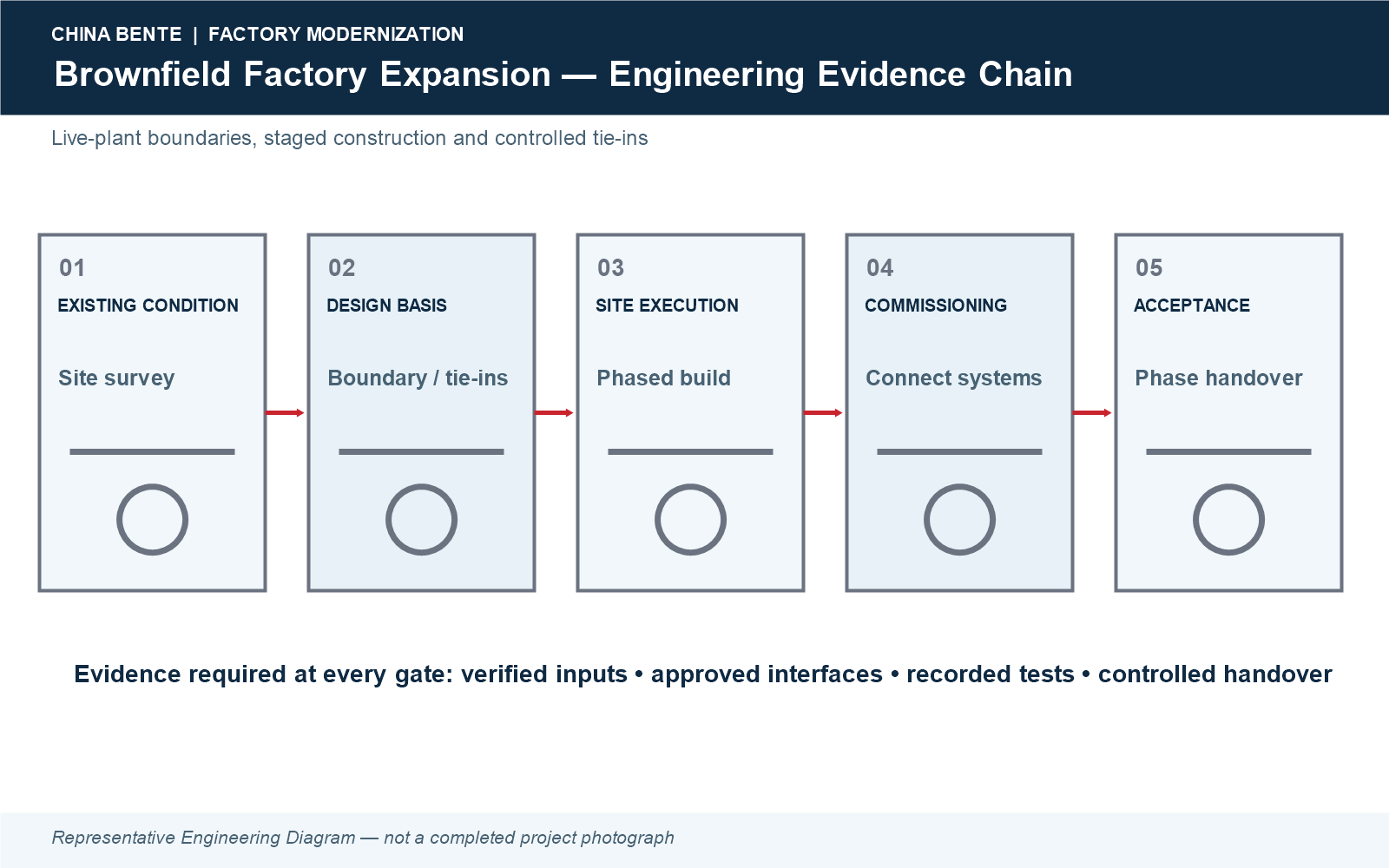
Representative engineering sequence. Final shutdown, cutover and performance criteria are agreed from verified plant data.
Main equipment and system architecture
- New process and material-handling equipment
- Building, civil and structural works
- Expanded utility generation and distribution
- Fire, drainage and environmental systems
- Controls, networks and data interfaces
- Temporary works and construction logistics controls
Capacity balance and design basis
The basis combines target capacity with existing line constraints, site geometry, soil/structure, utilities, logistics, permit limits, shutdown windows and future phases. Existing spare capacity is verified rather than assumed.
Retained / replaced / interface matrix
| Category | Engineering basis |
|---|---|
| Retained | Operating production, buildings and utilities proven suitable for continued service. |
| Replaced | Assets affected by expansion that cannot meet condition, capacity, compliance or interface needs. |
| Interfaces | Live production boundaries, structures, roads, drainage, power, utilities, fire systems, controls and construction access. |
Utilities and site infrastructure
- Existing and future load balance
- Source and distribution capacity checks
- Tie-in and isolation arrangements
- Temporary services during construction
- Expansion allowances and metering
Customer engineering inputs
- Current site and as-built surveys
- Production and logistics forecasts
- Existing utility measurements
- Geotechnical/structural information where applicable
- Permit, shutdown and construction-access constraints
Quality, automation and control
Expansion design protects current product quality and segregation. New systems receive approved quality gates, controls, traceability and documentation.
CAPEX and OPEX drivers
CAPEX is influenced by live-site constraints, relocations, temporary works, utility reinforcement, permits and phased construction. OPEX depends on the selected operating and maintenance arrangement.
Safety, environmental and compliance
Construction/operations interfaces, traffic, lifting, excavation, hot work, isolations, fire routes, dust/noise and emergency response are coordinated with the operating site.
Outputs and acceptance basis
Acceptance is phased by system and includes safe construction handover, utilities, equipment trials, interfaces, documentation and approved production ramp-up.
Shutdown, changeover and commissioning
The execution plan defines work zones, temporary routes, permits, shutdown/tie-in packages, readiness gates and handover boundaries for each phase.
Before / after evidence
No unverified brownfield KPI is claimed. Approved before/after evidence remains project-specific; current published cases are at Projects & Cases.
Frequently asked questions
What makes brownfield expansion different?
Existing operations, unknown conditions and live interfaces constrain design and execution.
How is production protected during construction?
Through segregated zones, traffic plans, temporary systems, permits and scheduled tie-ins.
Can existing utilities support expansion?
Only after source, distribution, measured demand, quality and redundancy are checked.
Why are as-built surveys essential?
They reveal actual geometry and interfaces that old drawings may not show.
Can expansion be phased?
Yes, with defined boundaries, temporary states and future-ready interfaces.
How are fire systems handled?
Existing and new coverage, impairment, temporary protection and authority requirements are coordinated.
What is an interface register?
It records technical and responsibility boundaries between existing, new and temporary systems.
How is each phase accepted?
Through system-specific tests, safe handover, documentation and approved operational readiness.
Request a Project Evaluation
Share current drawings, operating records, constraints and the required future state. Any missing baseline or target remains TBC until verified.