
What it is
A shutdown plan converts engineering scope into a time-controlled, safe sequence with clear interfaces, resources, tests and restart criteria.

The service develops work breakdown, access and isolation plans, prefabrication, removal, installation, tie-ins, inspection, testing, energization, commissioning and production restart. It manages dependencies between operations, contractors, vendors and utilities.
Typical applications
- Production-line replacement or retrofit outages
- Utility and electrical tie-ins
- Controls migration and cutover
- Multi-contractor factory shutdowns
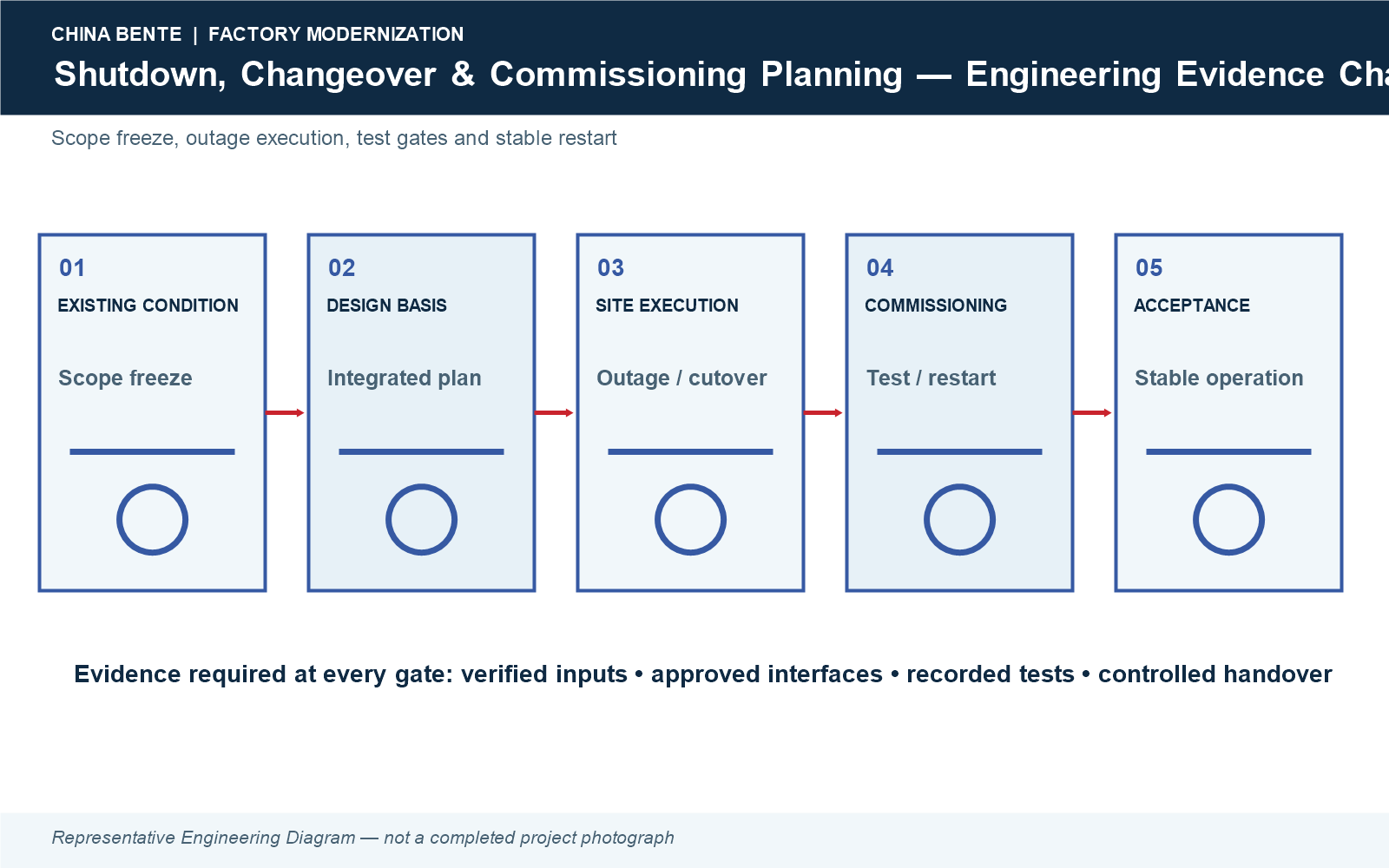
Representative sequence. Final outage, temporary-state and acceptance requirements are established from verified plant conditions.
Main equipment and system architecture
- Temporary power, utilities and access systems
- Lifting, scaffolding and removal equipment
- Isolation, lockout and permit controls
- Test instruments and commissioning tools
- Communication, schedule and issue-control systems
- Critical spares and rollback provisions
Capacity balance and design basis
Planning uses verified scope quantities, work fronts, access, resources, permits, isolation boundaries, vendor durations, test packs, critical path and realistic contingency. The outage duration remains project-specific.
Retained / replaced / interface matrix
| Category | Engineering basis |
|---|---|
| Retained | Existing systems outside the approved isolation boundary and assets confirmed for continued service. |
| Replaced | Equipment and interfaces listed in the frozen change scope. |
| Interfaces | Operations, safety, utilities, controls, construction, vendors, quality, environmental controls and handover documentation. |
Utilities and site infrastructure
- Temporary and permanent utility states
- Isolation and restoration sequence
- Energization permits and test conditions
- Drainage, flushing and waste handling
- Emergency services throughout the outage
Customer engineering inputs
- Frozen technical scope and drawings
- Site rules, permit and isolation procedures
- Resource, vendor and delivery schedules
- Test packs and acceptance criteria
- Production stop and restart requirements
Quality, automation and control
Hold points, inspection records, test packs, punch classification and turnover dossiers control completion. No system is released solely because physical installation appears complete.
CAPEX and OPEX drivers
Cost drivers include outage duration, shifts, temporary works, heavy lifts, prefabrication, specialist vendors, contingency and lost-production exposure as defined by the customer.
Safety, environmental and compliance
Simultaneous operations, isolations, confined spaces, lifting, hot work, electrical work, temporary access, housekeeping and emergency response receive coordinated control.
Outputs and acceptance basis
Readiness requires completed critical work, tests, isolations restored correctly, approved punch status, documents, trained operators and authorization to introduce energy/material.
Shutdown, changeover and commissioning
A levelled schedule, daily coordination, permit plan, system turnover sequence, rollback criteria and ramp-up monitoring govern execution through stable operation.
Before / after evidence
No generic shutdown duration or restart result is claimed. Project-specific before/after and schedule evidence requires approval; see Projects & Cases.
Frequently asked questions
When should shutdown planning start?
It should begin during design so access, prefabrication, interfaces and testing influence the solution.
What is a scope freeze?
It is the approved point after which changes follow formal review because they affect safety, cost and schedule.
What is a readiness review?
A structured check that people, systems, tests, documents and conditions permit the next energization or start-up step.
How is the critical path controlled?
Dependencies, durations, resources and constraints are tracked against verified field progress.
Why are rollback criteria needed?
They define when and how to restore a safe prior state if cutover cannot proceed.
How are punch items handled?
They are classified by risk and system release criteria, assigned and tracked to closure.
Can work be prefabricated?
Yes, verified prefabrication reduces outage work and risk when interfaces are surveyed accurately.
When can production restart?
Only after approved safety, technical and operational readiness gates are satisfied.
Request a Project Evaluation
Share current records, measured constraints and the required future state. Any unverified baseline, benefit or acceptance value remains TBC.