
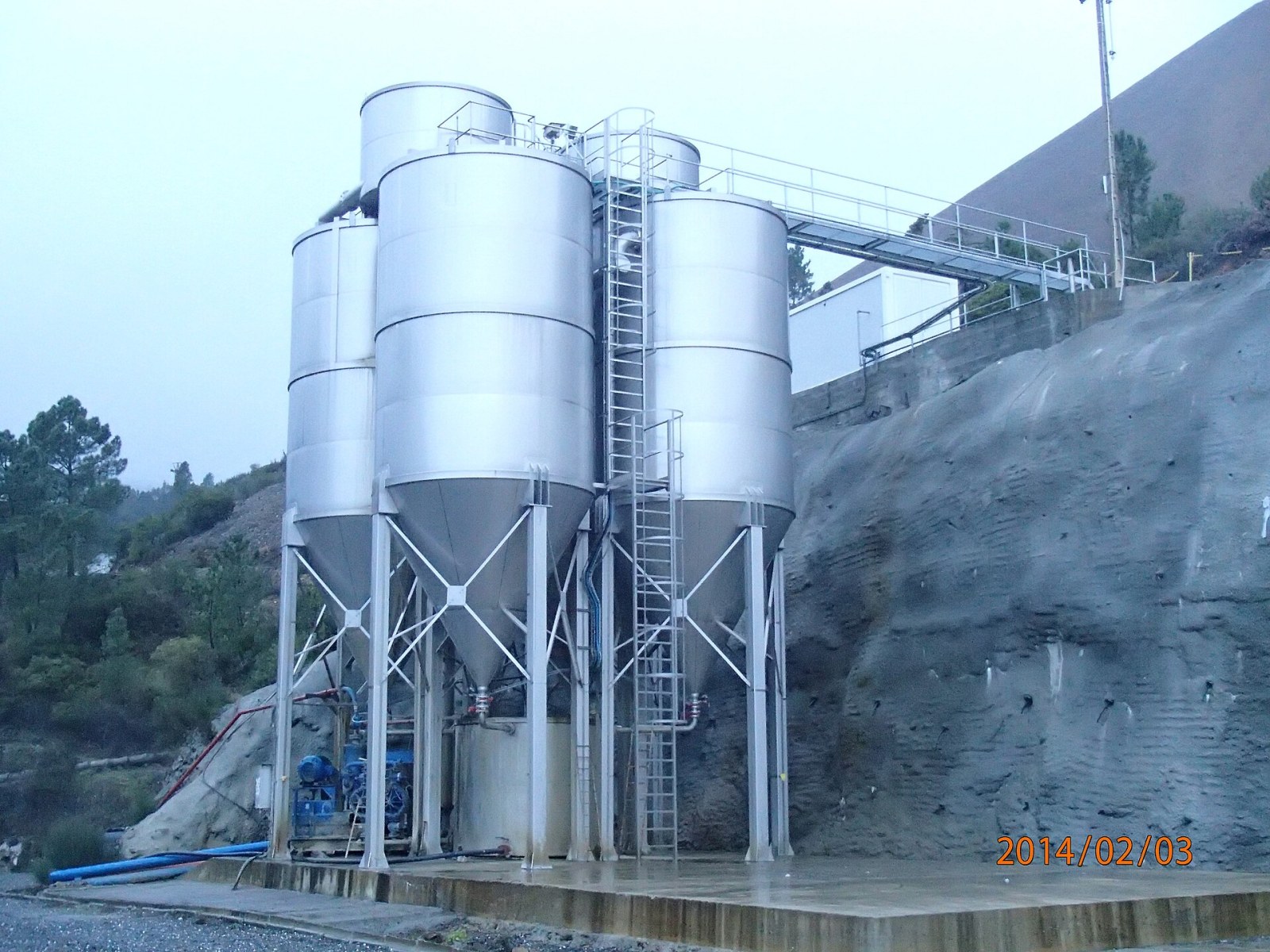
Engineering route for suspended mineral solids, acidity/alkalinity, metals, reagents and variable mine water. Final configuration is based on representative sampling, treatability evidence and the agreed discharge or reuse target.
Mine-Water Balance, Solids and Dissolved Metals
| Design item | Unit / reference | Engineering basis |
|---|---|---|
| Hydraulic and production schedule | m³/hour; m³/day; batch timing | Separate pit/dewatering water, mineral-processing return water, tailings water and contact stormwater. Check normal production, wet-weather peaks and storage requirements. |
| Feed analysis | Laboratory units and named test methods | Flow hydrograph, pH/acidity, sulfate, dissolved and total metals, TSS/particle size, residual flotation reagents and cyanide species where relevant. |
| Water balance | m³/hour; seasonal m³/day; storage m³ | Track process-water return, fresh-water make-up, rainfall and permitted discharge. |
| Suspended solids | TSS mg/L; particle-size distribution | Settling and thickening depend on solids behavior and flocculation tests. |
| Acidity and metals | Acidity/alkalinity; dissolved/total metals | Design neutralization and precipitation from the measured chemical demand. |
| Process reagents | Residual reagents; total/free/WAD cyanide where used | Set dedicated treatment and analysis for the actual mineral-processing chemistry. |
| Tailings interface | Slurry solids %; return-water quality | Coordinate thickener overflow, tailings storage and process-water compatibility. |
Capacity calculation and design boundary
Worked solids-load example: 1,000 m³/day at 500 mg/L TSS carries 500 kg suspended solids/day before separation.
Outlet and acceptance schedule
Selected IFC mining direct-discharge references are shown below. Site permits, receiving waters and the actual mineral-processing chemistry determine the complete acceptance schedule.
Selected IFC industry guideline references for direct surface-water discharge are listed for comparison. Local permits, receiving-water conditions and the full source guideline define applicability and the agreed project acceptance basis.
| Parameter | IFC guideline reference |
|---|---|
| pH | 6–9 |
| TSS | 50 mg/L |
| COD | 150 mg/L |
| Copper | 0.3 mg/L |
| Arsenic | 0.1 mg/L |
| Lead | 0.2 mg/L |
Engineering reference: IFC EHS Guidelines for Mining (2007), Table 1.
What It Is / Wastewater Characteristics
Suspended mineral solids, acidity/alkalinity, metals, reagents and variable mine water. The design basis must describe normal, peak and upset conditions rather than a single grab sample.
Typical Sources and Applications
Relevant process drains, production washwater, utility blowdown and segregated side streams are mapped at source before combining treatment duties.
Required Influent Data and Sampling Basis
Provide hourly and daily flow, peaks, pH, temperature, COD/TOC and biodegradability, suspended solids, conductivity/TDS, priority pollutants, toxicity indicators, production cycles and current chemical use. Composite and event samples should cover normal and upset operation.
Process Selection Logic
Selection begins with source segregation and treatability tests, then balances biological, physicochemical, membrane and thermal boundaries against residue outlets and acceptance requirements.
Wastewater-Specific Process Flow

- 1. Water segregation
- 2. Settling / thickening
- 3. Neutralization
- 4. Metal precipitation
- 5. Filtration
- 6. Reuse / discharge
System and Equipment Architecture

Main equipment: Clarifiers/thickeners, neutralization, precipitation, filter press, media filtration and reuse pumping.
Residues, Utilities and Environmental Interfaces
Metal/mineral sludge, tailings interfaces, brine and reagent residues are managed with the mine water balance.
Power, air, water, thermal utilities, chemical storage and consumption are calculated from the agreed flow and quality envelope. Off-gas, odor and ventilation controls are incorporated where the selected process requires them.
Monitoring and Operating Records
Measure water balance, pH, turbidity and relevant metal/reagent concentrations; include wet-weather and tailings-return conditions in the sampling program.
CAPEX / OPEX Drivers
Major drivers include contaminant load and variability, materials of construction, footprint, redundancy, chemical and energy duties, sludge/concentrate outlet, automation level and the required discharge or reuse quality.
Customer Engineering Inputs and Acceptance
Customer inputs include verified analyses, process inventory, site layout, utility conditions, hazardous-area requirements, local codes and the acceptance sampling protocol. Outputs are agreed as treated water, recovered materials and managed residues at defined battery limits.
Related capabilities: Turnkey process plants, factory modernization, residue recovery, renewable energy and SMART monitoring.
Frequently Asked Questions
Which feed analyses are needed for mining and mineral-processing wastewater?
Flow hydrograph, pH/acidity, sulfate, dissolved and total metals, TSS/particle size, residual flotation reagents and cyanide species where relevant.
How is mining and mineral-processing wastewater treatment capacity sized?
Separate pit/dewatering water, mineral-processing return water, tailings water and contact stormwater. Check normal production, wet-weather peaks and storage requirements.
Can pit water and flotation return water use the same treatment route?
They may differ in solids, acidity, dissolved metals and processing reagents. A site water balance and separate analyses determine which streams can share treatment.
Why distinguish total, free and WAD cyanide?
They represent different chemical fractions and acceptance criteria. Where cyanide is present, treatment verification and laboratory methods must match the specified fraction.
What residues must a mining and mineral-processing wastewater project handle?
Characterize metal-bearing sludge and retained solids for the approved tailings, recovery or disposal route. Water-treatment design includes the destination of both solids and clarified water.
Which operating records matter for mining and mineral-processing wastewater?
Measure water balance, pH, turbidity and relevant metal/reagent concentrations; include wet-weather and tailings-return conditions in the sampling program.
How does the worked sizing example for mining and mineral-processing wastewater apply?
Worked solids-load example: 1,000 m³/day at 500 mg/L TSS carries 500 kg suspended solids/day before separation.
What outlet quality must be agreed for mining and mineral-processing wastewater?
Selected IFC mining direct-discharge references are shown below. Site permits, receiving waters and the actual mineral-processing chemistry determine the complete acceptance schedule.