
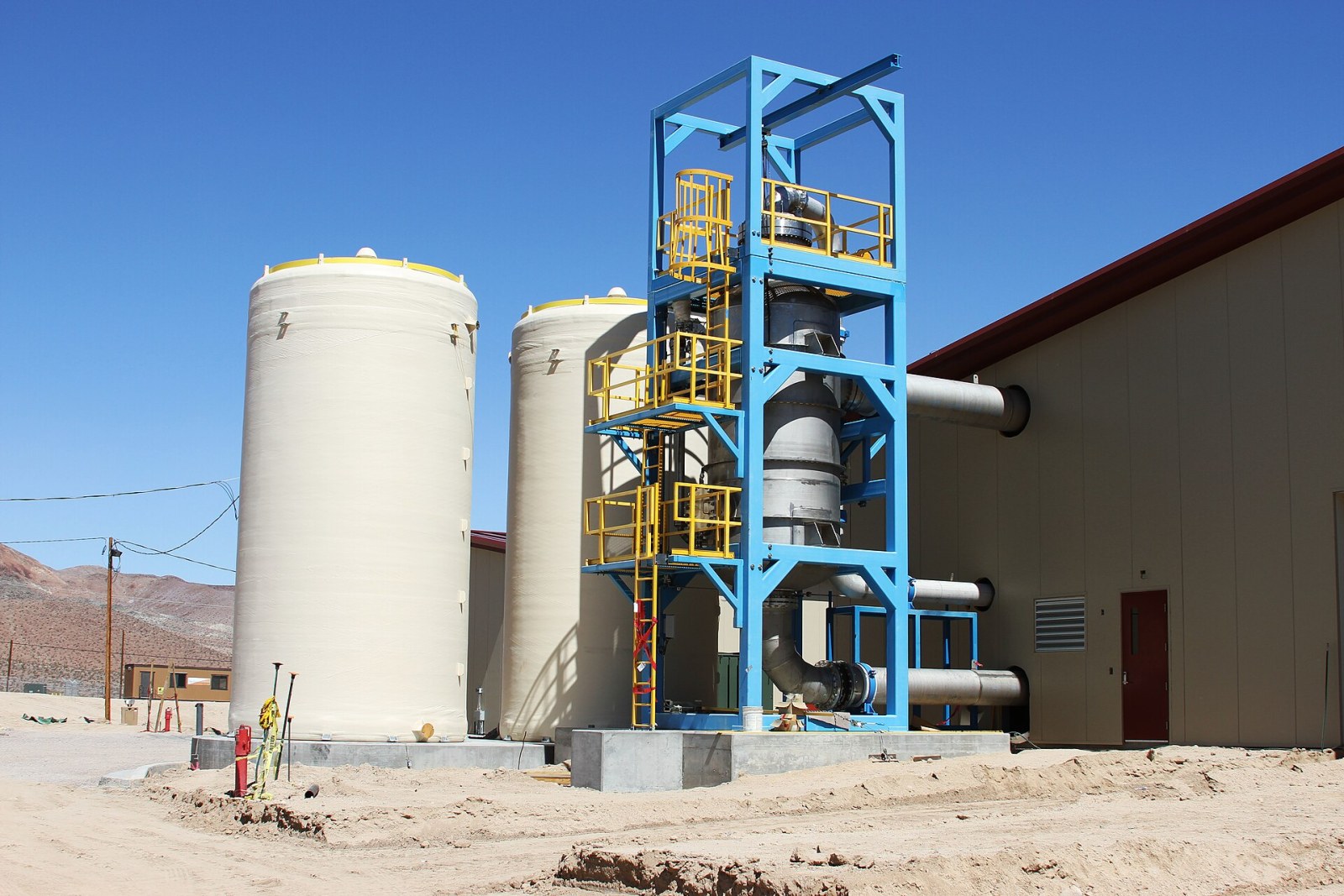
Engineering route for concentrated salts, scaling species, refractory organics and uncertain disposal outlet. Final configuration is based on representative sampling, treatability evidence and the agreed discharge or reuse target.
Concentrate Flow, Scaling and Salt Balance
| Design item | Unit / reference | Engineering basis |
|---|---|---|
| Hydraulic and production schedule | m³/hour; m³/day; batch timing | Provide upstream RO feed, permeate and reject flows at normal and maximum recovery, including cleaning returns. Concentrate treatment is sized from reject flow and dissolved-salt mass. |
| Feed analysis | Laboratory units and named test methods | Complete reject ion analysis, TDS, hardness, silica, sulfate, barium/strontium, alkalinity, COD/TOC, antiscalant and cleaning-chemical carryover. |
| Upstream recovery | % of feed flow | Calculate the remaining concentrate volume and verify it against measured flows. |
| Concentrate chemistry | Major ions mg/L; saturation indices | Use actual reject samples and scaling projections before attempting further recovery. |
| Organic carryover | COD/TOC; antiscalant identity | Check interference with softening, secondary membranes and thermal concentration. |
| Secondary treatment | m³/hour; pressure; temperature | Select further membrane or thermal duty from osmotic pressure and solubility limits. |
| Residual outlet | m³/day liquid; kg/day salts | Define where residual brine, precipitated salts and cleaning waste will go. |
Capacity calculation and design boundary
Worked water-balance example: 100 m³/hour feed at an assumed 75% recovery produces 75 m³/hour permeate and 25 m³/hour concentrate. With complete salt retention and no precipitation, concentration would be approximately four times the feed. The assumed recovery is a calculation input, not a proposed operating guarantee.
Outlet and acceptance schedule
Specify secondary permeate quality and the final brine/salt outlet separately. Acceptance must include a closed water and salt balance, including purge and cleaning streams.
What It Is / Wastewater Characteristics
Concentrated salts, scaling species, refractory organics and uncertain disposal outlet. The design basis must describe normal, peak and upset conditions rather than a single grab sample.
Typical Sources and Applications
Relevant process drains, production washwater, utility blowdown and segregated side streams are mapped at source before combining treatment duties.
Required Influent Data and Sampling Basis
Provide hourly and daily flow, peaks, pH, temperature, COD/TOC and biodegradability, suspended solids, conductivity/TDS, priority pollutants, toxicity indicators, production cycles and current chemical use. Composite and event samples should cover normal and upset operation.
Process Selection Logic
Selection begins with source segregation and treatability tests, then balances biological, physicochemical, membrane and thermal boundaries against residue outlets and acceptance requirements.
Wastewater-Specific Process Flow

- 1. Concentrate characterization
- 2. Softening
- 3. Organic control
- 4. Secondary membrane
- 5. Evaporation interface
- 6. Brine / salt outlet
System and Equipment Architecture

Main equipment: Softening, filtration, oxidation, high-recovery membranes, evaporator feed conditioning and brine storage.
Residues, Utilities and Environmental Interfaces
Chemical sludge, antiscalant residues, mother liquor and salts require outlet confirmation.
Power, air, water, thermal utilities, chemical storage and consumption are calculated from the agreed flow and quality envelope. Off-gas, odor and ventilation controls are incorporated where the selected process requires them.
Monitoring and Operating Records
Record feed, permeate and reject flow, conductivity, pressure and temperature; compare measured reject composition with the scaling model.
CAPEX / OPEX Drivers
Major drivers include contaminant load and variability, materials of construction, footprint, redundancy, chemical and energy duties, sludge/concentrate outlet, automation level and the required discharge or reuse quality.
Customer Engineering Inputs and Acceptance
Customer inputs include verified analyses, process inventory, site layout, utility conditions, hazardous-area requirements, local codes and the acceptance sampling protocol. Outputs are agreed as treated water, recovered materials and managed residues at defined battery limits.
Related capabilities: Turnkey process plants, factory modernization, residue recovery, renewable energy and SMART monitoring.
Frequently Asked Questions
Which feed analyses are needed for RO concentrate and brine?
Complete reject ion analysis, TDS, hardness, silica, sulfate, barium/strontium, alkalinity, COD/TOC, antiscalant and cleaning-chemical carryover.
How is RO concentrate and brine treatment capacity sized?
Provide upstream RO feed, permeate and reject flows at normal and maximum recovery, including cleaning returns. Concentrate treatment is sized from reject flow and dissolved-salt mass.
Can a second RO stage always recover more water?
Additional recovery is limited by osmotic pressure, membrane limits, scaling and fouling. Softening or another pretreatment may be required, and some rejects need thermal treatment or a permitted outlet.
Does reducing reject volume reduce the salt mass by the same percentage?
No. Water removal concentrates the salts. Salt balance, precipitation and the final residual outlet must be evaluated separately from liquid-volume reduction.
What residues must a RO concentrate and brine project handle?
Provide for softening cake, membrane cleaning returns and final concentrated liquid or salts; include their chemistry and destination in the mass balance.
Which operating records matter for RO concentrate and brine?
Record feed, permeate and reject flow, conductivity, pressure and temperature; compare measured reject composition with the scaling model.
How does the worked sizing example for RO concentrate and brine apply?
Worked water-balance example: 100 m³/hour feed at an assumed 75% recovery produces 75 m³/hour permeate and 25 m³/hour concentrate. With complete salt retention and no precipitation, concentration would be approximately four times the feed. The assumed recovery is a calculation input, not a proposed operating guarantee.
What outlet quality must be agreed for RO concentrate and brine?
Specify secondary permeate quality and the final brine/salt outlet separately. Acceptance must include a closed water and salt balance, including purge and cleaning streams.