
System visuals
What It Is
PLC and HMI systems execute deterministic equipment logic and provide operators with commands, status, alarms and diagnostics. A maintainable system links every screen and software module to approved process narratives, I/O, interlocks, alarm priorities and recovery procedures.
Applications and Operating Objectives
Applications include machine and line controls, utility skids, process units, conveyors, pump stations, batch equipment, packaged systems and replacement of obsolete PLC/HMI platforms.
System Workflow and Architecture
Main Equipment and Software Components
Components can include PLC CPU and remote I/O, safety PLC where required, managed switches, control panels, UPS, HMI panels or clients, engineering workstation, protocol gateways and versioned source repositories.
CPU, network and power redundancy are selected from availability needs rather than defaulted. Local control, remote commands and manual modes have explicit ownership.
Capacity and Design Basis
The basis includes I/O list, scan and sequence timing, program size, network load, redundancy, spare capacity, environmental rating, operator stations and maintenance skills.
| Operational scale | Digital/analog/special I/O, motion loops, recipes, alarms, trends, screens, users and network devices are counted with defined future margin. |
|---|---|
| Interfaces | Package data maps include address, datatype, engineering unit, quality, update rate, command handshake and failure state. |
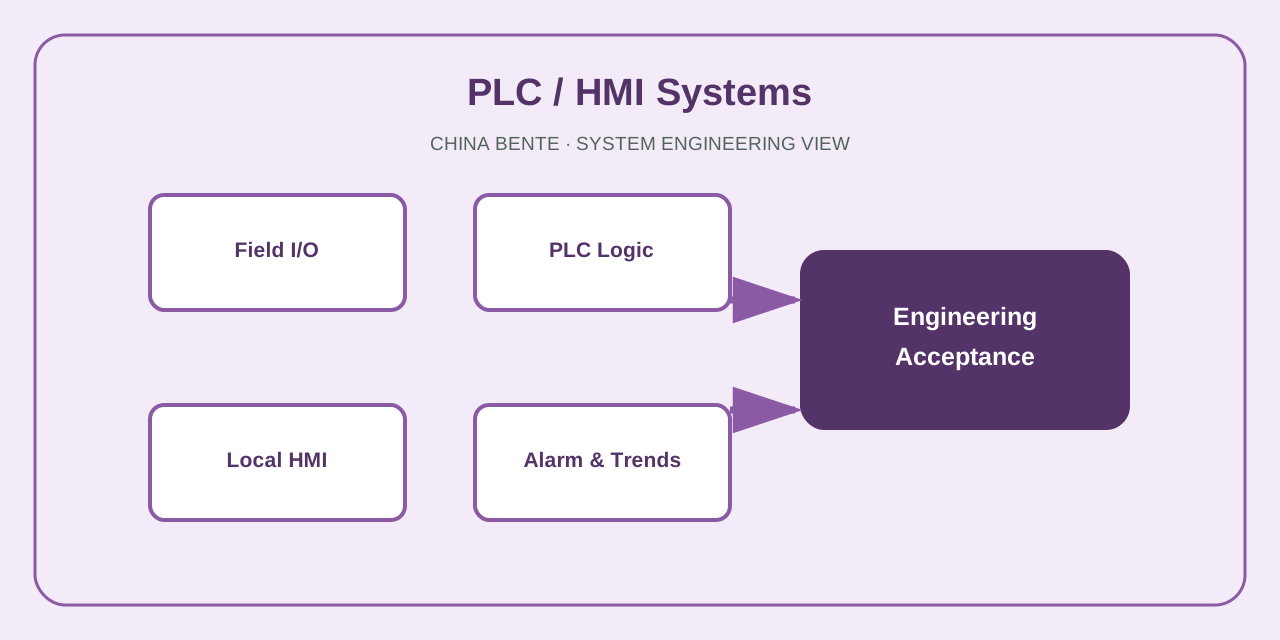
| Performance basis | Acceptance verifies every required I/O and function, sequence, interlock, alarm, trend, user role, communications failure and restart scenario. |
| Unknown/TBC | Unverified tag counts, cycle times, accuracy, latency, availability, savings and integration scope remain TBC until discovery and testing. |
Utilities and Infrastructure
Panels, clean power/UPS, grounding, ventilation or cooling, cable and fiber routes, engineering station, network time and backup media are included.
Required Customer Engineering Inputs
Customers provide process narratives, cause-and-effect, I/O and instrument lists, electrical drawings, existing source/backups, protocols, alarm philosophy, user roles and site standards.
Data, Automation and Control
PLC modules separate command, permissive, interlock, state and fault logic. HMI pages use consistent navigation and avoid decorative graphics that obscure abnormal conditions.
Cybersecurity and Access Control
Accounts, engineering access, removable media, remote connection, backups and firmware are controlled. Credentials are handed to authorized owner personnel, never embedded in public content.
CAPEX and OPEX Drivers
CAPEX depends on I/O and panel scope, redundancy, protocols, software complexity, simulation and migration. OPEX includes spares, licenses, backups, firmware compatibility and engineering support.
Safety, Compliance and Lifecycle
HMI cannot override required interlocks. Safety functions and bypass management follow approved risk and authorization procedures.
Outputs and Acceptance Basis
Outputs include hardware and panel records, commented source, HMI project, tag database, I/O and test sheets, network drawings, backups, licenses, manuals and training.
Implementation and Commissioning
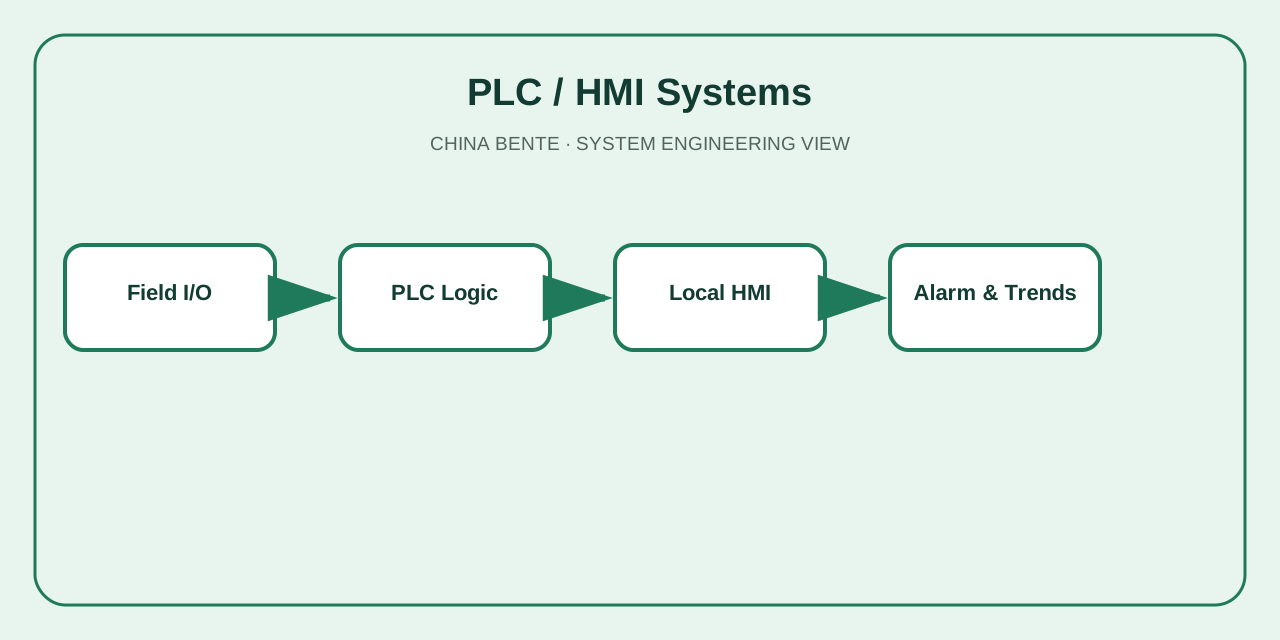
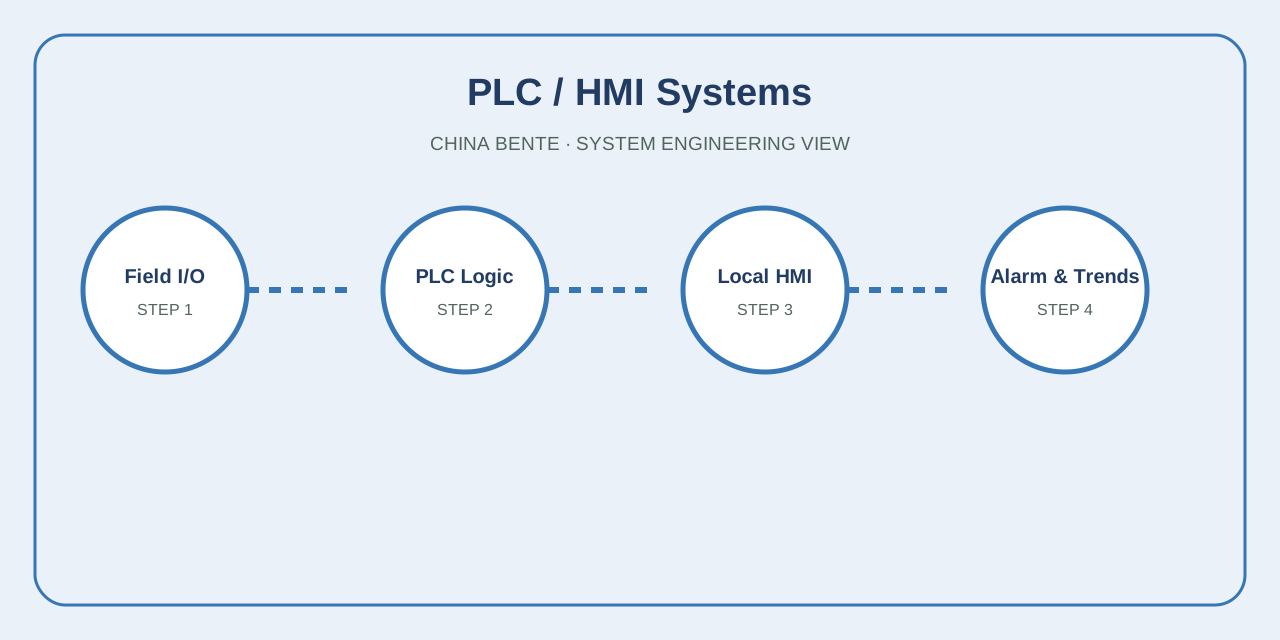
After functional approval, hardware and software are built, simulated, FAT-tested, installed, loop-checked, commissioned with safe equipment states and handed over under revision control.
Project Evidence
No production gain, accuracy, uptime or savings figure is claimed without approved evidence. Any reference used during evaluation will identify its scope and verification status. This page uses a system architecture diagram and does not present a concept image as a completed client project.
Frequently Asked Questions
How much spare I/O is required?
The project defines spare capacity from expansion plans, panel space, module strategy and owner standards.
Can the existing HMI remain?
Yes if compatibility, licensing, cybersecurity, performance and lifecycle support are acceptable.
How are PLC programs tested?
Through module review, simulation, I/O forcing under controlled conditions and approved FAT/SAT procedures.
What is a permissive versus an interlock?
A permissive allows start when conditions are met; an interlock stops or prevents unsafe or unacceptable operation.
Can operators change setpoints?
Only within approved limits and roles, with audit or event recording where required.
How are recipes protected?
Versioning, access control, validation, backup and download authorization are defined.
What if source code is missing?
The existing system must be surveyed and a migration or reconstruction plan agreed; online upload may not recover comments or full project context.
What confirms handover?
Signed tests plus delivered source, backups, licenses, drawings, tag data, manuals and trained owner access.
Related Engineering Links
Smart & Intelligent Solutions overview · AI Vision Inspection · Digital Twin & Data Platform · Projects & Cases · Request a Project Evaluation
Request a Project Evaluation
Provide process narratives, I/O or tag lists, network and system inventory, production objectives, existing backups, data interfaces, cybersecurity rules and acceptance priorities. Unknown information may remain TBC.