
Furnace Fume Collection
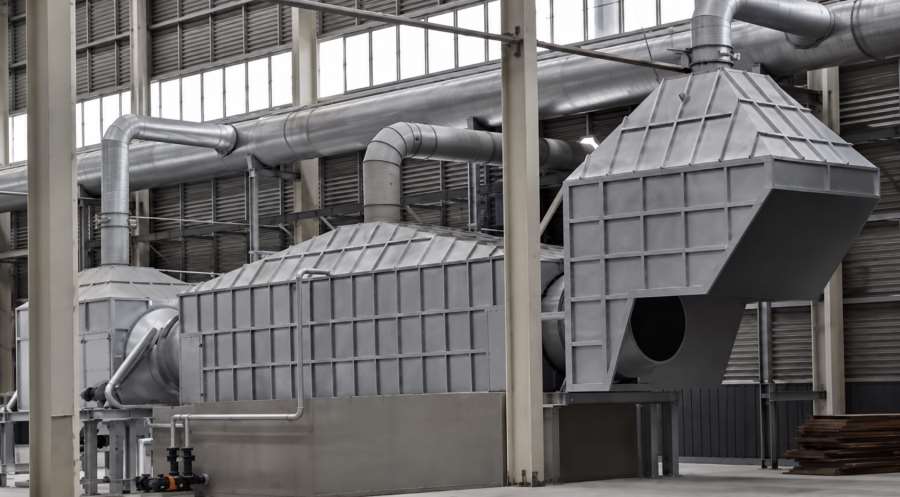
Process Flow
Equipment / System Architecture
Source capture and treatment
Fume and dust are captured at melting furnaces, ladles, transfer points, pouring stations, casting lines, cooling and finishing areas. Hood geometry, air volume, gas temperature, sparks, condensable fumes, particle loading and gas chemistry determine the treatment train.
Typical system
Local extraction hood → high-temperature ducting → spark control → cooling or conditioning → cyclone pre-separation where required → baghouse, scrubber or selected treatment → induced-draft fan → stack monitoring. Collected dust and wastewater are classified before recovery or disposal.
Preliminary Capacity & Technical Specification Range
| Typical configurable gas volume | 10,000–1,000,000 m³/h; final duty is calculated from source capture and operating conditions |
|---|---|
| Design basis | Furnace type, capture points, gas temperature, dust loading, particle size, sparks, condensable fumes, acid gases and required stack limit |
| Typical outputs | Cleaned exhaust gas plus separately collected dust, scrubber liquid or other controlled residues |
| Key utilities | Power, compressed air, cooling or conditioning water where selected, reagents where required and safe residue handling |
Required for quotation: representative photos and samples, minimum/normal/peak feed quantity, composition and contamination analysis, operating hours, desired products and sizes, local emission/discharge limits, utilities, plot plan and required automation.
Request a Project Evaluation
Share representative waste characterization, throughput range, required outputs, utilities, site constraints and compliance requirements.
Start the engineering evaluation