
A sludge-treatment and resource-utilization plant is engineered from sludge origin, dry-solids content, organic fraction, oil content, hazardous constituents, pathogens, local regulations and the verified outlet for every product and residue. Municipal, industrial, chemical and oily sludges are tested and segregated; they are not mixed into one universal route.
Technical Parameter & Capacity Range
Preliminary engineering selection range: Wet-sludge intake; every proposal must also state dry solids (tDS/day), inlet moisture and target product moisture. Final guaranteed values are issued only after feed/product data, utilities, site conditions and performance-test criteria are confirmed.
| Plant scale | Typical capacity range | Key technical envelope | Typical configuration |
|---|---|---|---|
| Compact | 5–30 wet t/day | Typically 15–30% dry solids at intake | Single aerobic-fermentation or drying module |
| Standard | 30–150 wet t/day | Mechanical dewatering + controlled conditioning | Parallel modules with odor and leachate collection |
| Centralized | 150–500+ wet t/day | Continuous reception and dry-solids metering | Multiple trains; RDF, carbonized fuel or brick-feed finishing as selected |
Sludge Characterization and Route Selection
| Sludge sources | Municipal sewage sludge, food/slaughterhouse organic sludge, industrial biological sludge, chemical sludge and oily sludge |
|---|---|
| Required analyses | Moisture and dry solids, organics/ash, calorific value, oil, salts, sulfur, pathogens, heavy metals and route-specific priority pollutants |
| Capacity basis | Project-specific wet feed t/day and dry solids tDS/day, confirmed from seasonal records and representative sampling; no universal catalog maximum |
| Operating mode | Batch, modular continuous or centralized multi-line plant according to feed variability and required availability |
| Acceptance basis | Agreed inlet envelope, outlet specification, test method, operating period, energy/chemical boundary and residue destination |
Route Selection Flow
Representative sampling→Hazard and compatibility screening→Thickening / dewatering→Route-specific conditioning→Resource product or compliant residue outlet
Real Equipment and Plant References
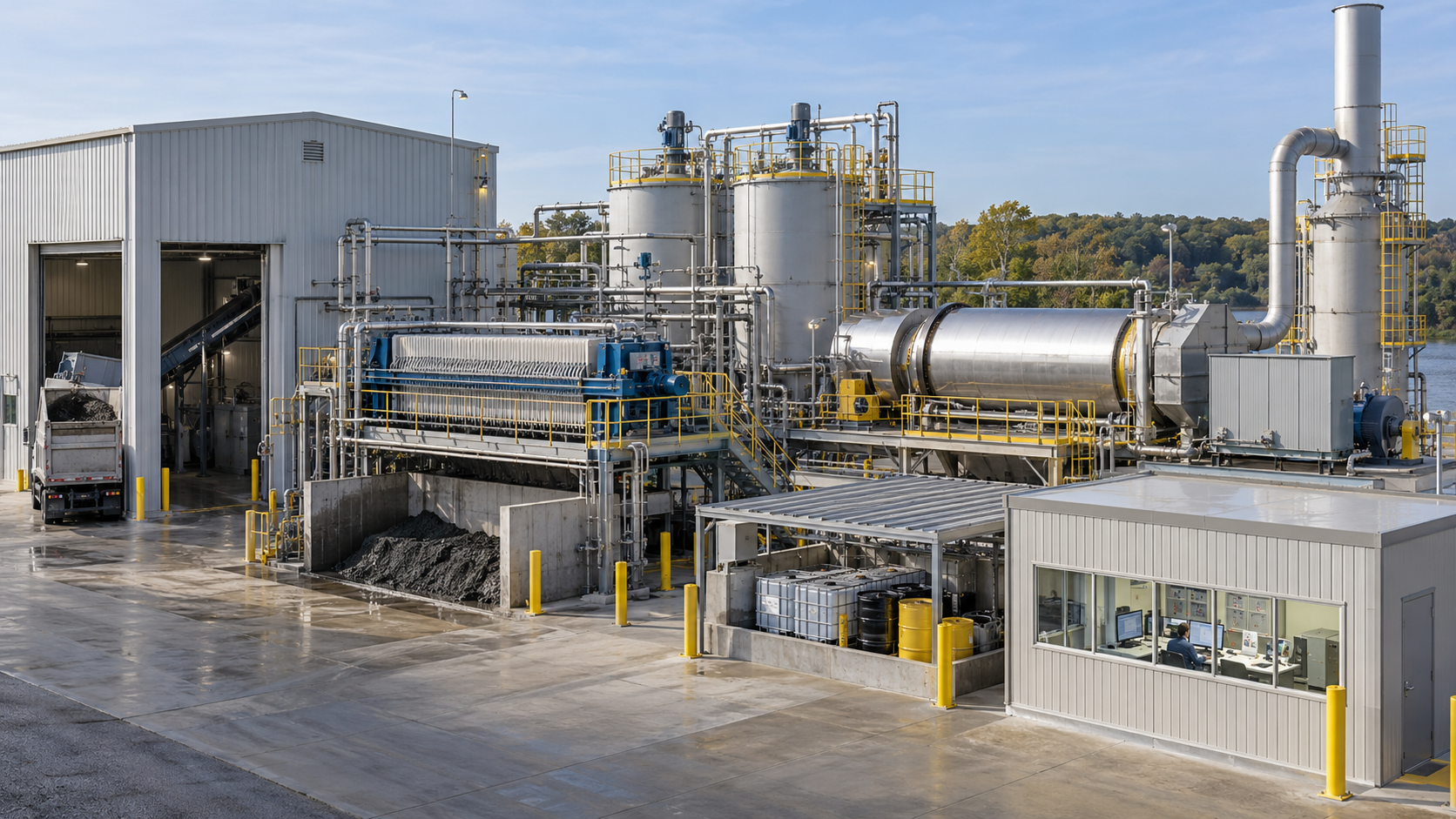
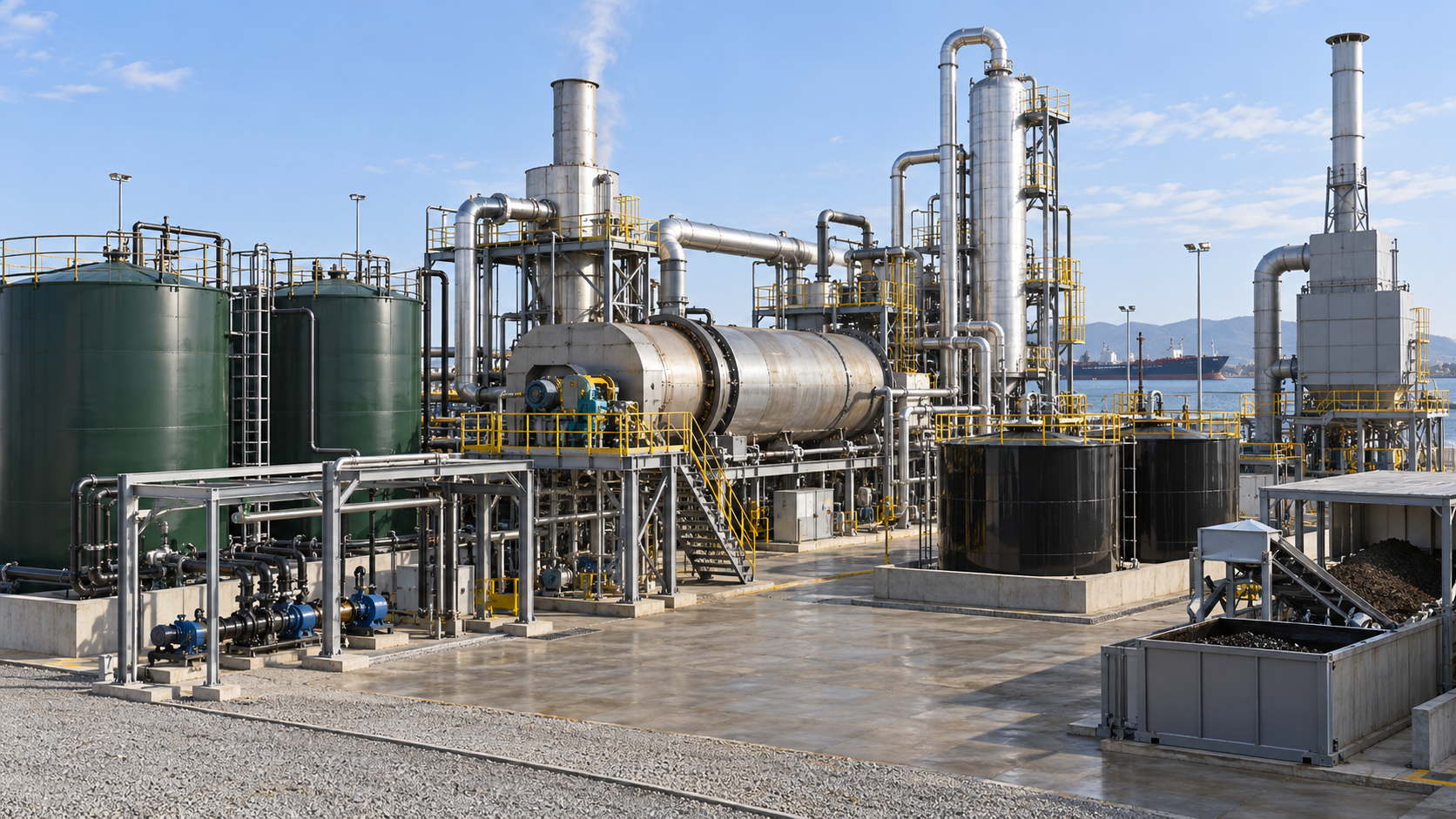
Municipal and Organic Sludge
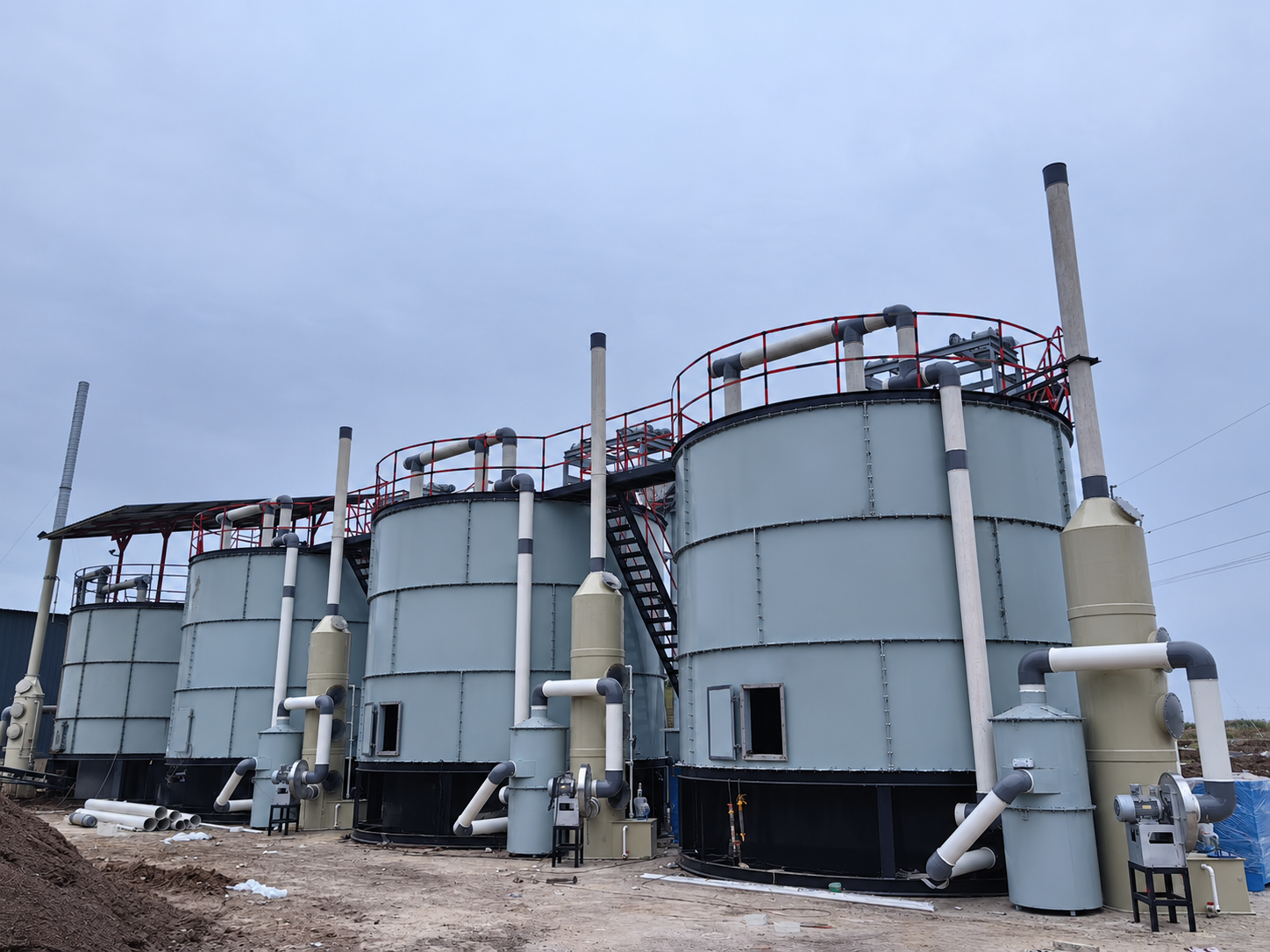
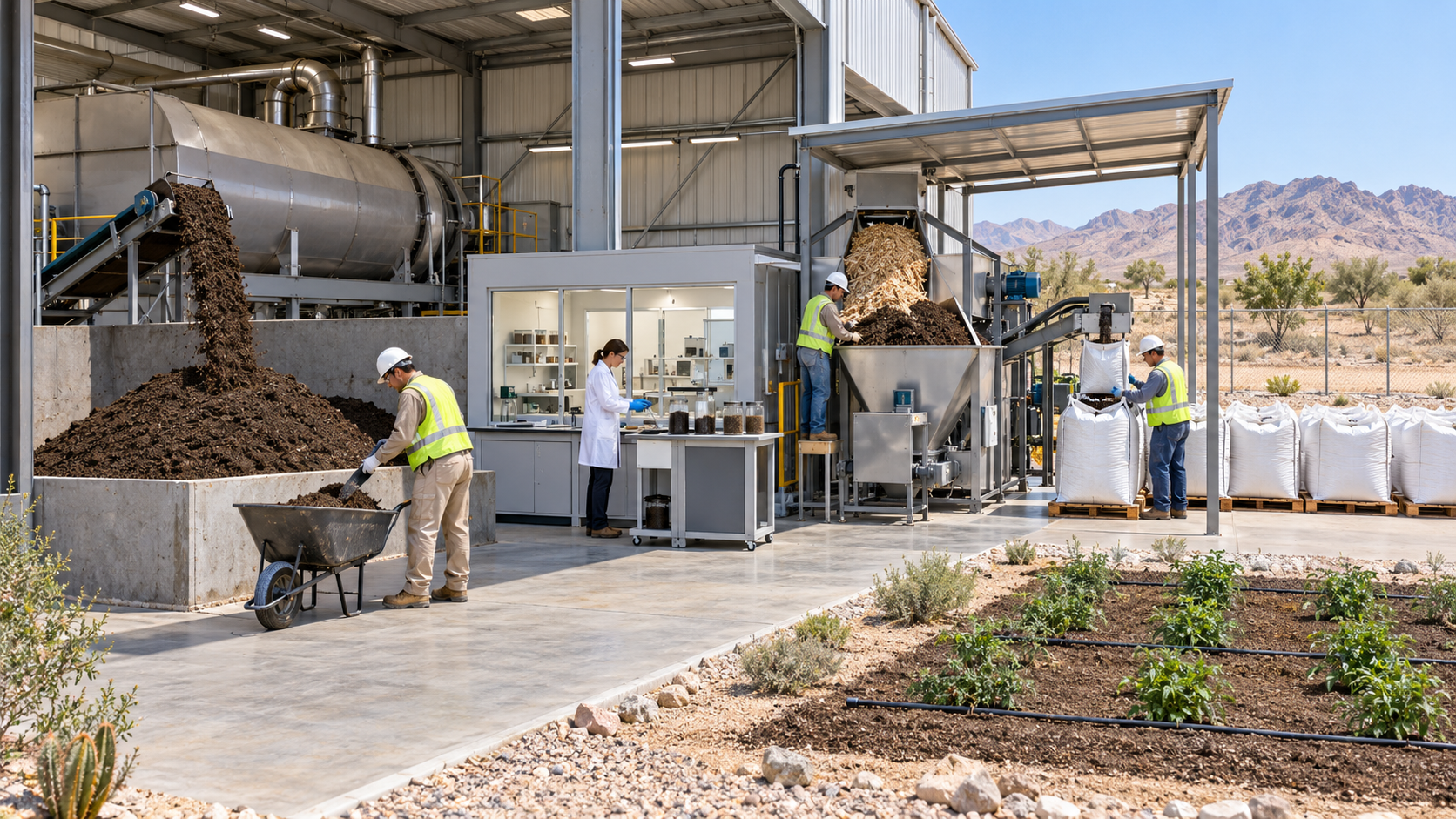
Suitable biological and agricultural sludges may proceed through thickening, dewatering and controlled aerobic tank fermentation with qualified bulking material. Stabilization, pathogen control, maturity, odor, metals and agronomic testing determine whether an organic-fertilizer or soil-conditioning outlet is permissible. Desert soil amendment is considered only after contaminant, salinity, agronomic, leaching and local regulatory review; it is never assumed from sludge origin alone.
Drying to RDF, Fuel Briquettes or Carbon Rods
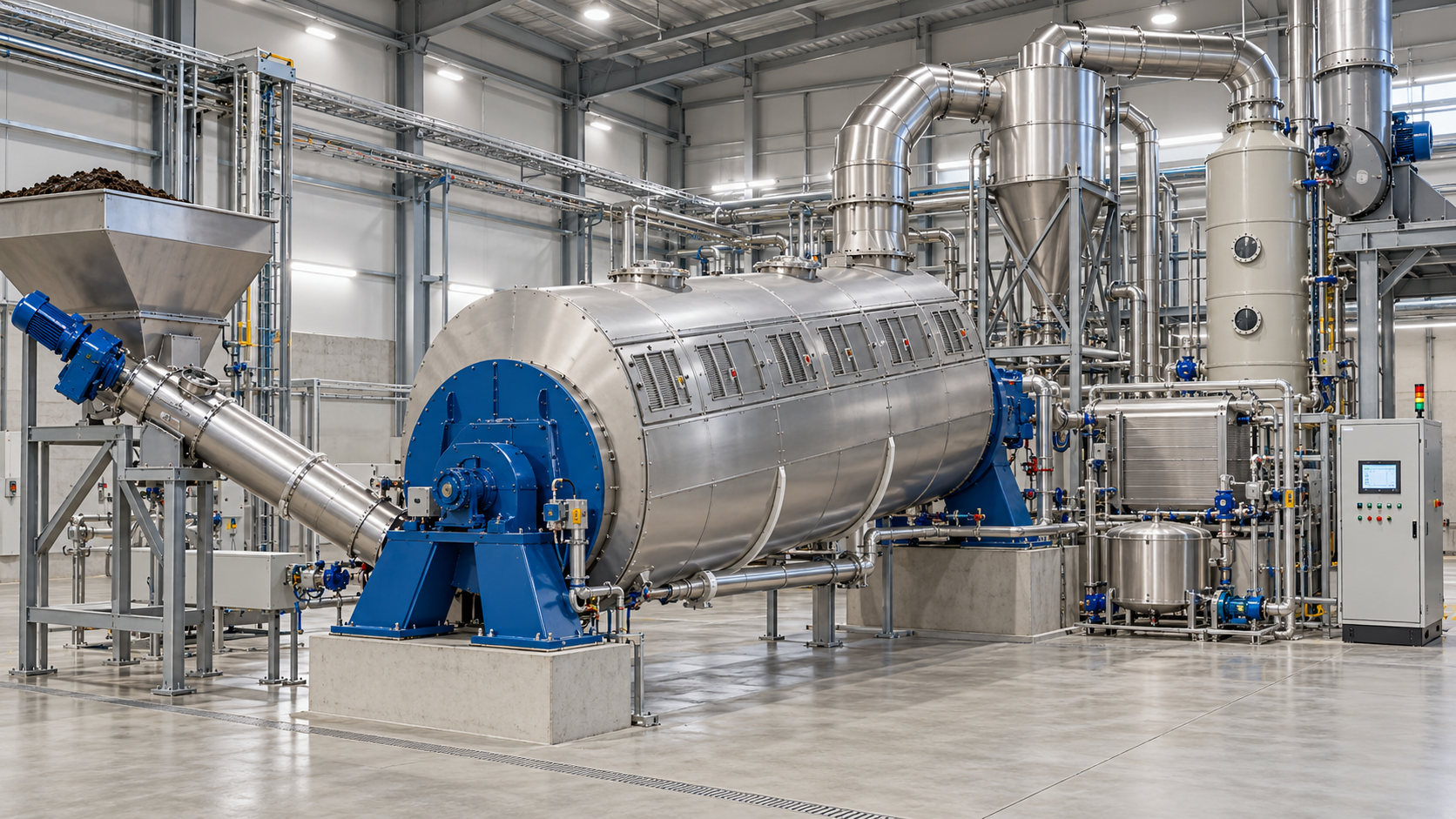
Municipal sewage sludge intended for fuel use is mechanically dewatered and dried, then blended only with compatible agricultural residue or other approved fuel-forming material. Calorific value, ash, chlorine, sulfur, metals, emissions and receiving-facility acceptance control whether RDF, briquettes or carbon rods are feasible.
Brick and Building-Material Route
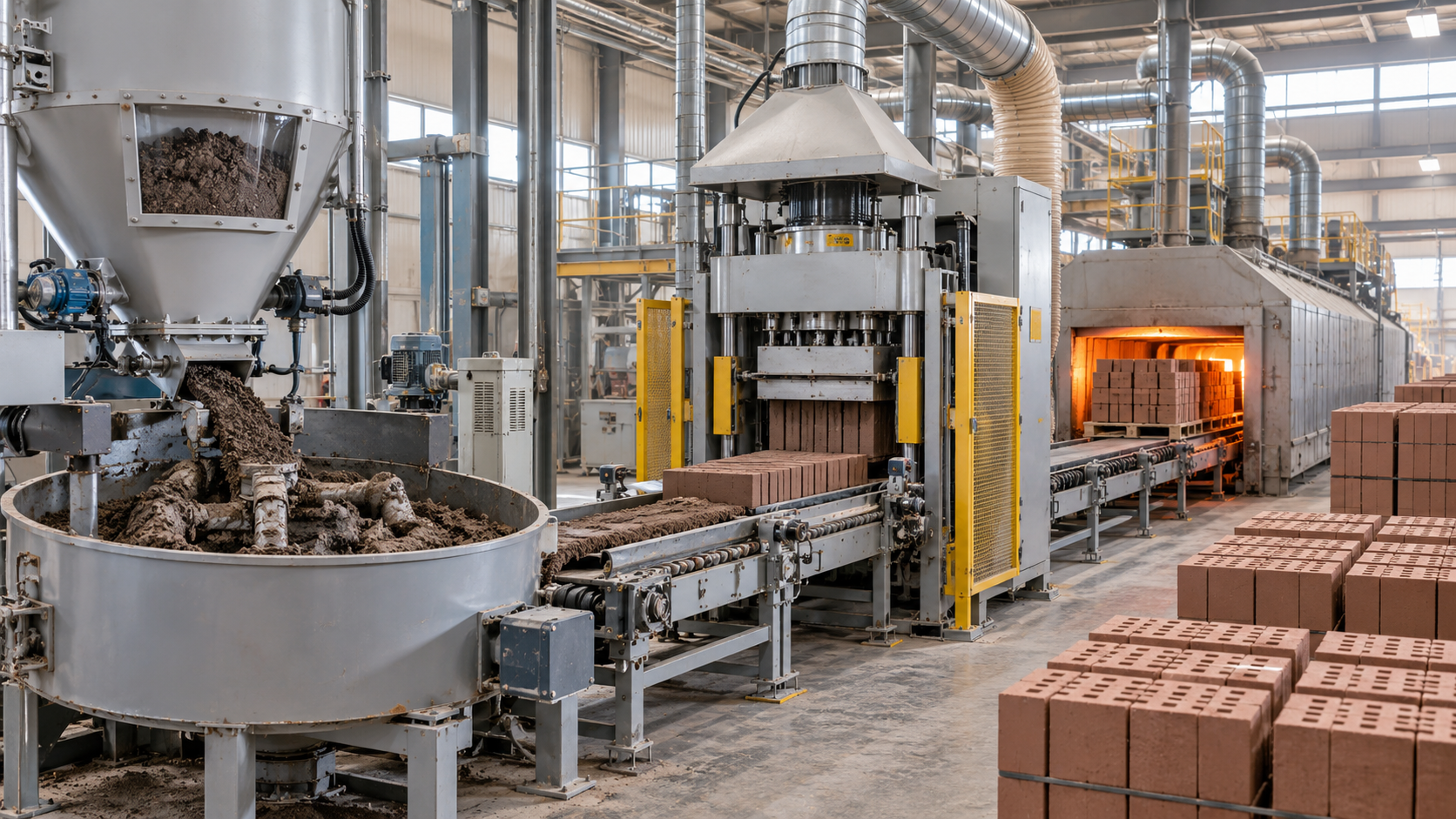
Dried mineral-rich sludge may be evaluated for controlled blending, forming and thermal treatment. Product strength, dimensional stability, leaching, air emissions and applicable construction-product requirements must be verified before use.
Chemical and Industrial Sludge
Chemical sludges are segregated by compatibility and hazard. Conditioning, filter-press dewatering, selective recovery, stabilization/solidification, thermal treatment or licensed disposal are selected from composition and leachability rather than visual appearance.
Oily Sludge Treatment
Screening and homogenization may be followed by thermal washing, chemical conditioning, centrifugation or other three-phase separation, recovered-oil handling, water treatment and route-specific treatment of remaining solids. Volatile compounds, fire risk and hazardous-area requirements are included in the design.
Main Equipment and Utilities
- Receiving, enclosed storage, mixing and feed systems
- Thickeners, screw/belt presses, centrifuges or filter presses
- Indirect dryers, heat recovery and dust/vapor collection
- Enclosed aerobic fermentation tanks and aeration/control systems where applicable
- Fuel densification, mineral blending/forming or oil-recovery systems where selected
- Power, water, steam or thermal oil, compressed air, ventilation, fire protection and laboratory facilities
Environmental, Automation and Safety Integration
Filtrate and condensate treatment, scrubbers, odor capture, dust control, VOC management, thermal off-gas treatment, noise control and final residue handling are integrated with PLC/HMI, optional SCADA, interlocks, temperature/oxygen/pressure monitoring, fire detection and emergency isolation.
Customer Inputs and Performance Acceptance
Customers provide representative analyses, seasonal quantities, dry-solids data, intended product outlet, site and utility information, local permits and residue destinations. Acceptance is defined against the agreed feed envelope, throughput basis, product or residue specification, sampling methods, continuous operating period and stated consumable boundary. No fertilizer, fuel, soil amendment or building product is represented as compliant until testing and local approval confirm it.
Frequently Asked Questions
Can different sludge types be mixed?
Only after compatibility, hazard and outlet testing confirms that mixing is technically and legally acceptable.
When is aerobic fermentation suitable?
For qualified biodegradable sludge with controlled moisture, carbon-to-nitrogen balance, aeration, temperature and pathogen management.
Can sludge automatically become organic fertilizer?
No. Feed eligibility, contaminants, maturity, pathogens and local fertilizer rules must all be satisfied.
How is a desert soil-amendment route evaluated?
Through salinity, metals, pathogens, agronomic value, leaching, application-rate and local regulatory assessment.
When can dried sludge be used as RDF?
Only when fuel value, ash, chlorine, sulfur, metals, emissions and receiving-facility requirements are acceptable.
Can sludge be used in bricks?
Potentially, after formulation, firing, strength, durability, leaching and emission tests confirm the route.
How is oily sludge treated?
The selected route may combine thermal washing, conditioning and three-phase separation with water, vapor and residue treatment.
How is plant capacity established?
From wet tonnes per day, dry solids per day, peak delivery pattern, storage, operating hours and equipment availability.
What happens to filtrate, condensate and odor?
They are captured and routed to dedicated water, vapor, odor or off-gas systems defined by characterization.
What defines performance acceptance?
The agreed feed envelope, throughput, outlet tests, sampling plan, operating period and energy/chemical/residue boundaries.