
System visuals
What It Is
Industrial IoT monitoring adds sensors or reads existing equipment to collect condition, utility or operating data for remote visibility and analysis. A reliable system defines measurement quality, edge behavior, communications resilience, asset context, alarm ownership and maintenance rather than treating consumer IoT as plant control.
Applications and Operating Objectives
Applications include vibration and temperature condition monitoring, tank and utility metering, remote pumps or stations, environmental data, equipment runtime, compressed-air or energy monitoring and temporary diagnostic campaigns.
System Workflow and Architecture
Main Equipment and Software Components
Components may include industrial sensors, gateways, protocol converters, edge compute, wired/wireless/cellular networking, time service, broker/API, database, dashboards, alarms, device management and backup.
IoT monitoring is read-only or advisory unless a separately validated control interface exists. Edge buffering and quality flags preserve meaning through communication interruptions.
Capacity and Design Basis
The basis includes variable range and accuracy, sample/event rate, battery or power, mounting environment, device count, coverage, latency, retention, alarm response and integration.
| Operational scale | Sensors, messages, payload size, connection duty, storage, concurrent users, alarms and site expansion are calculated. |
|---|---|
| Interfaces | PLC, meter, gateway, MQTT/API, historian, CMMS, energy or analytics interfaces define timestamps, quality, units, asset identity and ownership. |
| Performance basis | Acceptance verifies sensor accuracy against reference, coverage, buffering, data completeness, timestamps, alarm delivery, role access, backup and device health. |
| Unknown/TBC | Unverified tag counts, cycle times, accuracy, latency, availability, savings and integration scope remain TBC until discovery and testing. |
Utilities and Infrastructure
Sensor mounting, power or battery service, industrial network, cellular plan, gateway panels, antennas, server/cloud, time sync and maintenance access are evaluated.
Required Customer Engineering Inputs
Customers provide assets and use cases, existing instruments/networks, environmental conditions, measurement ranges, coverage constraints, user/response workflow, cybersecurity, retention and integration needs.
Data, Automation and Control
Edge logic validates range, rate-of-change and device health. Alarms have owner, priority, delay/deadband and acknowledgment; analytics do not invent missing measurements.
Cybersecurity and Access Control
Unique device identity, encrypted supported protocols, credential rotation, signed updates where available, segmentation, logging and remote support controls are required.
CAPEX and OPEX Drivers
CAPEX depends on sensor class, hazardous/environmental rating, installation, gateways, coverage and integration. OPEX includes connectivity, battery/calibration, platform licensing, replacements, security and data governance.
Safety, Compliance and Lifecycle
Sensors and installation must not compromise equipment integrity, hazardous-area classification, guarding or safe access. Monitoring is not a substitute for required protection.
Outputs and Acceptance Basis
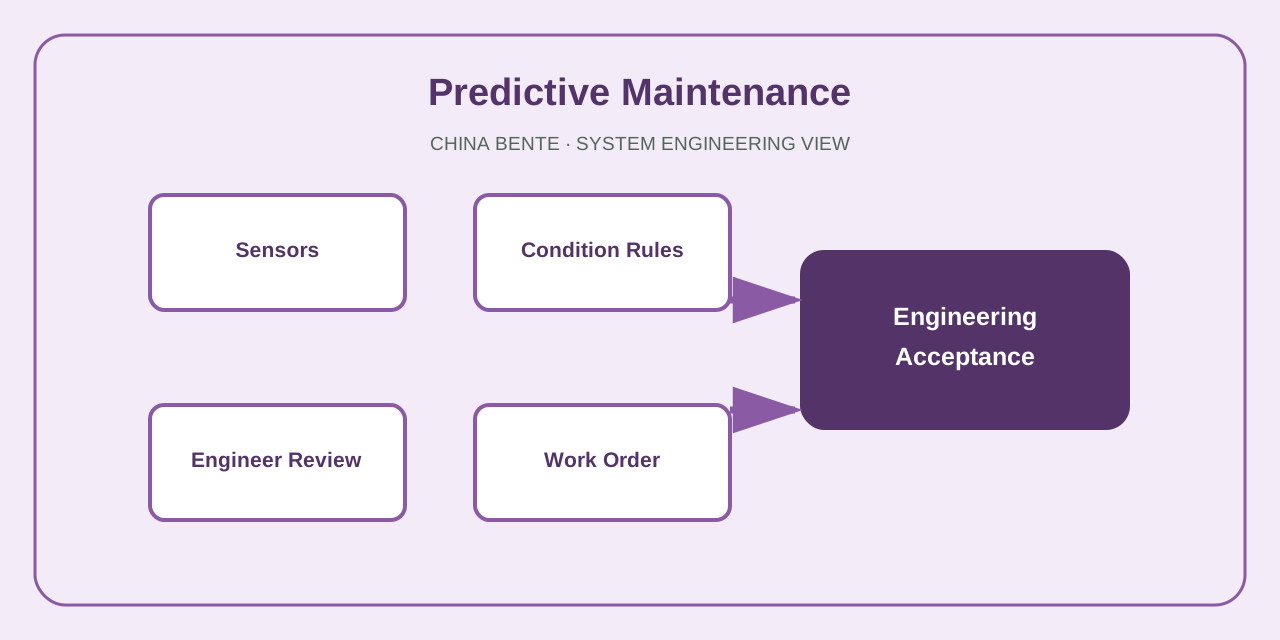
Deliverables include device and asset registry, calibration/reference checks, coverage and failover tests, dashboards/alarms, API records, backups, maintenance plan, training and data ownership.
Implementation and Commissioning
Implementation proceeds through pilot measurement and coverage survey, architecture/cyber review, device installation, platform configuration, reference validation, staged rollout and operational stabilization.
Project Evidence
No production gain, accuracy, uptime or savings figure is claimed without approved evidence. Any reference used during evaluation will identify its scope and verification status. This page uses a system architecture diagram and does not present a concept image as a completed client project.
Frequently Asked Questions
Can wireless sensors be used in a factory?
Yes when coverage, interference, battery, latency, security and environmental rating meet the use case.
Does IoT replace PLC or SCADA?
Usually no. It extends monitoring; critical control and protection remain in validated plant systems.
What happens when connectivity fails?
Edge buffering, quality indication and recovery behavior are designed, while essential local operation continues.
How often should data be sampled?
Rate follows the physical variable and decision need; vibration, energy and tank level require different strategies.
How are sensor batteries managed?
Expected duty, health reporting, replacement access and service responsibility are included in lifecycle planning.
Can data trigger maintenance work?
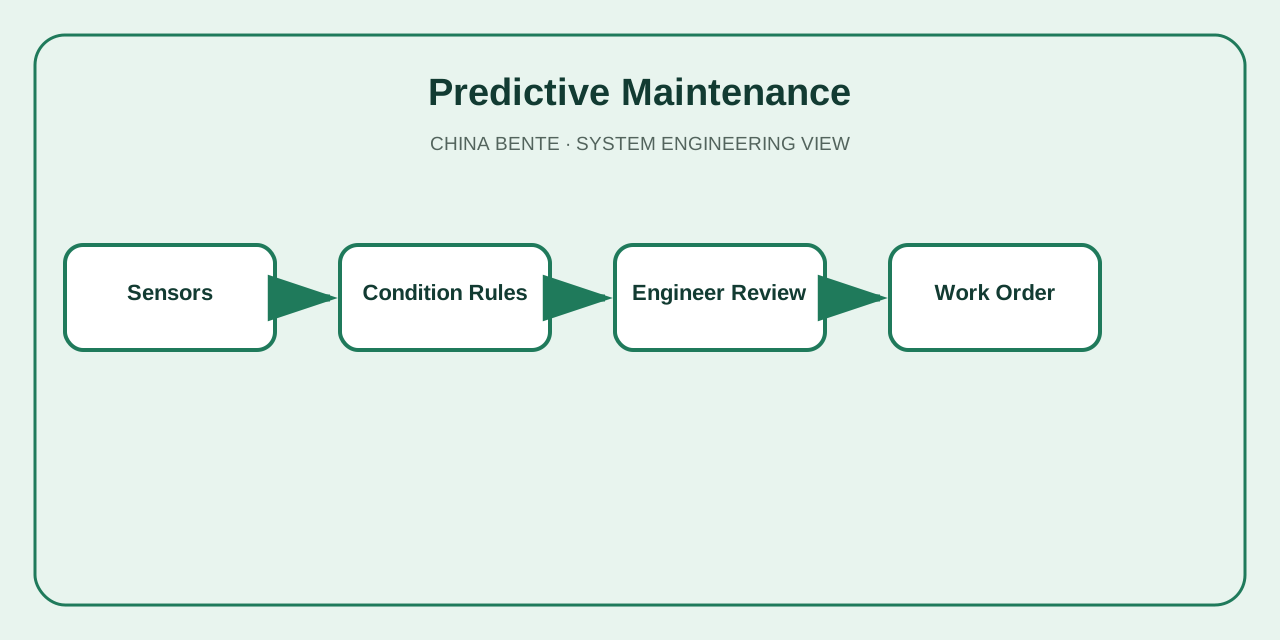
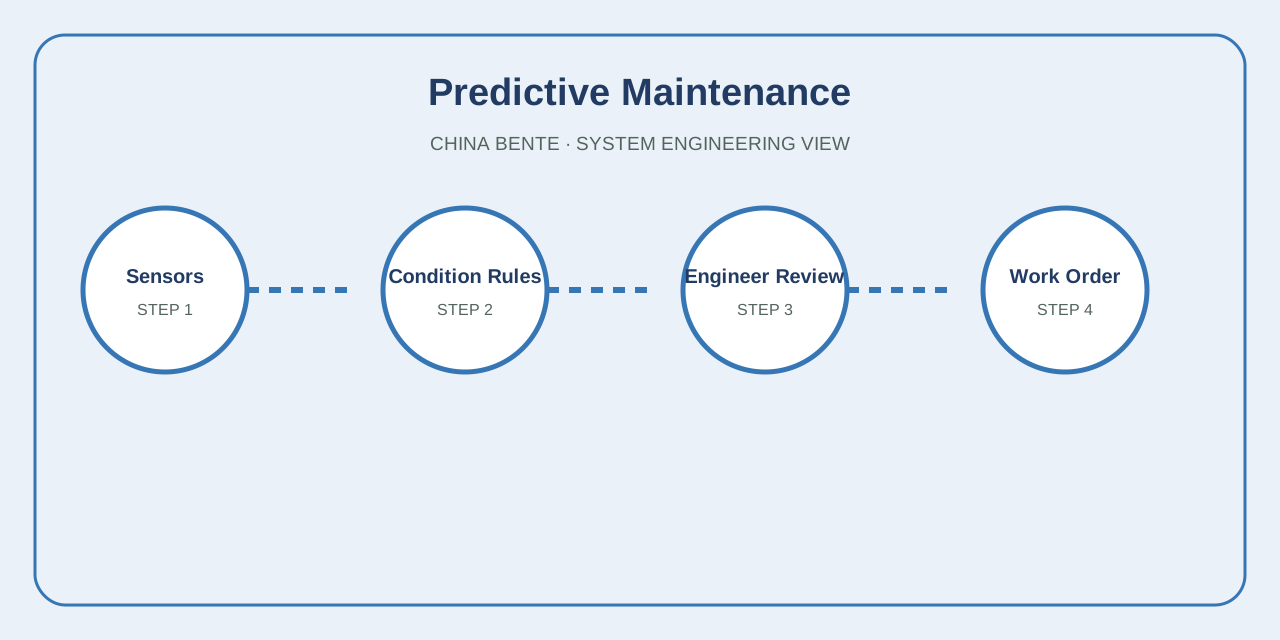
Yes through a governed rule and CMMS interface after alarm quality, ownership and response are validated.
Where is data stored?
At edge, on premises or in an approved cloud architecture based on retention, availability, security and owner policy.
What makes a good pilot?
A clear decision, representative assets, reference measurements, success criteria and an operational owner.
Related Engineering Links
Smart & Intelligent Solutions overview · AI Vision Inspection · Digital Twin & Data Platform · Projects & Cases · Request a Project Evaluation
Request a Project Evaluation
Provide process narratives, I/O or tag lists, network and system inventory, production objectives, existing backups, data interfaces, cybersecurity rules and acceptance priorities. Unknown information may remain TBC.