
SMART WAREHOUSING
WMS/WCS, AGV and intelligent transport, AS/RS, identification, inventory control and acceptance testing.
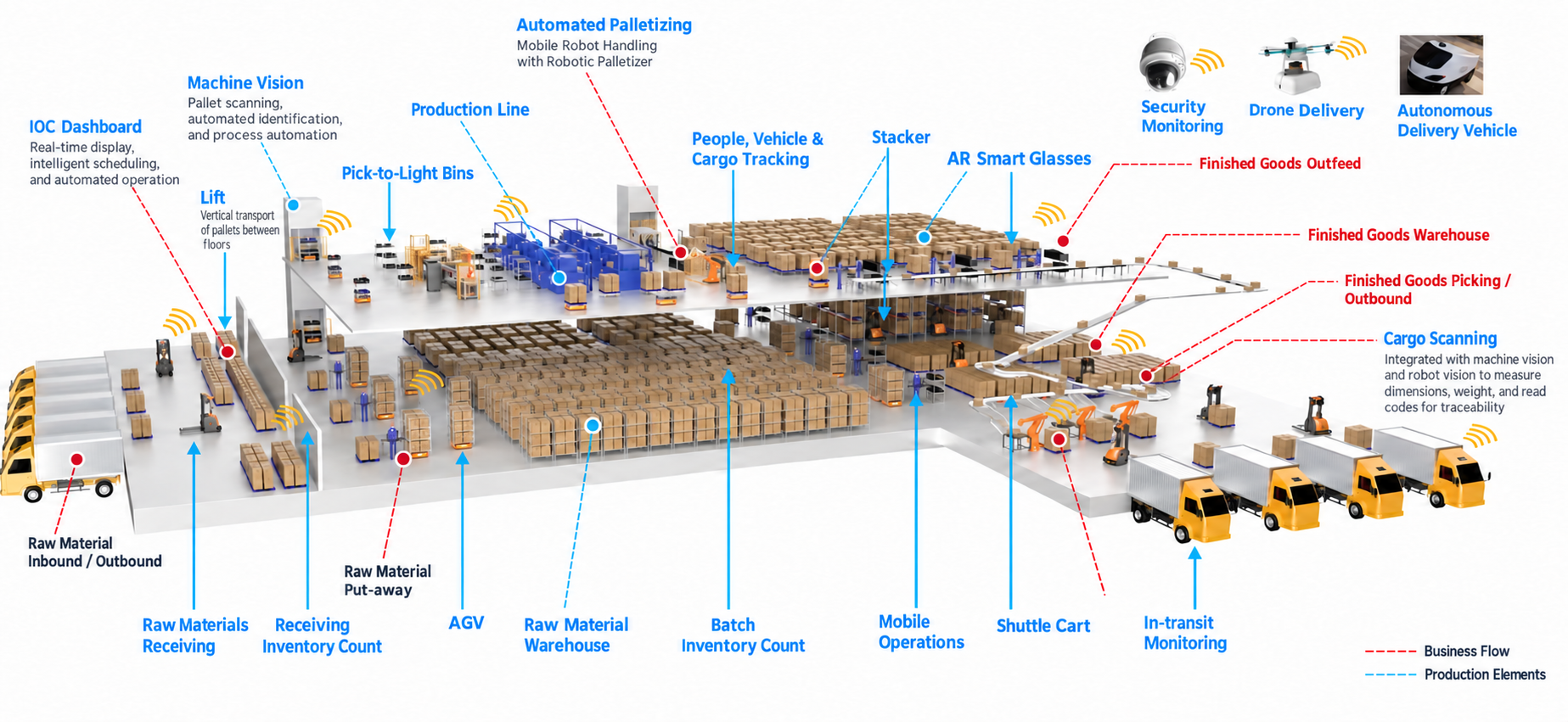
Warehouse process and data architecture
Receiving, identification, put-away, replenishment, picking, staging and dispatch are modeled as one flow. WMS applies inventory and location rules; WCS or fleet management dispatches equipment; PLC and safety controllers execute local motion.
- SKU, pallet, carton and bin envelope
- Inventory rules, location policy and exception states
- ERP, MES, WMS, WCS and equipment interfaces
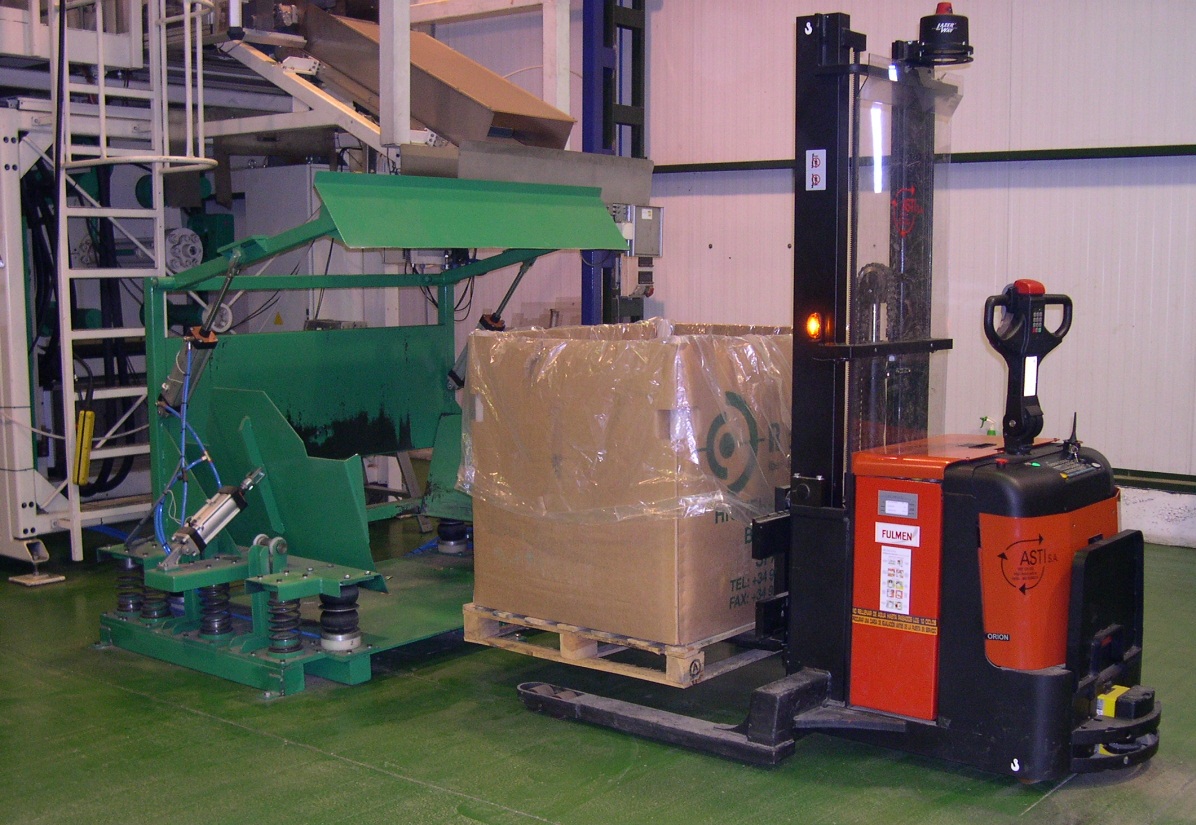
AGV, AMR and intelligent transport vehicles
Vehicle selection depends on payload, load carrier, lift height, route geometry, floor condition, door and lift interfaces, personnel interaction and traffic capacity.
- Payload, load center and handling module
- Routes, intersections, clearance and safety zones
- Charging, fleet manager and manual recovery
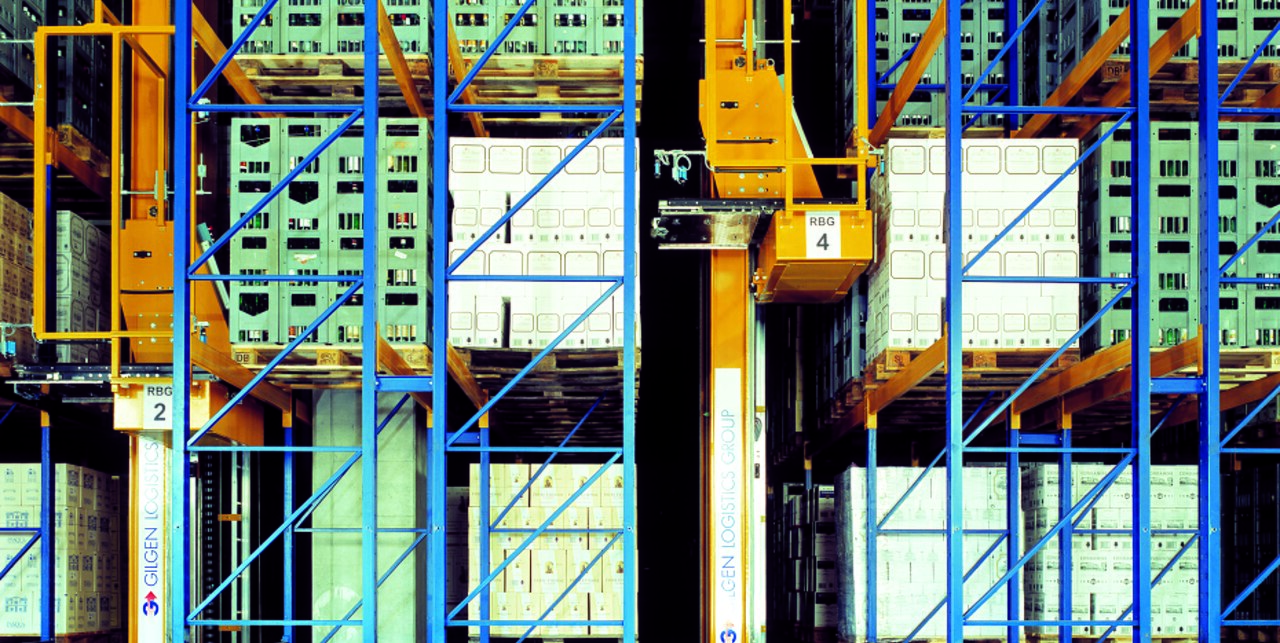
AS/RS and stacker-crane storage
High-bay systems coordinate rack geometry, storage positions, cranes, conveyors, lifts, fire compartments and maintenance access.
- Positions, aisle geometry and load dimensions
- Storage strategy and throughput model
- Fire, egress and emergency retrieval
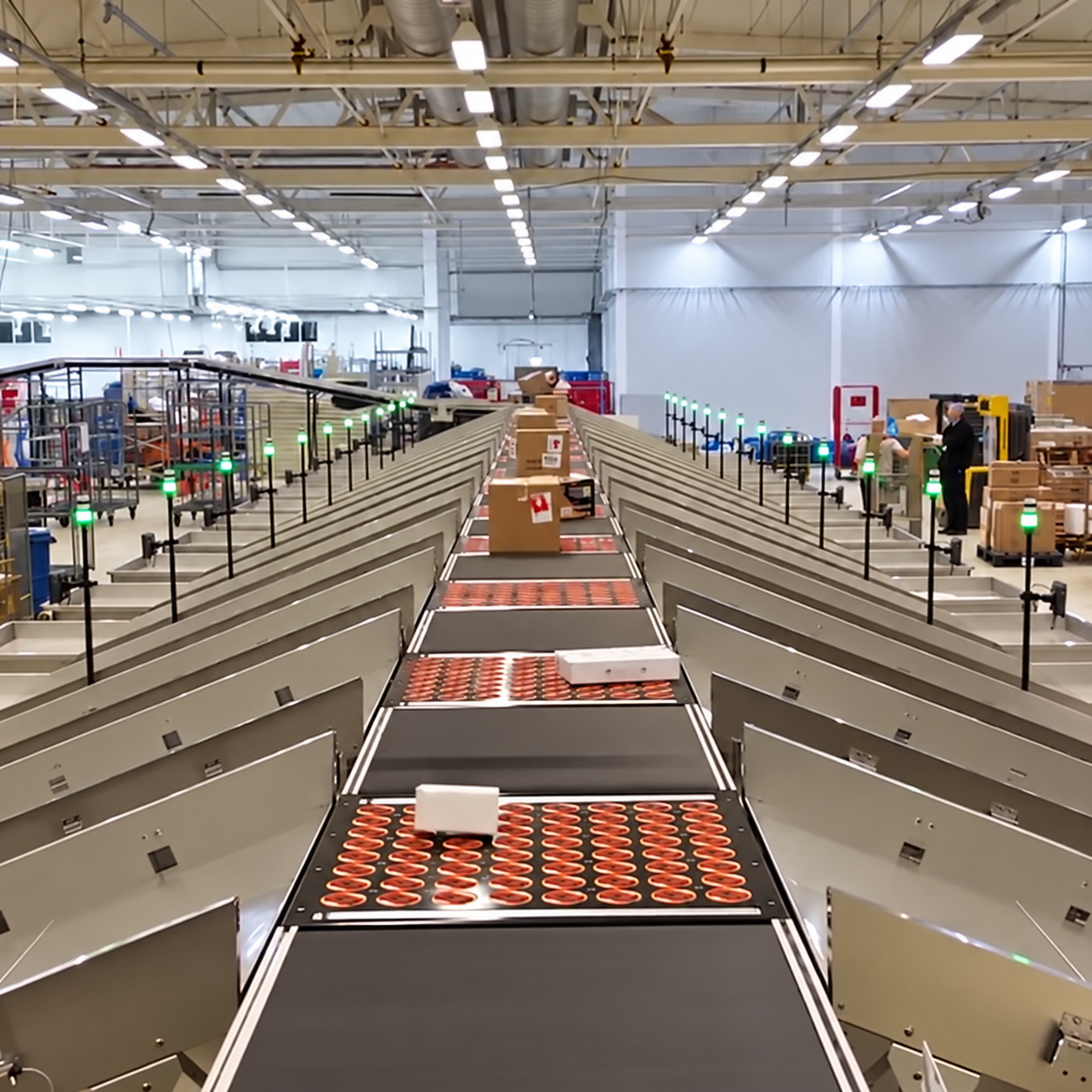
Identification and inventory control
Barcode, RFID, vision, dimensioning and weighing events establish material identity and status. Controls define unread items, mismatched weights, blocked destinations and reconciliation.
- Identification and read-rate basis
- DWS accuracy and exception handling
- Dashboards, alarms and audit trail
FAT, SAT and handover
Acceptance testing covers normal flow and recovery from realistic faults, with role-specific training and final controls documentation.
- Peak-flow and endurance tests
- Fault, recovery and power-restoration tests
- Training, backup and change control
Frequently asked questions
What information starts a warehouse design?
SKU and load data, receiving and order profiles, storage policy, layout, interfaces, shifts, growth and acceptance targets.
How are AGV or AMR quantities calculated?
From mission cycle time, travel paths, traffic, charging, availability, peak demand, recovery and reserve requirements.
When is AS/RS suitable?
When storage density, throughput, building geometry, fire strategy, load consistency, maintenance and lifecycle economics support it.
What is the difference between WMS and WCS?
WMS manages inventory and orders; WCS coordinates real-time equipment flow and routing.
Can existing racking and forklifts remain?
Yes, where condition, clearances, loads, traffic and interfaces meet the approved operating and safety basis.
How are unread or mismatched loads handled?
They enter a controlled exception route for identification, reconciliation and authorized re-entry.
How is warehouse throughput tested?
With an agreed load and order mix, peak and sustained tests, exception handling, recovery and host-system reconciliation.
What happens if the host system is unavailable?
Defined local safe states, buffers, manual workflows, restart and data reconciliation are tested before acceptance.
Define the system from the operating requirement
Share the site, process, equipment, users, data interfaces, constraints and acceptance objectives.
Request Project Evaluation →