
What it is
Safety upgrades must remove or control verified risks without creating hidden operating or maintenance hazards.
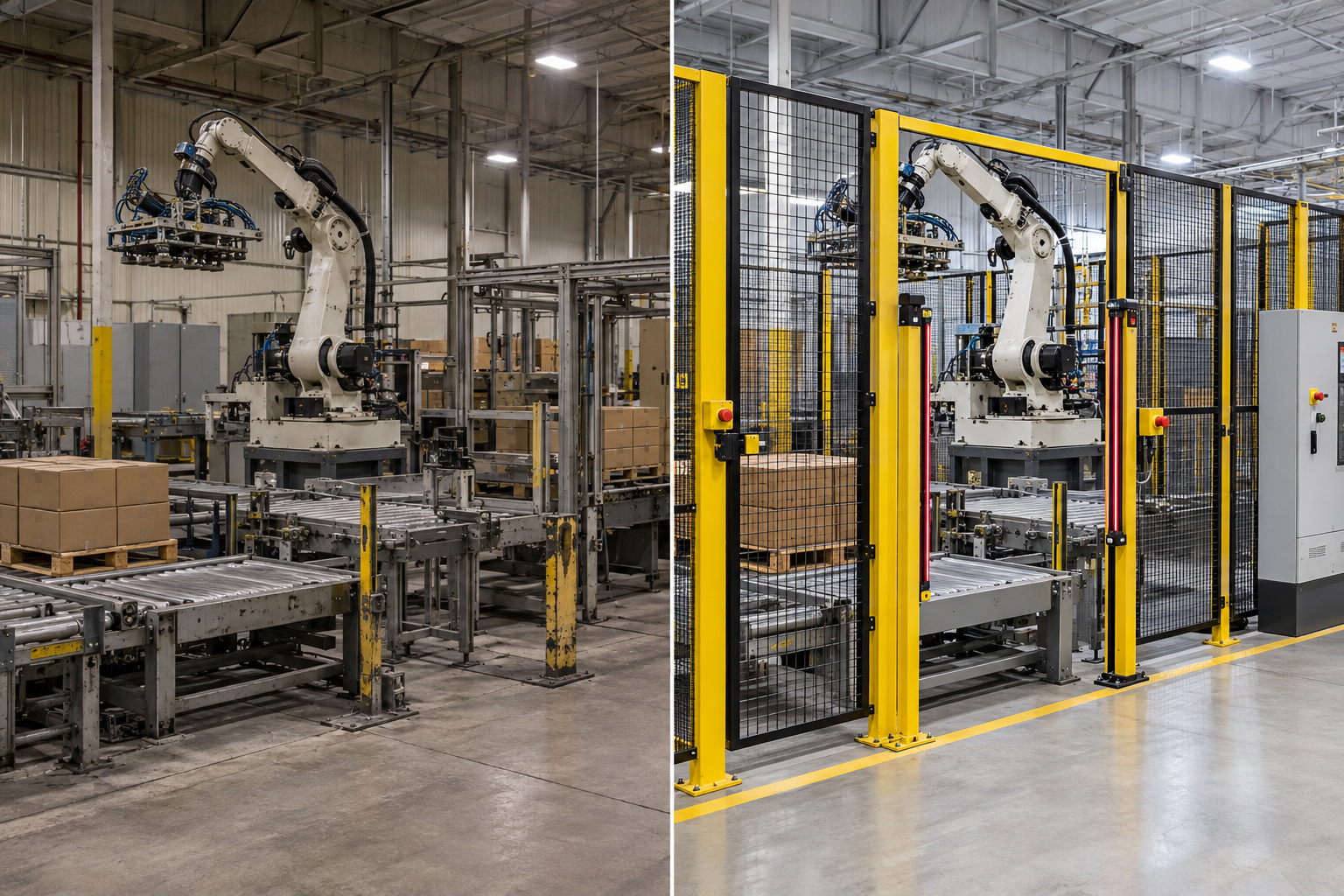
The scope reviews machines, processes, utilities, access, fire/life safety, electrical systems, chemicals, emissions, waste and work practices against the applicable project requirements. Engineering actions are prioritized by risk and coordinated with production.
Typical applications
- Machine-guarding and safety-control upgrades
- Electrical, fire or hazardous-area improvements
- Chemical, dust, fume or waste-control upgrades
- Compliance gaps during factory expansion or modernization
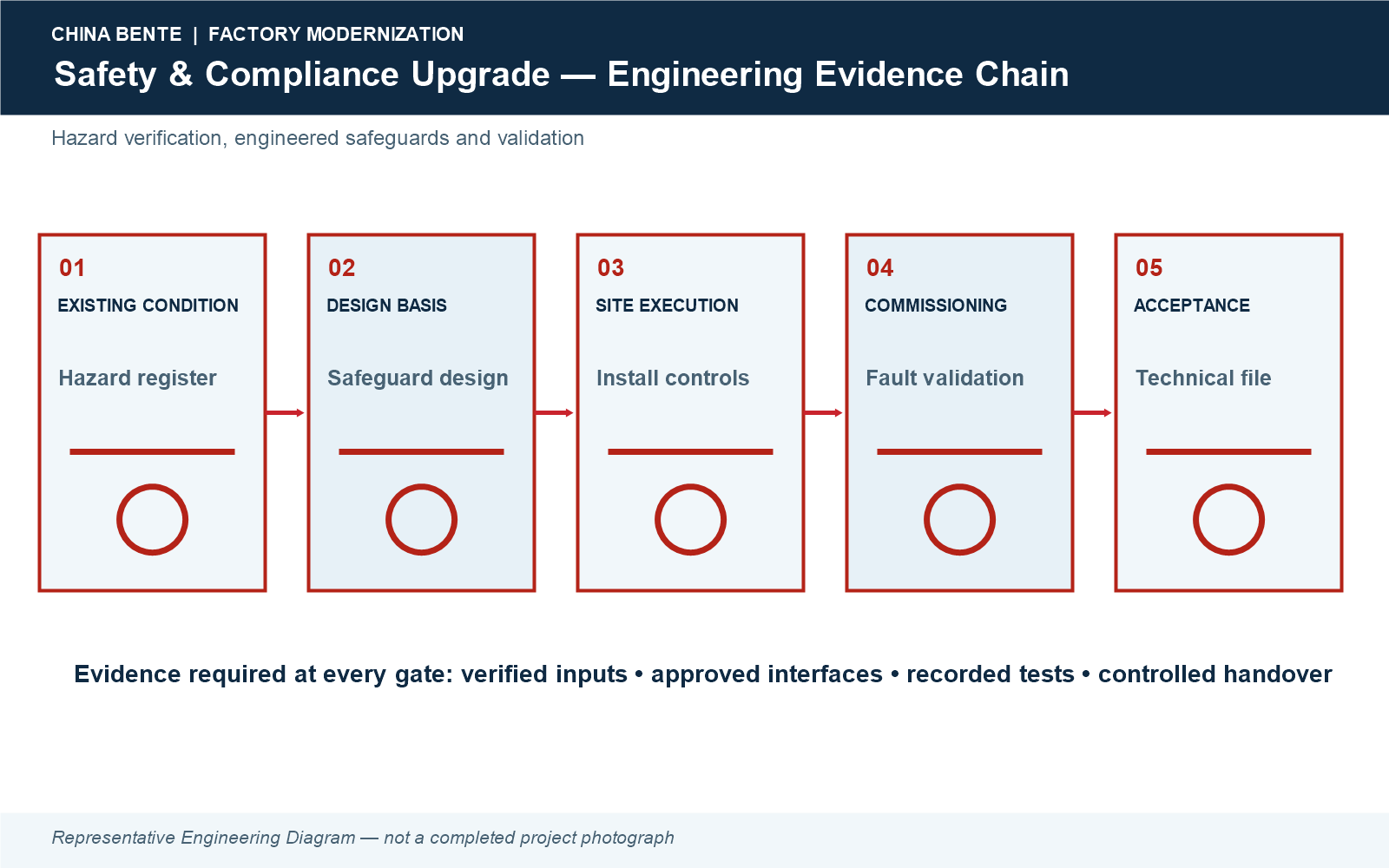
Representative sequence. Final outage, temporary-state and acceptance requirements are established from verified plant conditions.
Main equipment and system architecture
- Guards, interlocks and safe-access systems
- Electrical protection and isolation improvements
- Extraction, containment and environmental controls
- Fire detection, suppression and egress interfaces
- Monitoring, alarms and emergency systems
- Platforms, lifting and ergonomic improvements
Capacity balance and design basis
The design basis records applicable requirements, hazards, exposure, operating modes, maintenance tasks, users and consequence. Controls follow the approved hierarchy and are not selected from a generic checklist alone.
Retained / replaced / interface matrix
| Category | Engineering basis |
|---|---|
| Retained | Existing safeguards and systems proven effective, compliant and maintainable for the approved use. |
| Replaced | Deficient guards, devices, electrical components, controls or environmental systems confirmed by assessment. |
| Interfaces | Machine logic, emergency stops, fire systems, building egress, utilities, permits, maintenance and operating procedures. |
Utilities and site infrastructure
- Safe isolation and lockout points
- Emergency power and alarm interfaces
- Ventilation/extraction capacity
- Firewater or suppression supply where required
- Access, lighting and emergency routes
Customer engineering inputs
- Applicable codes, customer standards and audit findings
- Machine/process inventory and operating modes
- Incident, near-miss and maintenance history
- Existing drawings, risk assessments and procedures
- Production and shutdown constraints
Quality, automation and control
Safety functions, monitoring and records are verified by documented tests. Changes are configuration-controlled and linked to procedures, training and maintenance inspection.
CAPEX and OPEX drivers
CAPEX depends on hazard scope, guarding, controls, building/fire work and phased installation. OPEX includes inspection, testing, training, consumables and maintenance.
Safety, environmental and compliance
The project itself uses controlled isolations, temporary protection, permit-to-work, contractor management and readiness review before safeguards are returned to service.
Outputs and acceptance basis
Acceptance requires installed-control inspection, functional and fault tests, required measurements, documentation, training and closure of defined findings.
Shutdown, changeover and commissioning
High-risk items are sequenced first where practical. Temporary risk controls, shutdown work, validation and operational release are formally documented.
Before / after evidence
No compliance certification is claimed beyond the verified project scope and authorized assessor/authority roles. Published cases are at Projects & Cases.
Frequently asked questions
Does an upgrade guarantee legal compliance?
Compliance depends on the applicable jurisdiction, scope, implementation and authorized approvals; claims are limited accordingly.
How are priorities set?
Using verified risk, consequence, exposure, existing controls and required obligations.
Can production continue during upgrades?
Only with approved temporary controls and safe separation; some work requires shutdown.
How are safety circuits tested?
Against approved cause/effect and fault scenarios with documented results.
Are maintenance tasks included?
Yes, access, isolation and foreseeable maintenance modes are part of the assessment.
How are environmental gaps handled?
Emission, drainage, waste or containment actions are engineered from measured/source data and permit requirements.
What training is required?
Operators, maintenance and supervisors receive role-specific instruction for changed systems.
Who closes audit findings?
Responsibilities and evidence are assigned in the approved action register and governance process.
Request a Project Evaluation
Share current records, measured constraints and the required future state. Any unverified baseline, benefit or acceptance value remains TBC.