
What it is
Energy retrofits should be selected from measured consumption and production conditions, not generic saving percentages.
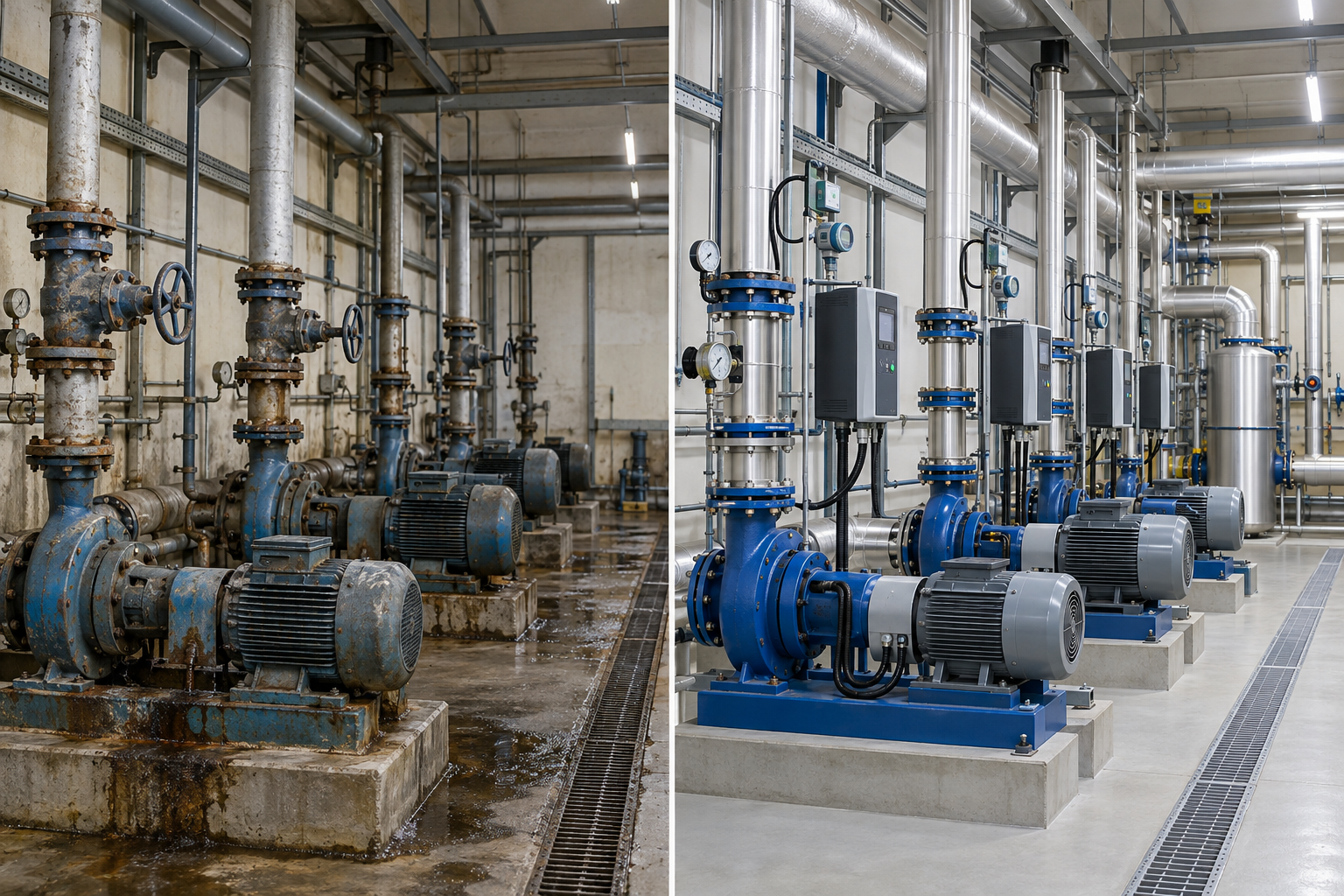
The assessment reviews electrical, thermal, compressed-air, cooling, pumping, ventilation and process loads against production and operating schedules. Measures are prioritized by engineering feasibility, reliability, safety, lifecycle and an agreed economic method.
Typical applications
- Compressed-air and motor-system optimization
- Boiler, steam and heat-recovery improvements
- Cooling, refrigeration and pumping upgrades
- Metering, controls and operational optimization
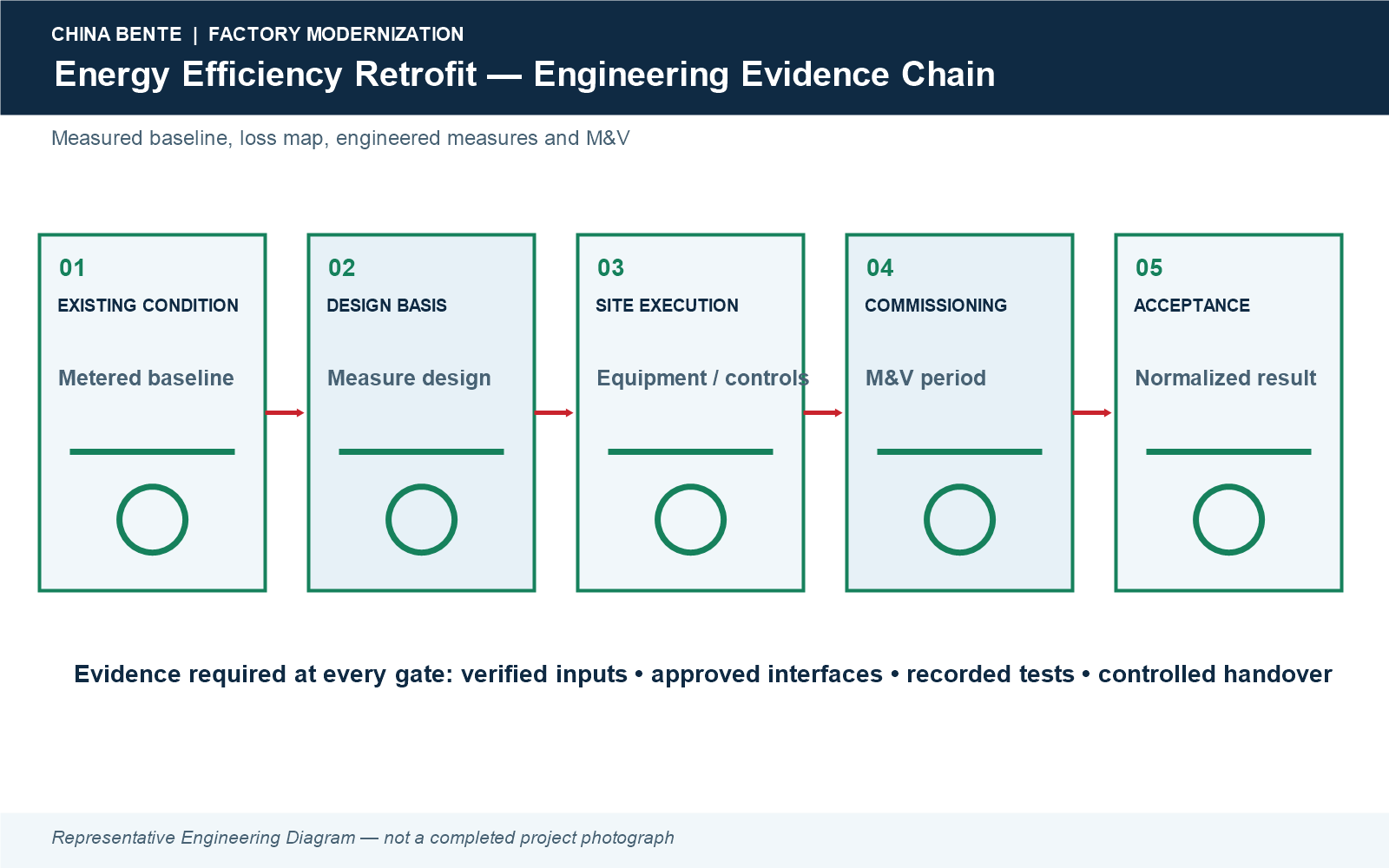
Representative engineering sequence. Final shutdown, cutover and performance criteria are agreed from verified plant data.
Main equipment and system architecture
- Revenue or submetering and data acquisition
- High-efficiency motors/drives where justified
- Compressors, pumps, fans or thermal equipment within scope
- Heat exchangers and recovery interfaces
- Controls, sequencing and utility dashboards
- Insulation, leak reduction and distribution improvements
Capacity balance and design basis
The baseline uses measured energy, operating hours, product mix, weather or process variables and equipment condition. Low/normal/peak cases and production-normalized indicators are defined before evaluating benefits.
Retained / replaced / interface matrix
| Category | Engineering basis |
|---|---|
| Retained | Efficient and serviceable equipment that meets target duty and control requirements. |
| Replaced | Assets justified by measured losses, condition, duty mismatch or lifecycle risk. |
| Interfaces | Production schedule, utility headers, controls, metering boundaries, maintenance and tariff/energy-source conditions. |
Utilities and site infrastructure
- Electrical and thermal metering plan
- Utility pressure/temperature/flow measurements
- Distribution losses and return systems
- Heat rejection and ventilation constraints
- Production-critical redundancy requirements
Customer engineering inputs
- Energy bills and interval data
- Production and shift records
- Equipment list, ratings and maintenance condition
- Utility maps and measured operating points
- Tariffs, fuel data and required economic method
Quality, automation and control
Energy changes are checked against product quality, process stability and equipment reliability. Controls and metering are validated so savings are not achieved by compromising production requirements.
CAPEX and OPEX drivers
CAPEX depends on equipment, distribution modifications, metering, controls and shutdown work. OPEX and benefit depend on verified load, operating hours, tariffs, maintenance and normalized production.
Safety, environmental and compliance
The design manages electrical work, pressure and thermal systems, refrigerants, hot surfaces, rotating equipment, temporary connections and safe restart.
Outputs and acceptance basis
Acceptance includes equipment performance, controls, stable production, calibrated metering and an agreed measurement-and-verification period.
Shutdown, changeover and commissioning
Work is scheduled around production, with pre-installation surveys, temporary services where needed, commissioning and tuning under representative operating conditions.
Before / after evidence
No fixed savings, ROI or payback is claimed. Results require an approved baseline and measurement plan; see Projects & Cases for published evidence.
Frequently asked questions
How is an energy baseline created?
From measured consumption normalized for production, operating time and relevant process or weather variables.
Are savings guaranteed?
Only project-specific performance may be agreed after baseline, scope and measurement conditions are approved.
Can efficiency reduce production capacity?
It should not; options are checked against process, quality, reliability and peak demand.
What are common compressed-air losses?
Leaks, excess pressure, inappropriate uses, poor sequencing and distribution restrictions.
When is a variable-speed drive suitable?
When the duty profile and process control benefit support it and minimum operating conditions are protected.
How is heat recovery assessed?
Source and sink temperatures, timing, cleanliness, distance, control and lifecycle are evaluated.
What is measurement and verification?
It is the agreed method for comparing normalized pre- and post-project energy performance.
Can metering be added first?
Yes, metering can establish evidence before larger capital decisions.
Request a Project Evaluation
Share current drawings, operating records, constraints and the required future state. Any missing baseline or target remains TBC until verified.