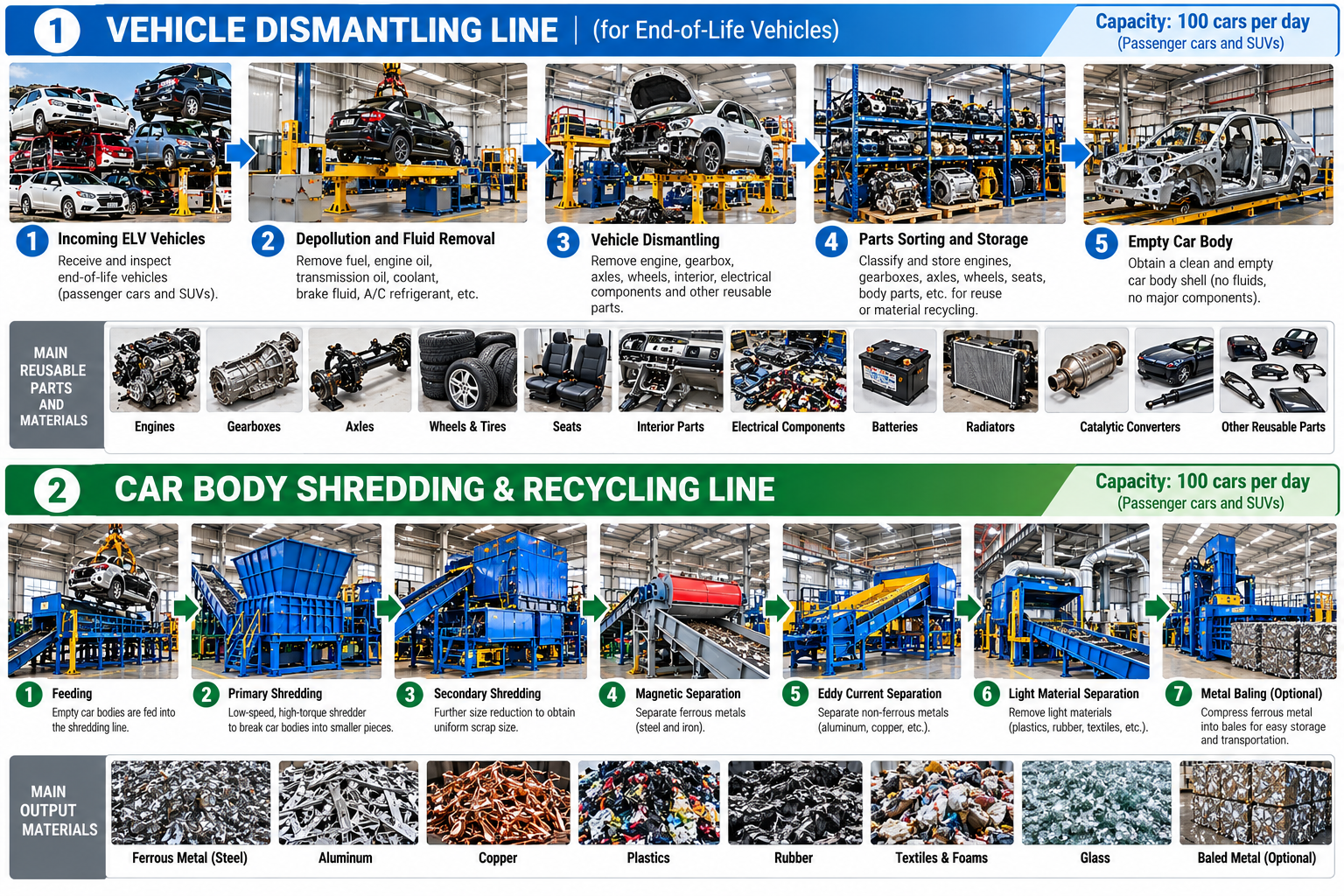
Process Flow
Related project: USA End-of-Life Vehicle Dismantling & Recycling Project
What It Is
End-of-life vehicle recycling safely removes fuels, oils, batteries, refrigerants, airbags, tires and reusable parts before dismantling or shredding the remaining body. The facility combines depollution compliance, parts traceability, ferrous and non-ferrous recovery and controlled management of shredder residue.
Applications and Feedstock Boundaries
- Passenger vehicles and light commercial vehicles
- Defined heavy-vehicle streams with suitable handling
- Fleet retirement programs
- Vehicle dismantling and reusable-parts recovery
- Shredder-feed preparation and downstream metal separation
Main Equipment and System Architecture
- Vehicle reception, drainage and quarantine area
- Depollution rigs, fluid tanks and refrigerant recovery
- Lifts, dismantling tools and parts inventory systems
- Baler, shear or car flattener as applicable
- Heavy-duty shredder with dust and explosion controls
- Magnetic, eddy-current, sensor and density separation
- Firewater containment, hazardous stores, weighbridge and traceability system
The facility separates wet depollution, reusable parts, heavy processing, product storage and hazardous stores; drainage prevents contaminated water leaving controlled zones.
Capacity and Design Basis
Capacity depends on vehicle type mix, completeness, depollution time, parts-recovery strategy, body preparation, shredder duty, storage and outbound logistics.
| Feed envelope | Vehicle age, size, drivetrain, battery chemistry, fuel type, damage condition, missing components and exceptional hazards are recorded. Electric and hybrid vehicles require specific isolation procedures. |
|---|---|
| Capacity logic | Minimum, normal and peak receipt rates, storage autonomy, operating hours and downstream bottlenecks are defined from verified records. |
| Product basis | Outputs may include reusable parts, ferrous scrap, aluminium and other non-ferrous concentrates, tires, glass, fluids and controlled residue, each with defined acceptance routes. |
| Unknowns | Unverified composition, recovery, yield, purity, price and disposal route remain TBC; no fixed performance is invented. |
Utilities and Infrastructure
Power, compressed air, ventilation, drainage, firewater and containment, lifting equipment, roads, scales, hazardous storage and data systems are required.
Required Customer Engineering Inputs
Customers provide vehicle volumes and mix, legal certificate and deregistration workflow, parts strategy, product buyers, hazardous-waste routes, site plan, utilities, fire rules and environmental limits.
Automation, Sorting and Quality Control
The system records vehicle identity, depollution completion, component inventory, weights and output destinations. Shredder load, bearings, dust and fire detection are monitored with interlocks.
CAPEX and OPEX Drivers
CAPEX depends on depollution automation, dismantling depth, shredder scale, metal separation, buildings and environmental controls. OPEX includes labor, power, wear parts, dust/fire systems, hazardous disposal and residue transport.
Safety, Environmental and Compliance
Hazards include fuel vapor, high-voltage batteries, undeployed airbags, refrigerants, heavy lifting, sharp metal, fire, dust explosion and contaminated liquids. Competency, isolation, drainage and emergency plans are essential.
Outputs and Acceptance Basis
Acceptance verifies depollution workflow, containment, throughput under agreed vehicle mix, separation operation, traceability, fire and dust controls, product sampling, documentation and training.
Implementation and Commissioning
Work proceeds through regulatory mapping, vehicle characterization, flow and zoning design, equipment selection, civil and containment works, FAT, installation, safety validation, vehicle trials and ramp-up.
Project Evidence
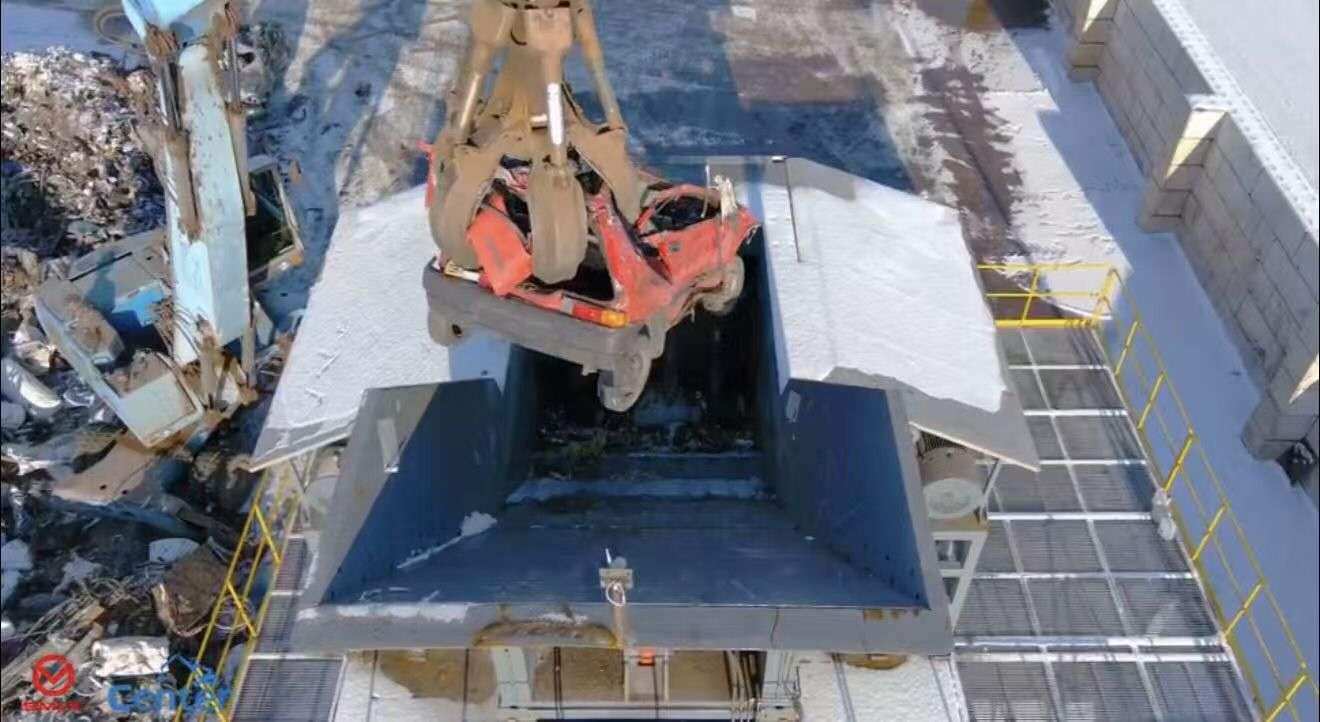
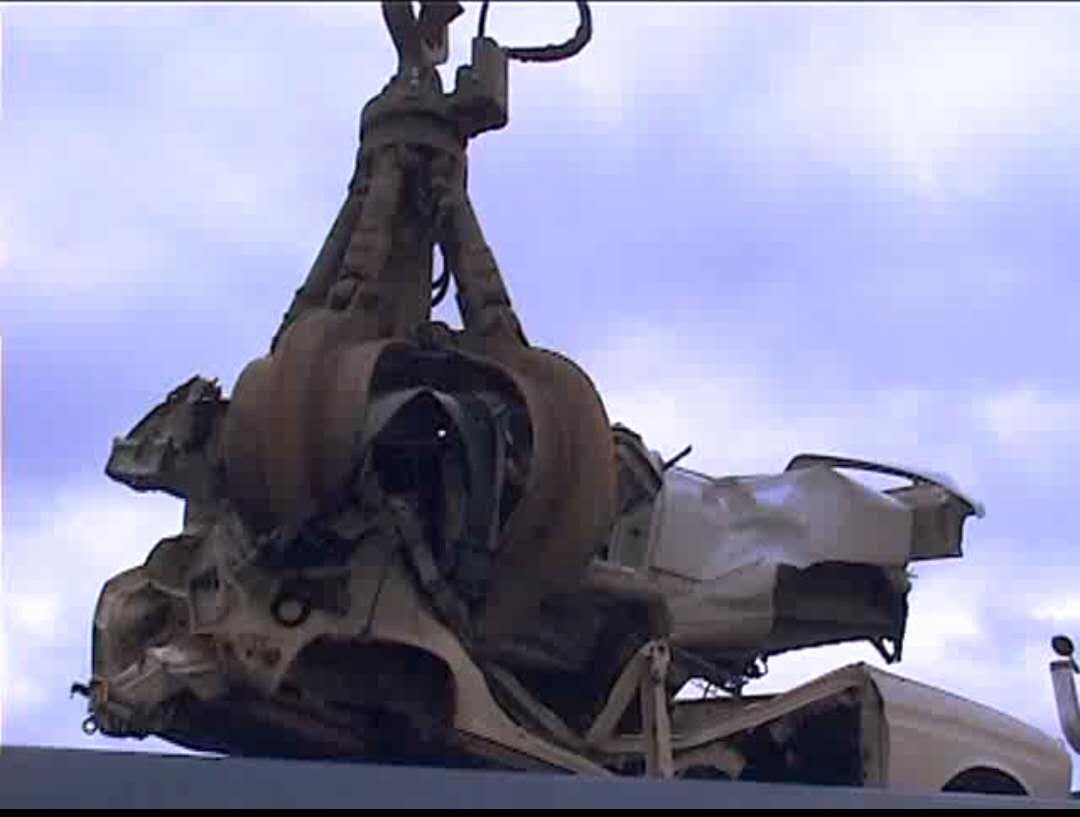
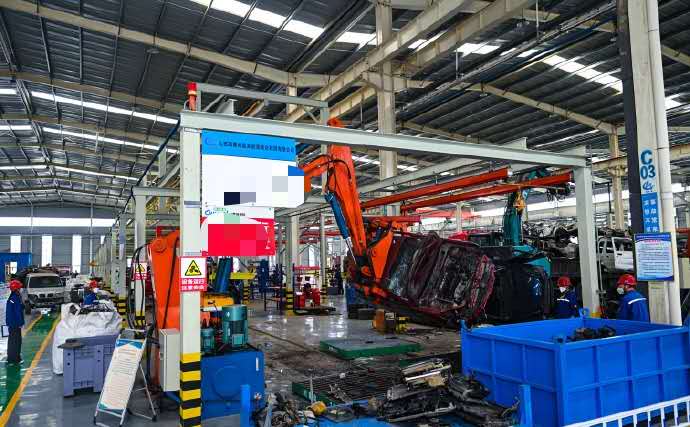
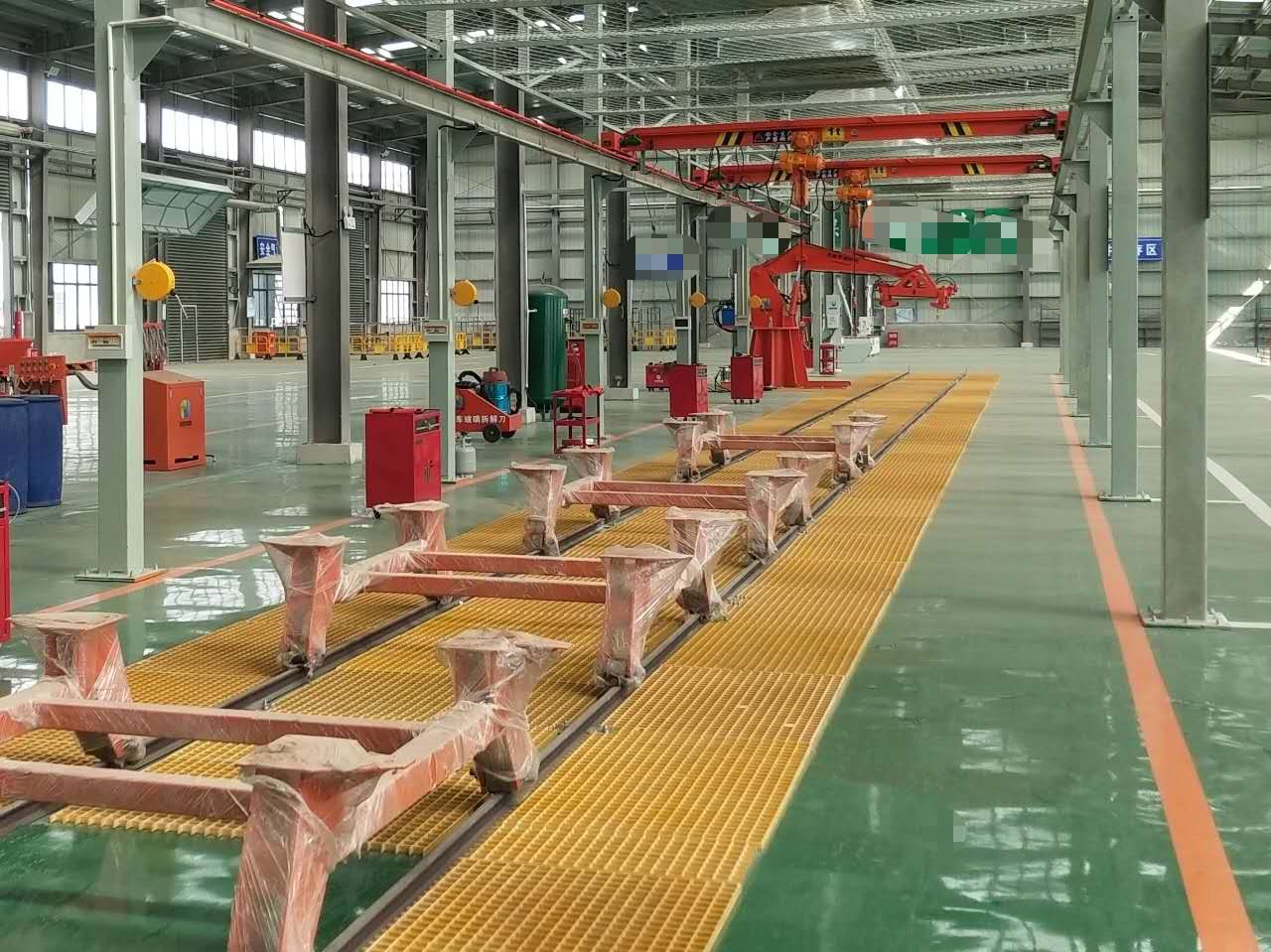
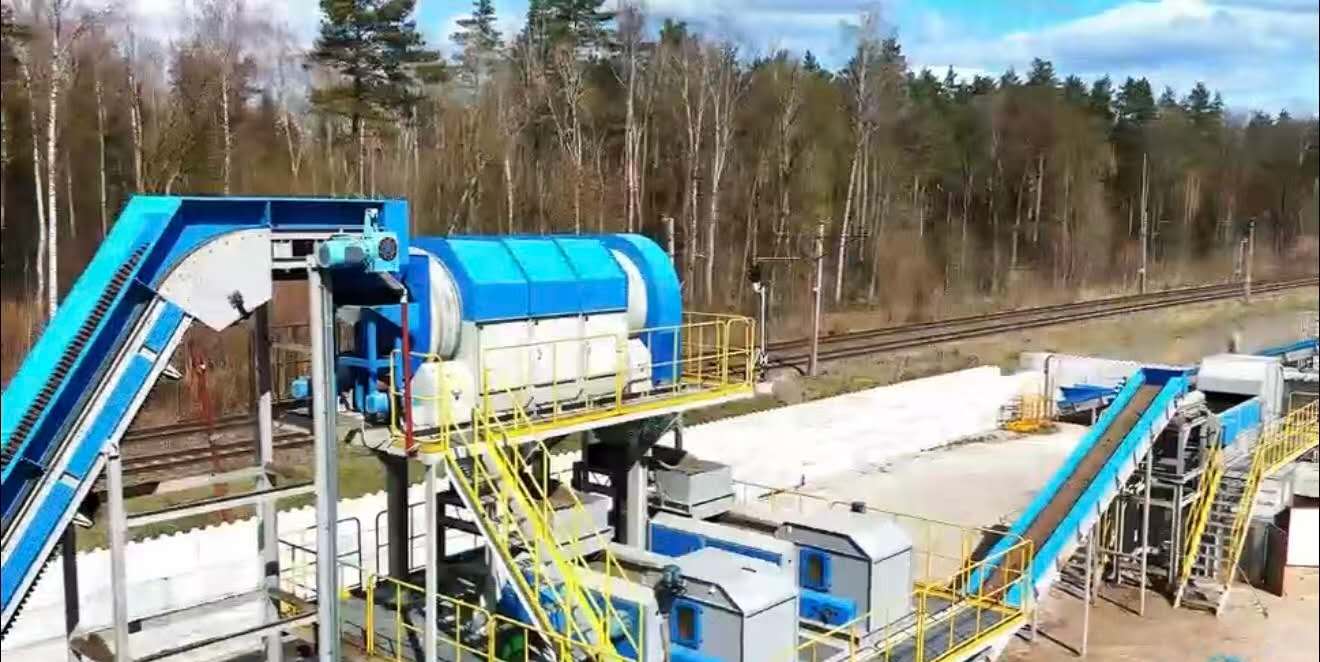
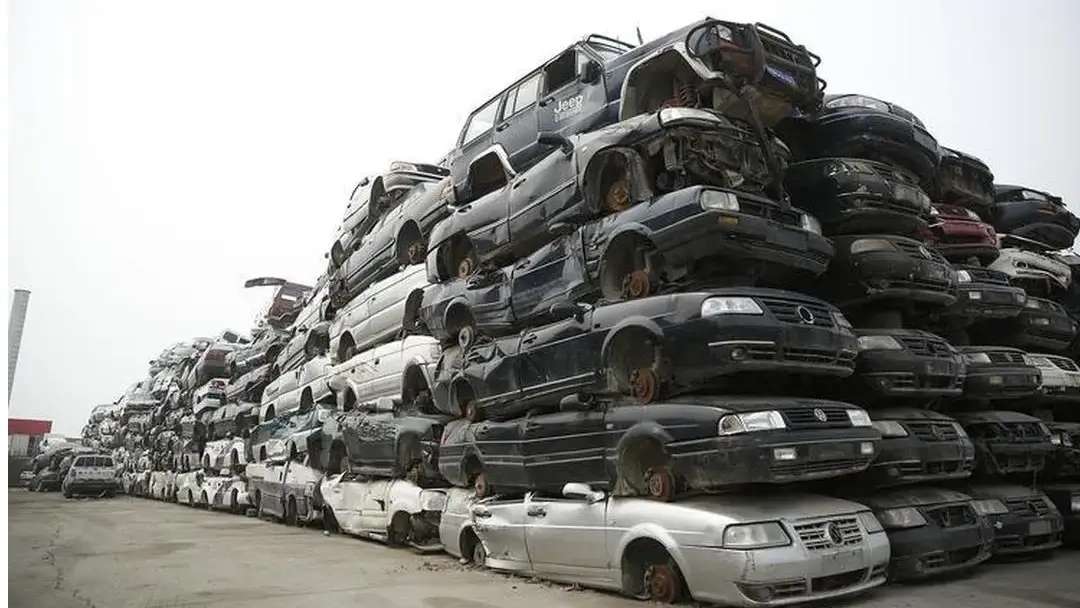
Supplied photographs illustrate vehicle receiving, depollution, dismantling and mechanical-processing references. Final configuration, capacity and permitted output routes depend on the vehicle mix, approved scope and local requirements.
Frequently Asked Questions
Must every vehicle be depolluted before shredding?
Yes. Fluids, batteries, refrigerants, airbags and other controlled components must be addressed according to the approved procedure.
Can electric vehicles use the same line?
They require trained personnel, high-voltage isolation, battery assessment and specific quarantine and emergency procedures.
Are reusable parts part of the project?
They can be, but dismantling depth, testing, inventory and sales processes must be defined separately.
How are fluids stored?
In compatible labeled tanks within contained areas, with transfer, inspection and emergency arrangements.
What controls shredder fires?
Depollution, feed inspection, temperature and spark detection, housekeeping, suppression and safe shutdown are coordinated.
How is metal recovery measured?
Through calibrated weights, sampling and mass balance under an agreed vehicle mix and operating condition.
What happens to shredder residue?
It is sampled and routed to approved recovery, treatment or disposal; a beneficial outlet is not assumed.
Which records are needed?
Vehicle identity, depollution checklist, component and fluid removal, weights and dispatch destinations are maintained.
Related Engineering Links
Waste Recycling & Resource Recovery Systems overview · Construction & Demolition Waste Recycling · E-waste Recycling · Projects & Cases · Request a Project Evaluation
Request a Project Evaluation
Provide feedstock samples or analyses, quantity history, contamination, existing layout, target products, utilities, compliance limits and local outlet or disposal requirements. Unknown information may remain TBC.
Request a Project Evaluation View Waste Recycling & Resource Recovery
End-of-Life Vehicle: Receiving, Dismantling and Material-Recovery References
Supplied ELV photographs show separate receiving, depollution and dismantling, mechanical processing and process-route references. Final equipment selection, capacity and permitted output routes depend on the vehicle mix, depollution scope and local requirements.