
Manure to Organic Fertilizer: Raw Material, Equipment and Products
Process Flow
Equipment / System Architecture
Applications and Product Routes
Agricultural residues, suitable food-processing by-products, segregated kitchen and market waste, livestock manure and other clean organic materials are evaluated separately. Fertilizer, soil-improvement and legally compliant feed-ingredient routes are not interchangeable.
Design Basis and Customer Inputs
Engineering requires representative feed analyses, seasonal quantity, moisture, solids, C/N ratio, pathogens, metals, packaging and other contaminants, intended product, operating hours, plot limits and local fertilizer or feed rules.
Utilities and Interfaces
Power, process water, drainage, ventilation, thermal energy for drying, odor extraction, wastewater handling, storage and packing interfaces are confirmed for the selected route.
Outputs, Cost Drivers and Acceptance
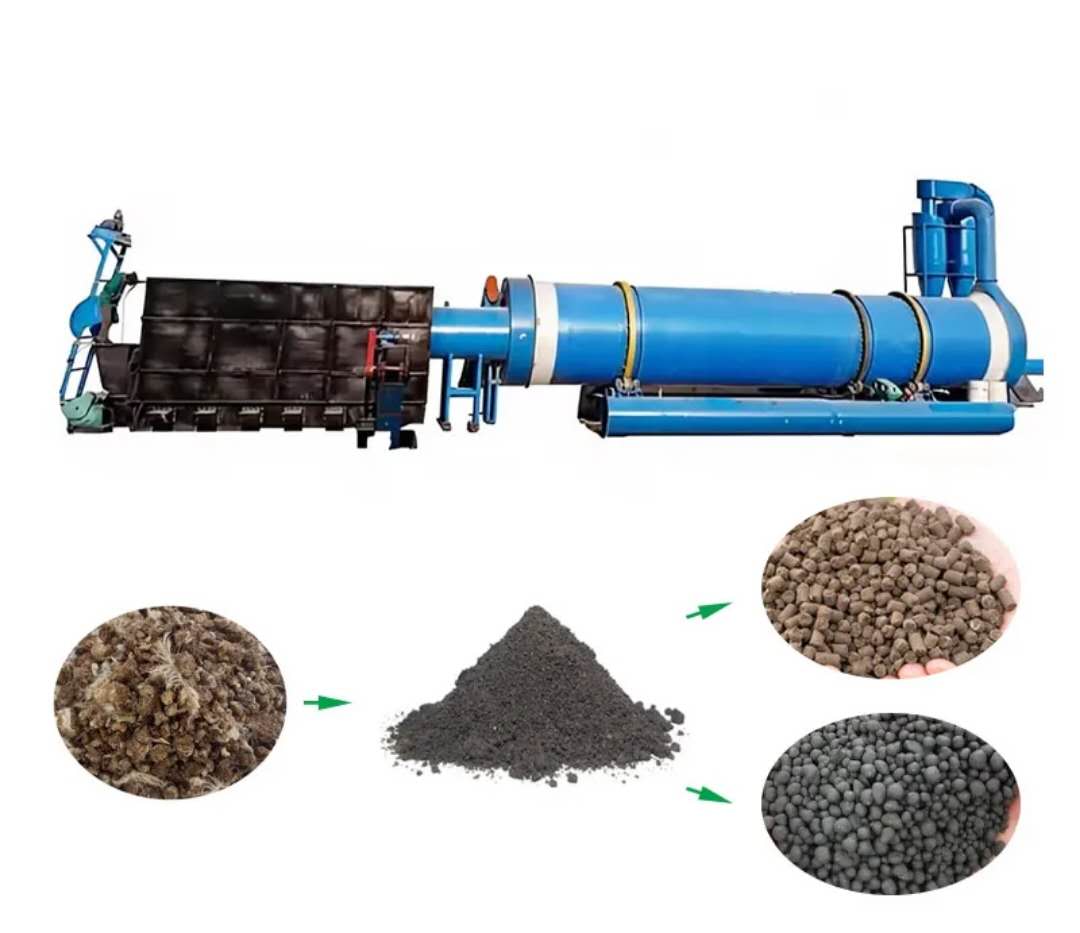
Possible outputs include stabilized compost, formulated organic fertilizer, granules or pellets, and only where legally and technically acceptable, verified feed ingredients. CAPEX and OPEX depend on depackaging, hygiene duty, drying load, residence time, odor control, formulation and packing. Acceptance uses agreed feed and product test criteria.
Safety and Environmental Controls
Dust, bioaerosol, pathogen, odor, wastewater, fire and incompatible-material controls are developed for the feed.
Frequently Asked Questions
Which feedstocks can be evaluated?
Agricultural residues, suitable food-processing by-products, segregated food waste, manure and other clean organic materials can be evaluated after representative sampling.
Are fertilizer and feed routes interchangeable?
No. Feed use requires a much stricter and legally permitted raw-material basis, hygiene controls and product testing. Mixed or unsafe waste is excluded.
How are packaged food residues handled?
A project may include depackaging, screening and contaminant removal before biological or thermal conditioning, subject to the packaging mix.
What determines whether composting or fermentation is used?
Moisture, biodegradability, contamination, odor constraints, required product and available residence time determine the selected route.
What laboratory data are required?
Representative moisture, solids, nutrients, C/N ratio, pathogens, metals, contaminants and any locally regulated product parameters are required.
Can the line produce pellets or granules?
Optional drying, milling, blending, granulation or pelletizing can be evaluated after the product formulation and acceptance specification are confirmed.
How is odor controlled?
Enclosed reception, controlled aeration, covered transfer, extracted-air treatment and disciplined housekeeping are selected for the site and feedstock.
What defines final acceptance?
Acceptance is based on agreed feed range, equipment function, hygienic control, product testing, utility use and compliant management of rejects and wastewater.
Request a Project Evaluation
Share representative waste characterization, throughput range, required outputs, utilities, site constraints and compliance requirements.
Start the engineering evaluation