
Integrate solar electricity with a correctly sized cold room, refrigeration system and operating reserve for produce, dairy, meat or other temperature-sensitive products. Product cooling duty comes before the PV or battery nameplate.
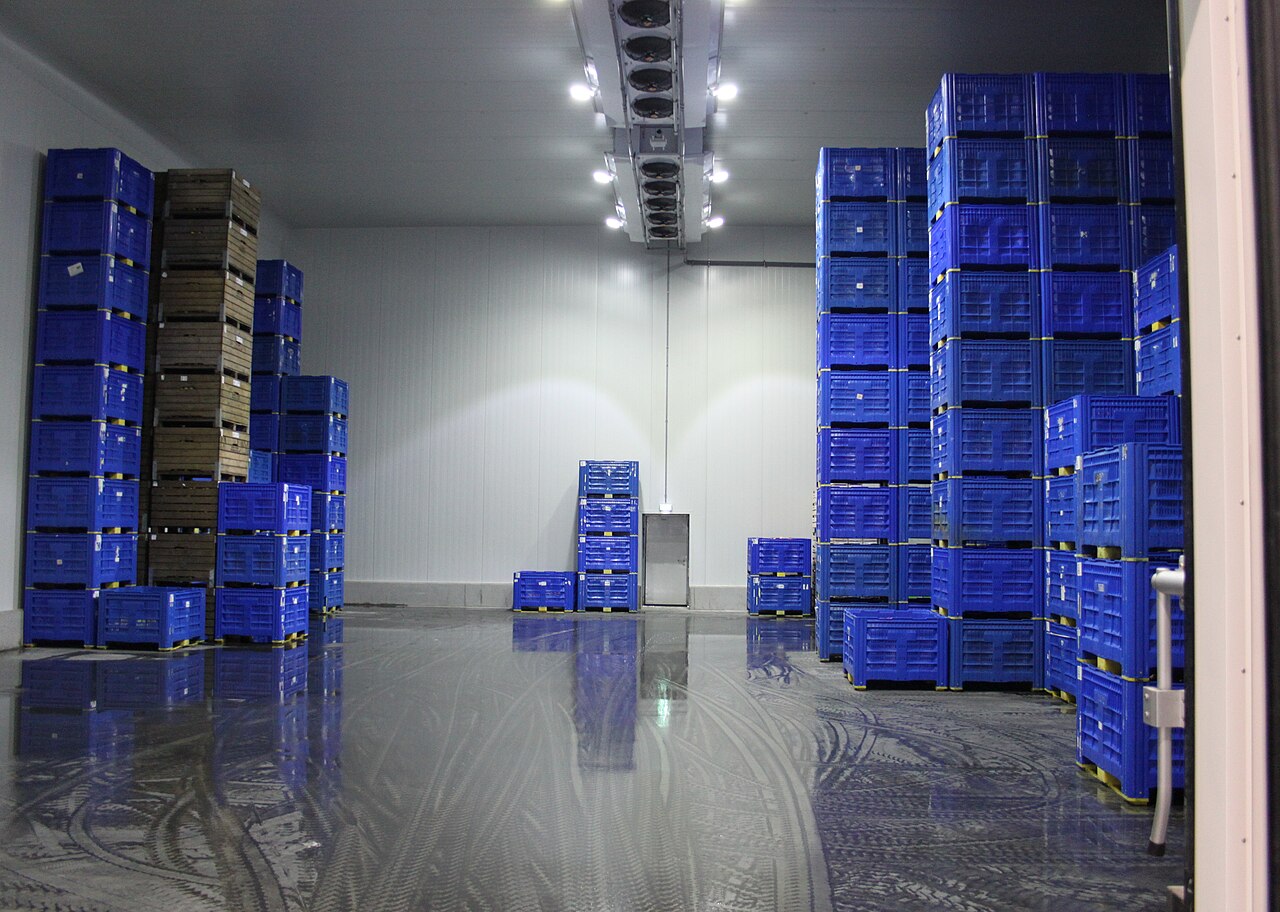
Process and equipment architecture
- Define product and daily intake
- Calculate cooling and pull-down duty
- Design enclosure and refrigeration
- Match solar and reserve strategy
- Install controls and alarms
- Validate temperature and product duty
Main equipment and supply boundary
Insulated enclosure, doors and vapor barrier, refrigeration compressor/condensing unit, evaporators, temperature sensors, controls and logging, PV equipment, electrical protection and optional batteries, thermal storage or backup supply.
Technical parameters and capacity basis
| Parameter | Unit / basis | Design requirement |
|---|---|---|
| Storage volume | m³ / pallet positions | Define usable loading pattern, aisles and product density. |
| Product throughput | t/day | Include entry temperature and pull-down time. |
| Room conditions | °C; relative humidity % | Set from the actual product and food-safety requirements. |
| Cooling duty | kW cooling | Include product, infiltration, transmission, fans, lighting and defrost. |
| Design ambient | °C; humidity | Confirm local extremes and condenser operating limits. |
| Energy supply | kWp; kWh/day | Match hourly refrigeration demand to solar output and grid availability. |
| Reserve | kWh / hours | Choose battery, thermal storage or backup from temperature-hold and outage requirements. |
Numerical equipment ratings and guaranteed values are established in the project datasheet after the operating inputs are verified; units shown here are not fixed product ratings.
Engineering inputs
Product type and handling; daily intake and entry temperature; target temperature/humidity; storage time; door openings; site weather; electricity availability; food-safety rules and future expansion.
Frequently asked questions
Can solar run a cold room at night?
Night operation needs grid supply, suitably sized batteries, thermal storage or another backup arrangement. Daytime PV alone is not continuous refrigeration.
How is refrigeration capacity selected?
Calculate product cooling, enclosure transmission, infiltration, internal gains and defrost at the design ambient and agreed pull-down time.
Is battery storage always required?
No. Compare the available grid, outage tolerance, thermal inertia, thermal storage and required product protection before selecting batteries.
Can frozen and chilled products share one room?
Only where product and food-safety conditions permit. Different temperature or hygiene requirements often require separate rooms or zones.
What prevents condensation and icing?
Correct insulation, vapor control, door management, drainage, humidity control and defrost design are needed.
How is product temperature monitored?
Define room and product measurement points, logging intervals, calibration, alarms and the responsible operator response.
Can an existing cold room be converted?
Audit insulation, refrigeration condition, load profile and controls before adding solar and reserve equipment.
What is the acceptance test?
Test room stability, pull-down or product duty, alarms, logging, defrost and the agreed outage/reserve scenario under defined loading and ambient conditions.