
Use solar thermal heat for suitable factory hot-water, preheating and drying duties. Collectors, heat exchange, storage and auxiliary heating must match the actual process temperature and operating schedule.
Process and equipment architecture
- Measure process temperature and heat duty
- Select collector and heat-transfer loop
- Design storage and auxiliary heat
- Integrate process heat exchanger
- Commission controls and safety
- Test useful heat and drying duty
Main equipment and supply boundary
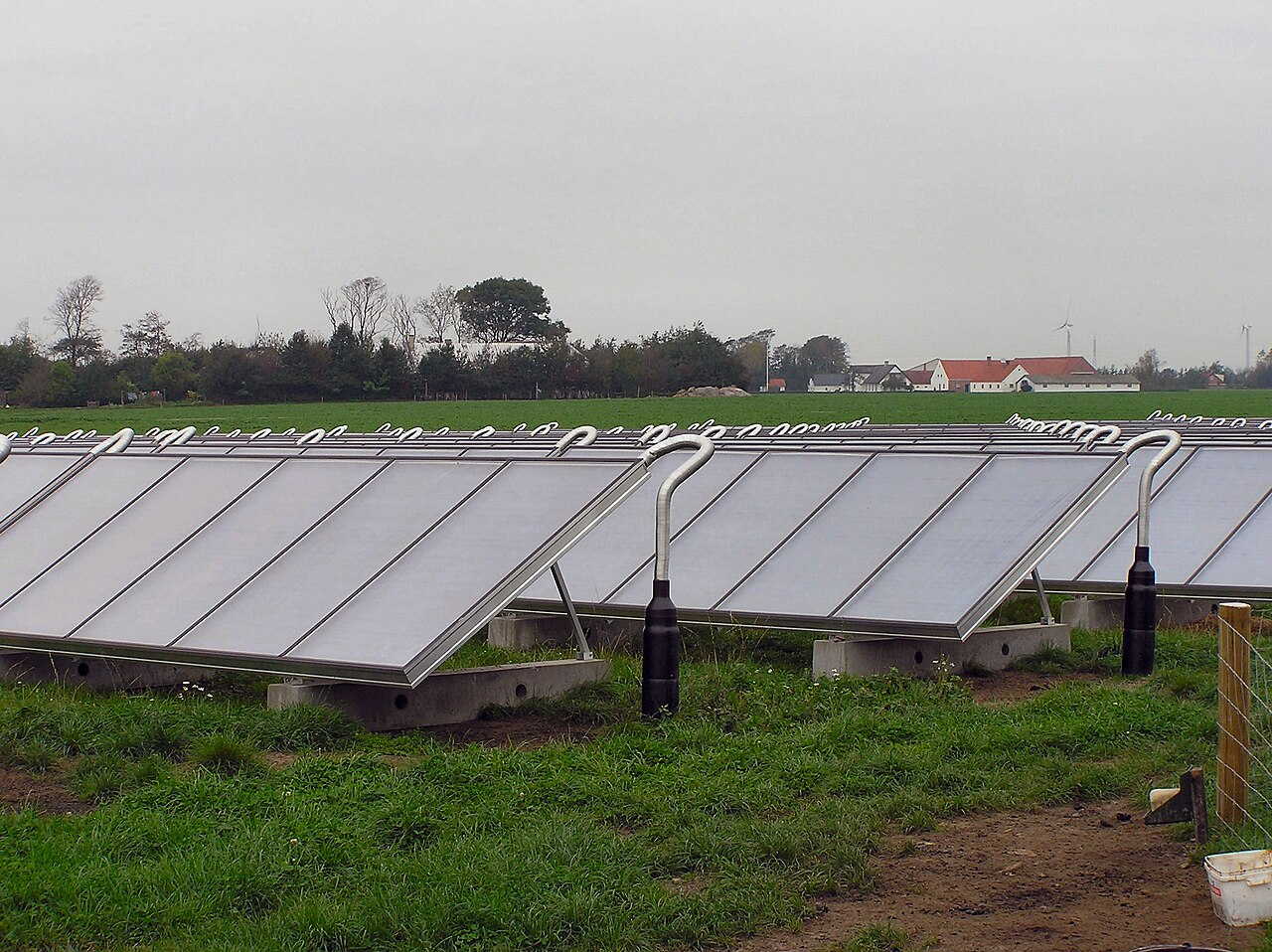
Solar thermal collectors and supports, insulated piping, circulating pumps, expansion and pressure protection, heat exchanger, insulated storage, temperature/flow instrumentation, controls, auxiliary heating and process dryer interfaces as specified.
Technical parameters and capacity basis
| Parameter | Unit / basis | Design requirement |
|---|---|---|
| Process temperatures | Supply/return °C | Define required temperature and allowable variation; avoid confusing hot water with steam. |
| Useful heat demand | kWth; kWhth/day | Use hourly process duty and seasonal operation. |
| Collector area | m² | Select collector type from operating temperature, weather and usable site area. |
| Storage | m³; temperature range | Size from timing mismatch, heat losses and product requirements. |
| Dryer throughput | kg/h or t/day | State material type, inlet/outlet moisture and wet/dry basis. |
| Moisture removal | kg water/h | Calculate from material mass balance and the agreed final moisture. |
| Auxiliary heat | kWth; fuel/electricity | Maintain the required process under low solar input and startup conditions. |
Numerical equipment ratings and guaranteed values are established in the project datasheet after the operating inputs are verified; units shown here are not fixed product ratings.
Engineering inputs
Process temperature and flow logs; product and moisture data; operating schedule; available roof/land; existing boiler/heater; water quality; hygiene requirements and local weather.
Frequently asked questions
Is solar thermal the same as rooftop PV?
No. PV generates electricity; solar thermal collectors supply heat. The site may use either or both according to its energy demand.
Can solar heat replace the boiler completely?
Only if the duty and operating strategy support it. Many processes retain auxiliary heating to meet temperature and availability requirements.
Which collector type is suitable?
Select from the required fluid temperature, ambient conditions, solar resource, roof/land constraints and equipment performance curves.
How is storage sized?
Compare hourly solar input and heat demand, allowable temperature range, useful storage volume and heat losses.
How is drying capacity stated?
State feed throughput, feed and final moisture on a defined basis, required water removal and product-temperature limits.
Can it supply sanitary process water?
Use appropriate separation, materials, hygiene controls and temperature management for the actual application.
How is overheating handled?
Provide a designed stagnation/overtemperature strategy, pressure protection, suitable fluid and controls for low-demand periods.
What does acceptance measure?
Measure useful heat at the agreed boundary, flow and temperatures, controls and safety; test drying output against defined feed and final moisture where included.