BEFORE
Manual batching and disconnected records
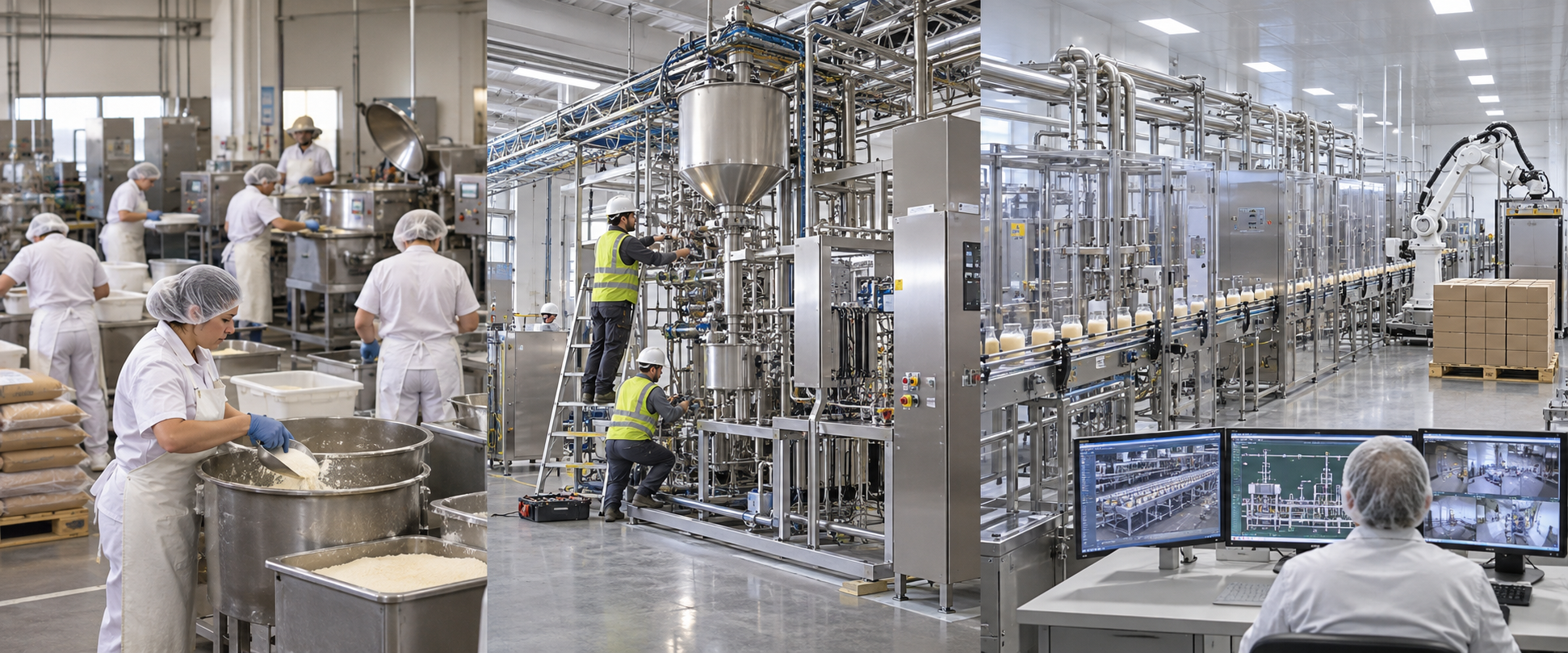
Ingredients are weighed and moved manually; separate machines depend on operator timing and paper-based checks.
 CHINA BENTEINDUSTRY GROUP
System-level modernization of agricultural and food processing from manual batching and isolated equipment to hygienic automated production, packaging and traceability.
Upgrade the complete agricultural or food-production system from receiving and preparation through processing, filling or packing, cleaning and traceability. The modernization boundary is defined by product safety, recipe control, hygienic design and the actual operating environment.
BEFORE
Ingredients are weighed and moved manually; separate machines depend on operator timing and paper-based checks.
RETROFIT
Enclosed transfer, automatic dosing, instruments, valves, cleanable pipework and control panels connect retained and new process equipment.
AUTOMATED
Receiving, dosing, processing, filling, packing, CIP and traceability are coordinated through validated recipes and production states.
Receiving, silos, tanks, bins, conveying, weighing, dosing and controlled additions.
Cleaning, milling, mixing, thermal processing, separation, fermentation, holding and enclosed transfer as applicable.
Filling, sealing, coding, inspection, case packing, palletizing, CIP circuits and sanitation states.
PLC, batch/recipe control, HMI/SCADA, lot genealogy, critical-process records, alarms and production reporting.
Yes, when hygienic boundaries, temporary flows, cleaning, traceability and release conditions are defined for every phase. Product-safety controls cannot be deferred.
They may be retained after checking condition, material compatibility, cleanability, capacity, controls and food-safety requirements against the intended products.
The system can use controlled storage, load cells, feeders, meters, valves, barcode checks and recipe permissions. The selected method depends on ingredient behavior, accuracy and contamination risk.
CIP is assessed wherever product-contact equipment requires controlled cleaning. The final boundary depends on the process, existing sanitation method, circuits and verification requirements.
The design reviews segregation, scheduling, dedicated or shared equipment, transfer routes, cleaning validation, line clearance and traceability according to the customer’s food-safety plan.
Yes. Buffering, permissives, speed coordination, coding, inspection and lot data can connect processing and packaging when interface details are available.
Steam or heating duty, refrigeration, process water, compressed-air quality, drainage, effluent capacity and electrical distribution often require verification before the target operating plan is accepted.
An agreed challenge follows material lots, recipes, process states, packaging codes, holds and rework through the defined system, with exceptions recorded and resolved.
No. Binding criteria require verified product data, recipe, raw-material variation, utilities, packaging, sanitation, staffing and test conditions. The initial study defines how they will be measured.