BEFORE
Manual adjustments and isolated machines
Operators regulate feed, moisture and machine settings locally while material flow and quality data remain fragmented.
 CHINA BENTEINDUSTRY GROUP
System-level modernization of building-material production from manual batching and fragmented controls to integrated automated crushing, dosing, forming, curing and packaging.
Modernize the complete building-material production system—from raw-material receiving and preparation through dosing, forming or thermal processing, finishing and dispatch. The upgrade balances heavy-duty process equipment, dust control, quality feedback, utilities and central control.
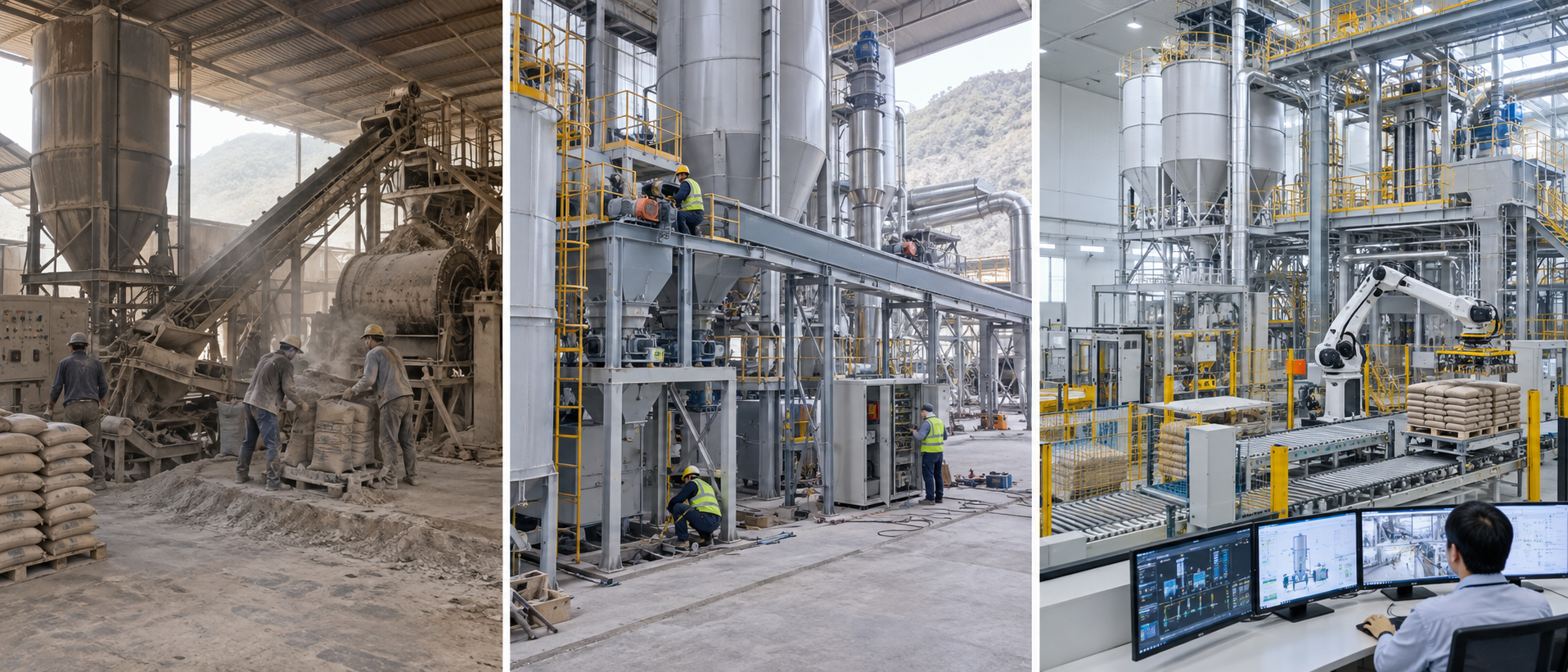
BEFORE
Operators regulate feed, moisture and machine settings locally while material flow and quality data remain fragmented.
RETROFIT
Weighing, feeders, drives, dust extraction, conveyors, sensors and PLC controls are added around retained process equipment.
AUTOMATED
Raw-material preparation, dosing, processing, forming or firing, inspection, palletizing and production reporting work as one controlled line.
Hoppers, crushers, screens, mills, dryers, silos, feeders, conveyors, elevators and dust collection.
Weighing, blending, mixers, presses, extruders, moulds, kilns, dryers, autoclaves or curing systems as applicable.
Cutting, surface treatment, inspection, stacking, palletizing, wrapping, storage and dispatch handoff.
PLC/SCADA, drives, weighing control, moisture/temperature instruments, recipes, quality feedback, historian and maintenance data.
Typical candidates include concrete products, blocks, dry mixes, gypsum, cementitious products, aggregates, boards, tiles and bricks. The process and product specification determine the actual scope.
Yes, after condition, capacity, wear, safety, control and interface checks show that the equipment can support the target operating envelope and product quality.
The upgrade may add controlled storage, weighing, moisture measurement, feeders, blending logic, sampling and recipe correction. Control limits require representative material data.
Yes. Capture points, ducting, air balance, filters, discharge and housekeeping interfaces should be engineered together with material transfers and production states.
Their fuel, airflow, temperature, residence-time, safety and product interfaces are mapped into the line controls. Thermal acceptance requires defined product and operating conditions.
Feed preparation, conveying, storage, weighing, mixing, forming, thermal residence, curing space, finishing or packing may each become the constraint. Measurement is needed before selecting equipment.
It may be feasible when surveys, prefabrication, access, lifting, structural work, isolations, curing times, resources and contingency are resolved before the outage.
The plan defines sampling, test standards, raw-material envelope, product mix, test duration, operating conditions and responsibility for laboratory results before trials begin.
Options are compared on engineering scope, retained-asset risk, installation, utilities, wear, energy, maintenance, labour, quality loss and lifecycle support rather than an unverified headline saving.