
Used tires pile up in every growing city. Many investors start by buying a shredder or a pyrolysis reactor, then discover the real problems later: dust inside the hall, smell around the fence, oil and gas that are hard to store or sell, and power bills higher than planned.
A tire recycling site works when the process line, the environmental systems and the energy side are designed together from the start.
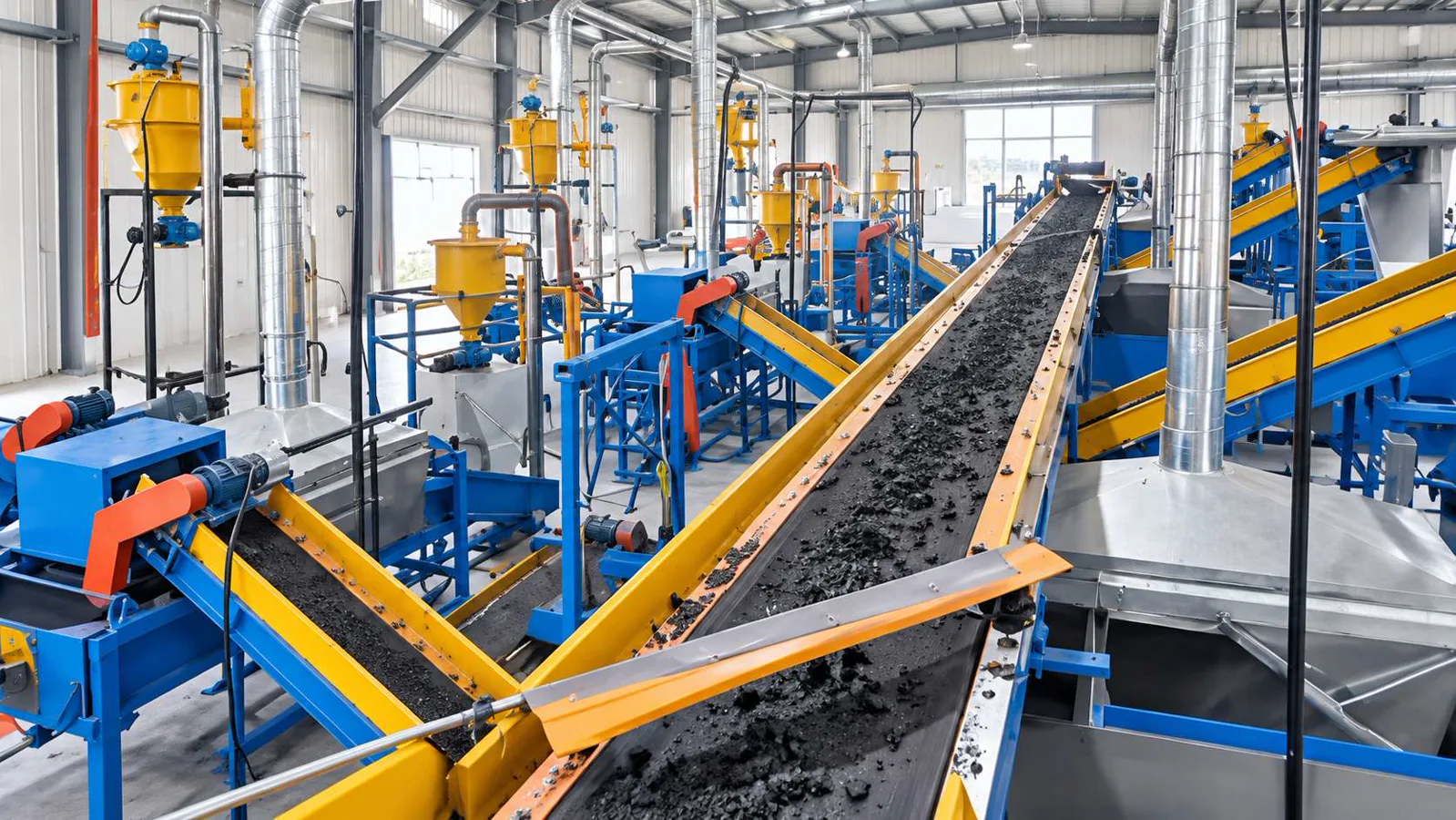
Crumb rubber or pyrolysis: which route fits your site?
The first decision is the product, because it decides almost everything else.
| Item | Mechanical route (crumb rubber) | Thermal route (pyrolysis) |
|---|---|---|
| Main products | Rubber chips, granules, powder; steel wire; textile fiber | Pyrolysis oil, recovered carbon black, steel wire, non-condensable gas |
| Main buyers | Sports surfaces, rubber products, molded goods, road and civil works | Industrial fuel users, refiners or upgraders, carbon black users |
| Key environmental issues | Dust, noise, fiber handling | Odor, off-gas, oil and gas safety, oily wastewater, carbon dust |
| Energy profile | Electricity for shredding and grinding | Process heat, which can be partly supplied by the plant's own gas |
| Permitting | Usually simpler | Usually stricter: emissions, fire safety, storage of liquid fuel |
| What to confirm first | Local buyers and required granule sizes | Oil buyers and specifications, gas use, emission limits |
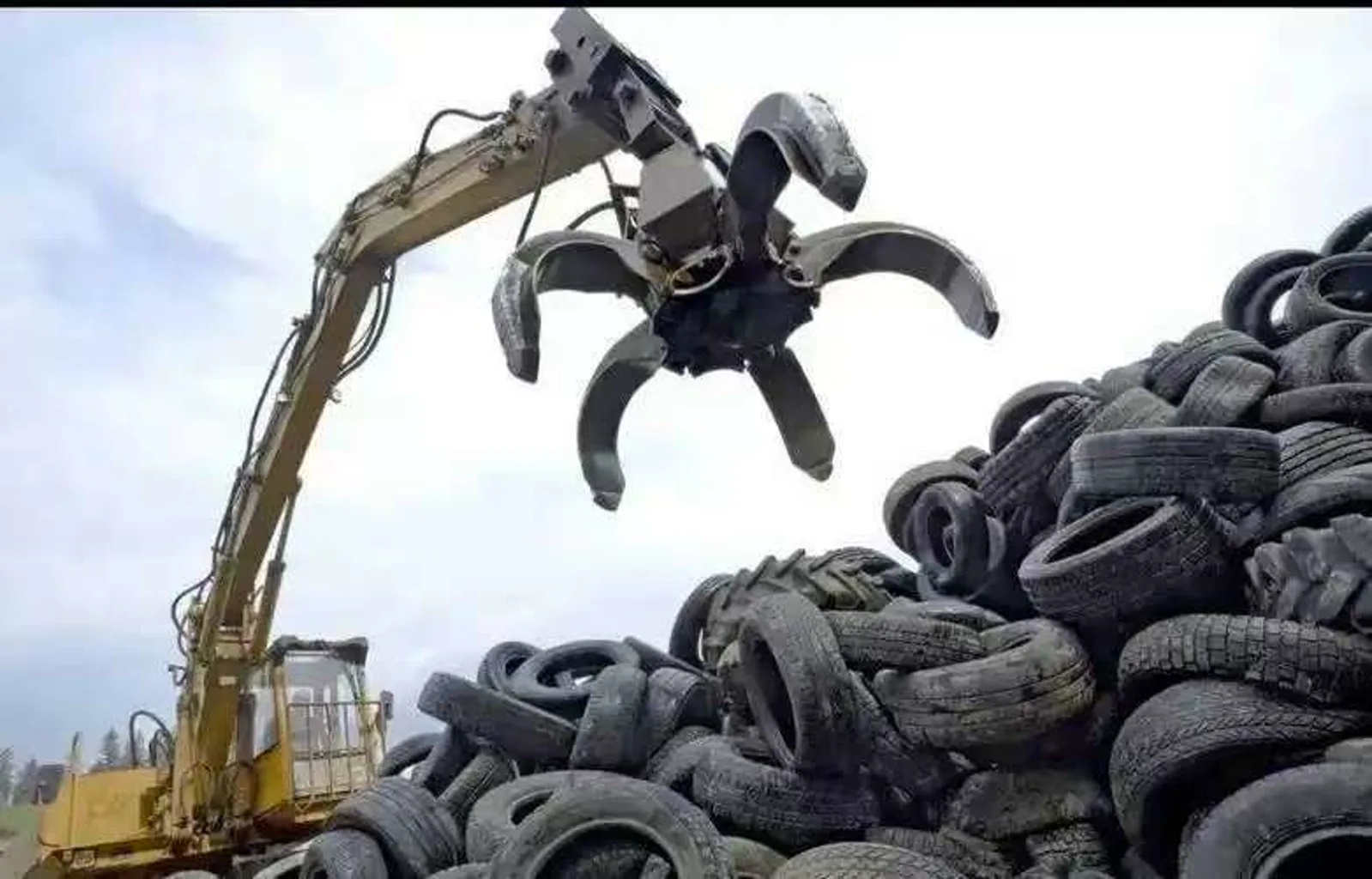
Some sites combine both: shredding first, then crumb rubber for clean tires and pyrolysis for the rest. Either way, the buyer for each product should be identified before the line is sized.
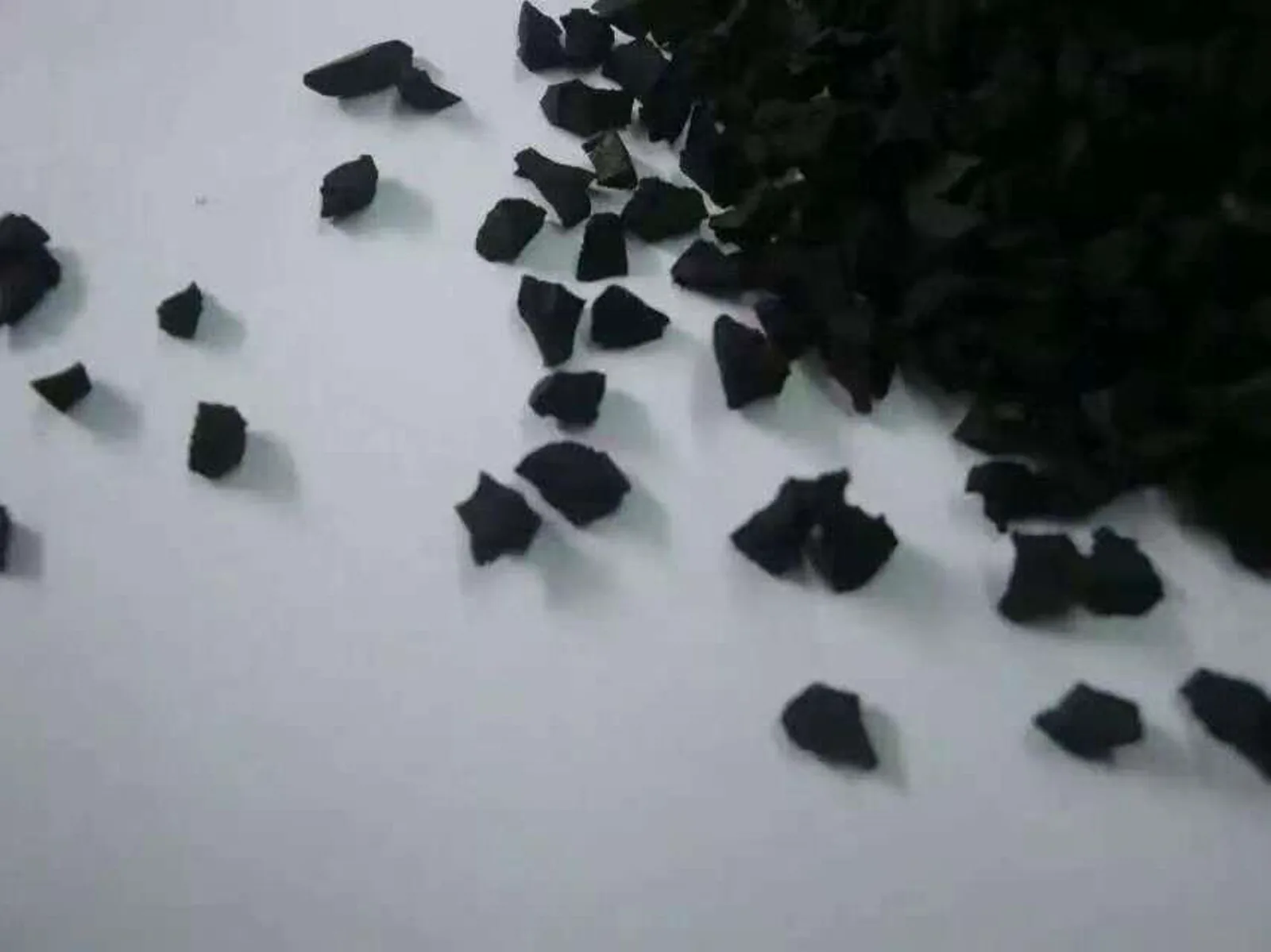
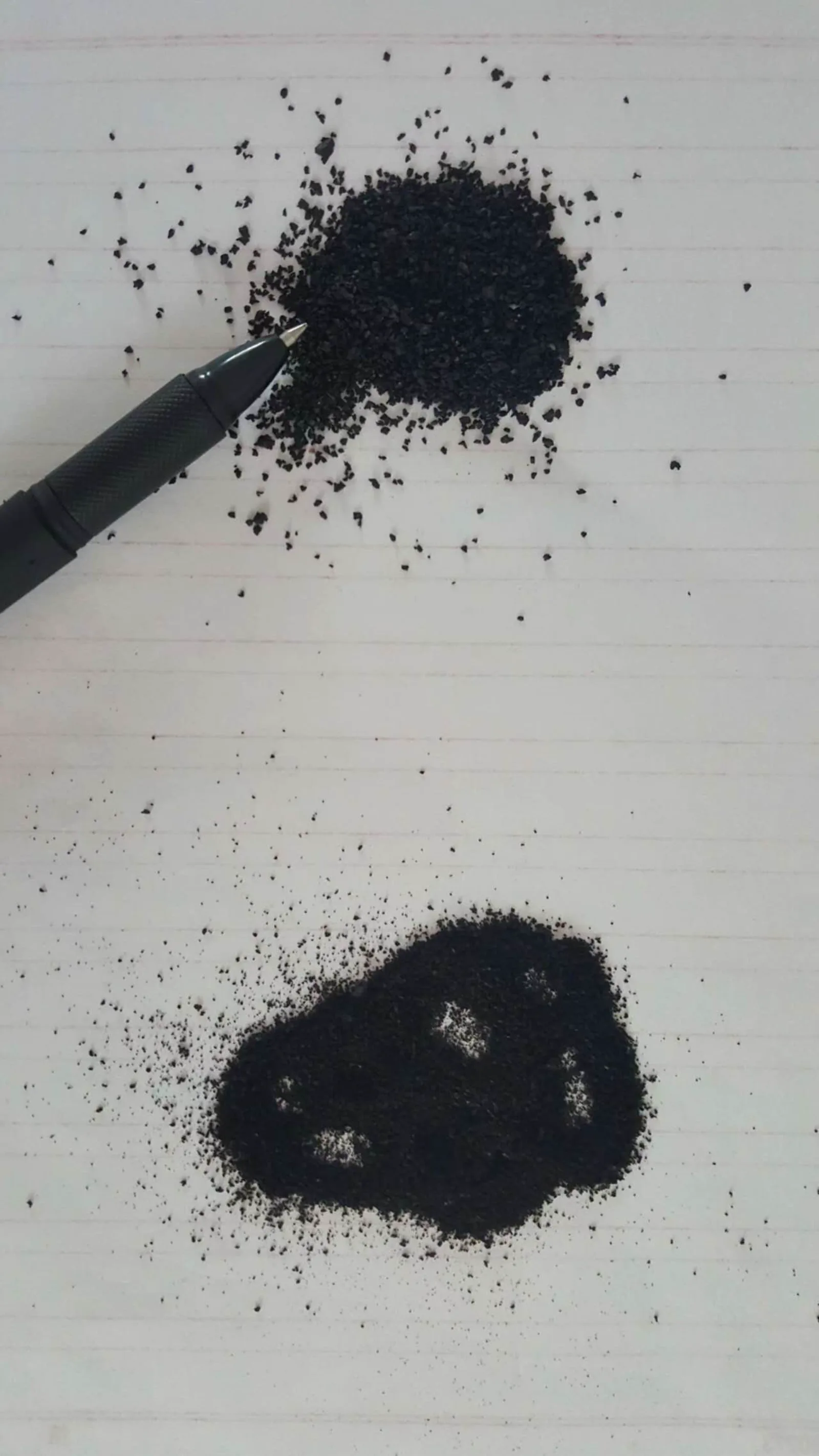
What usually goes wrong when only the machines are bought?
- Dust and fibers: grinding lines without proper dust collection lose product and create a fire and health risk.
- Odor and off-gas: pyrolysis plants without a closed gas system and treatment cause complaints and permit problems.
- Oil and gas handling: storage, transfer and flaring are often an afterthought, although they decide site safety.
- Water: cooling and cleaning water picks up oil and carbon and needs treatment before reuse or discharge.
- Energy: motors and heaters run without metering, so nobody knows the real cost per tonne.
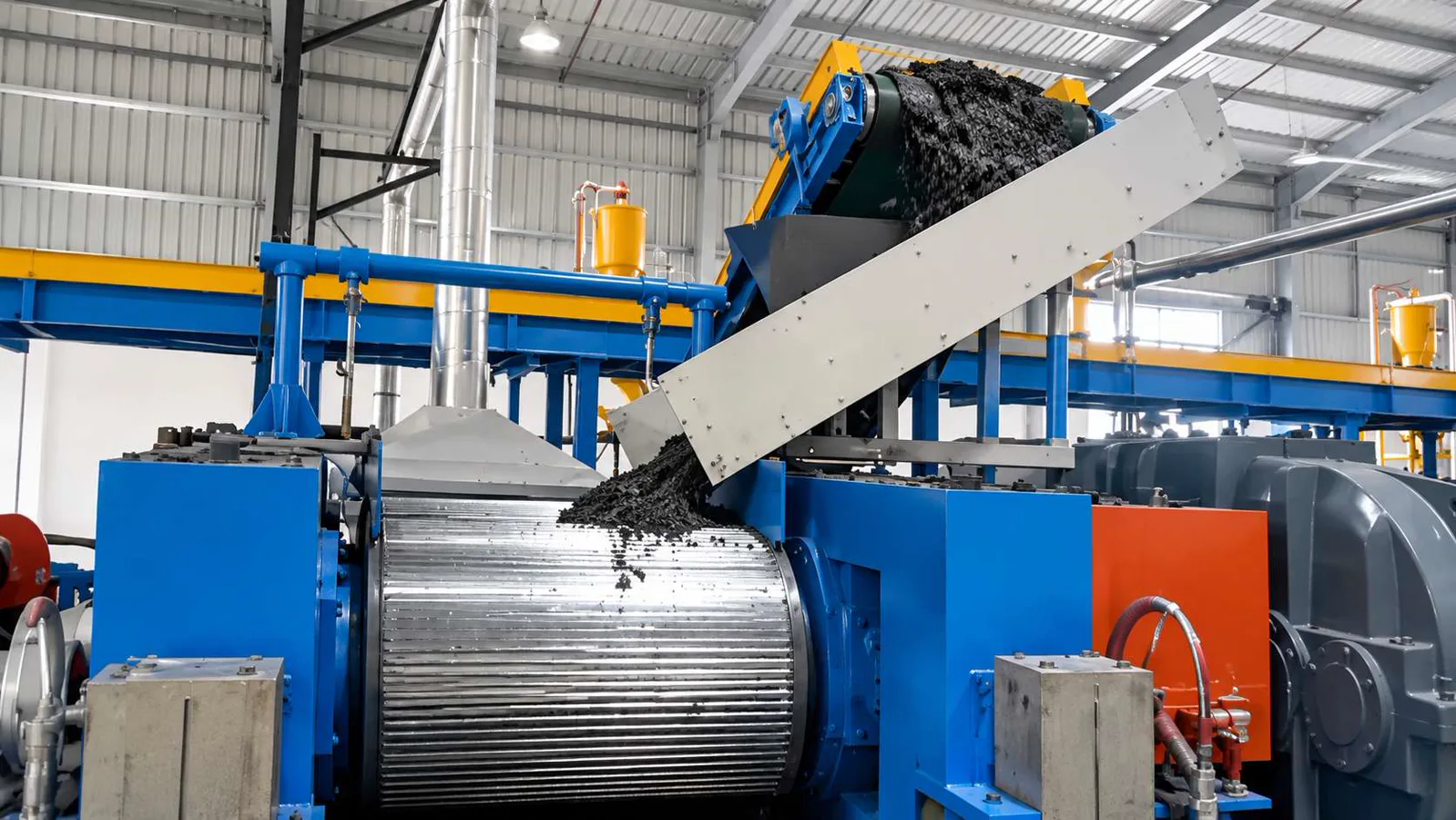
Which of the six areas apply to a tire recycling site?
- Waste Recycling: tire reception, debeading, shredding, crumb rubber or pyrolysis line, steel and fiber separation.
- Difficult Wastewater: oily and carbon-laden water from cooling, cleaning and gas scrubbing; reuse where possible.
- Renewable & Clean Energy: using non-condensable gas as process fuel, heat recovery from flue gas and reactor cooling, rooftop solar for mechanical lines.
- SMART Solutions: weighbridge, line status, temperatures and pressures, gas detection, energy per tonne on one screen.
- Factory Modernization: upgrading an existing shredding yard or an older batch pyrolysis unit instead of starting from zero.
- Turnkey Factory EPC: one contract for design, supply, installation, commissioning and training.
What does the combined process look like?
Used tires → Weighbridge (data to SMART screen) → Debeading → Shredding to chips
   ├─ Mechanical route: Granulating → Steel removal (magnets) → Fiber separation → Screening → Crumb rubber / powder → Bagging
   │      Dust collection on every transfer point → Collected dust back to product or disposal
   └─ Thermal route: Chip feeding → Pyrolysis reactor → Oil condensing → Oil storage → Sale
          ├─ Non-condensable gas → Gas cleaning → Burner (process heat) → Flue-gas treatment → Stack monitoring
          ├─ Carbon black → Cooling → Screening / grinding → Bagging
          └─ Steel wire → Baling → Sale
Cooling / cleaning water → Oil-water separation → Treatment → Reuse
Power, heat, water → Metering → SMART energy dashboard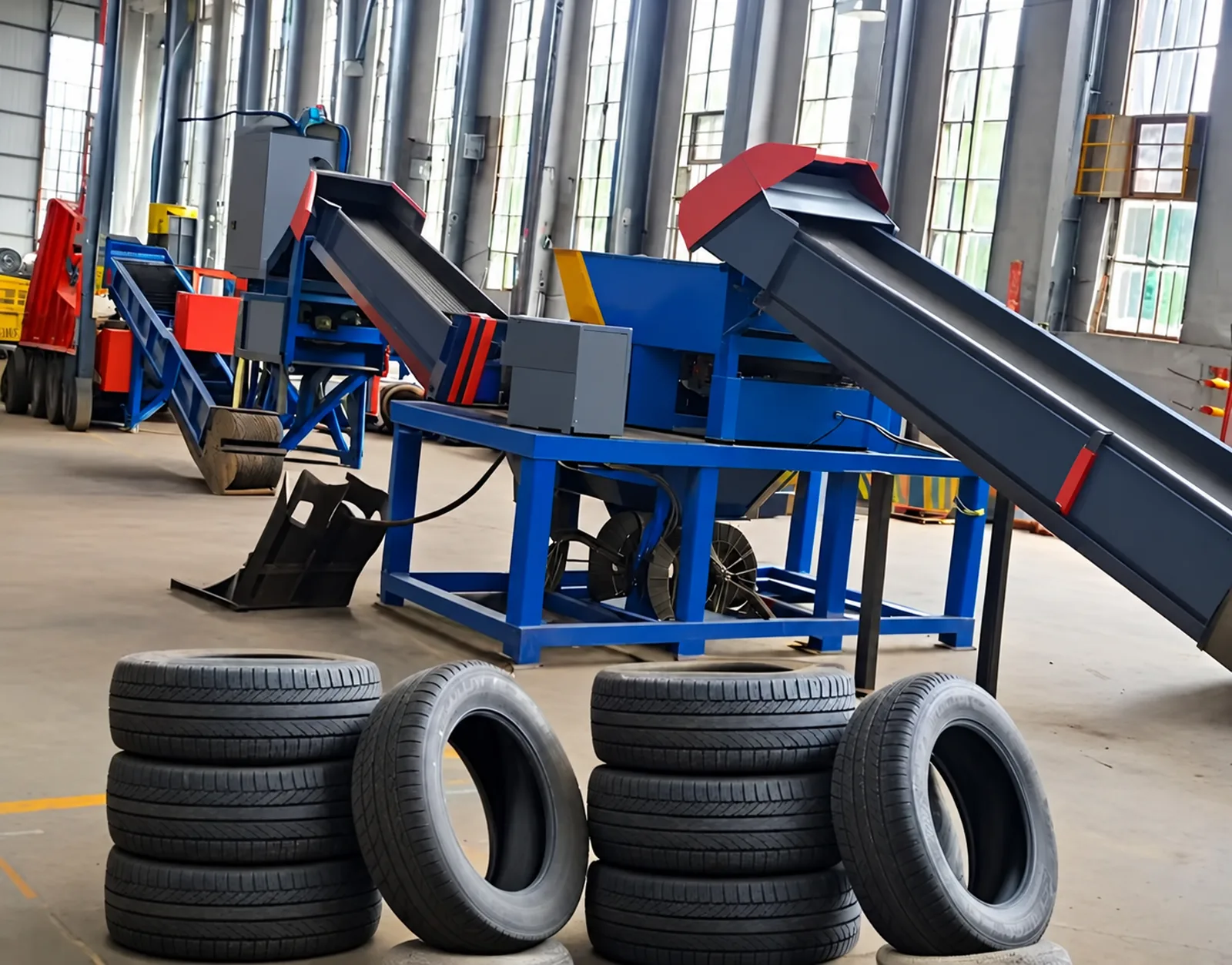
Where does the 25%+ saving come from?
This is the part that separates a site that makes money from one that only runs. We start by metering, then reduce energy and emissions where the data shows losses:
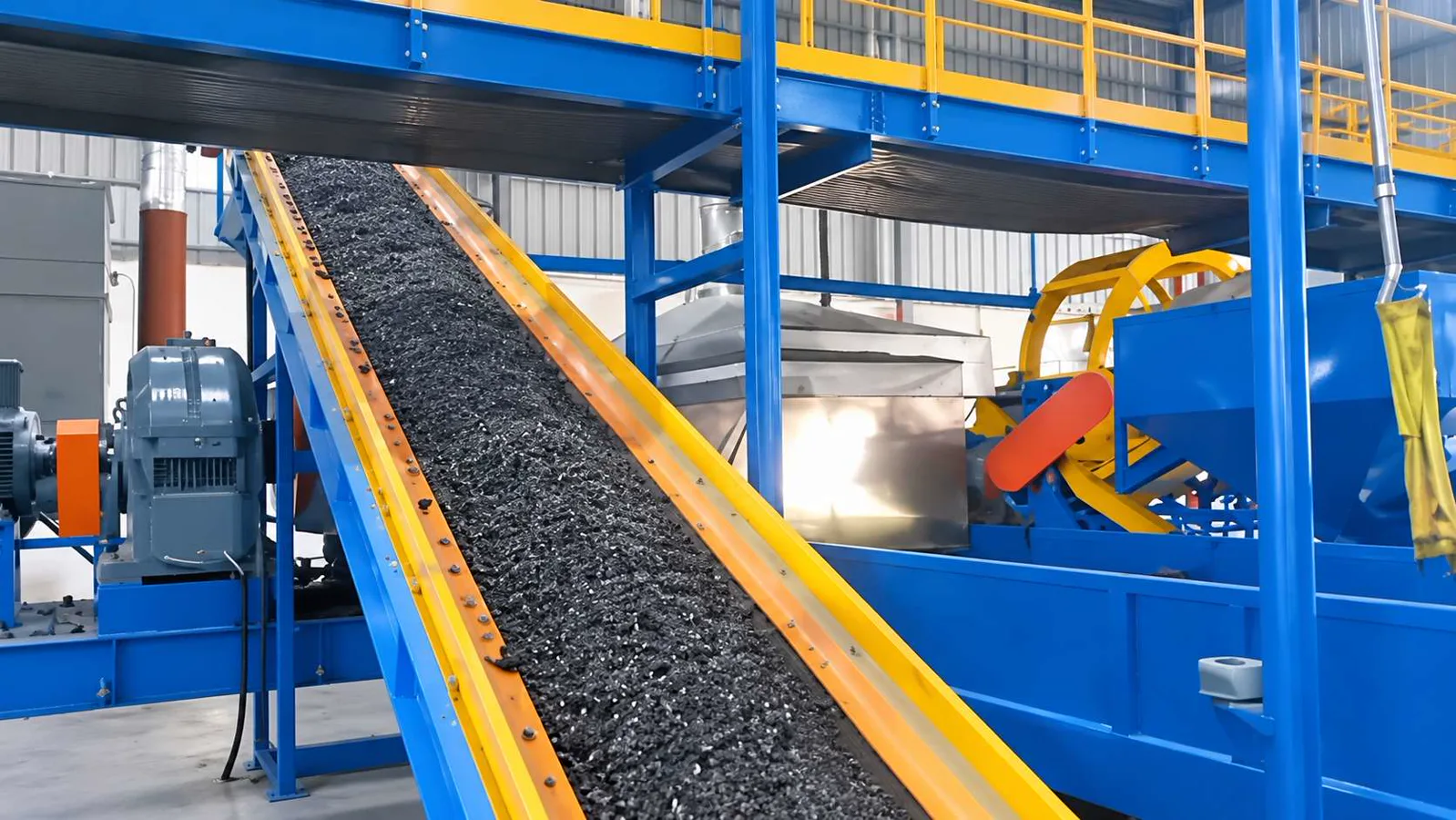
- Energy saving: correct motor sizing and variable-speed drives on shredders, granulators and fans; heat recovery from flue gas and reactor cooling; insulation and burner tuning on pyrolysis units. The target is 25% or more against the measured baseline, and older sites often save more.
- Monitoring: power, gas, heat and water per tonne of tires processed, on one screen next to line throughput and temperatures.
- Green energy: non-condensable gas reused as process fuel where the design allows; rooftop solar with storage for mechanical lines, sized from metered load.
- Emission reduction: enclosed conveying, dust collection, closed gas handling and flue-gas treatment instead of open burning or open storage.
We do not promise a fixed percentage before a baseline audit. The audit comes first, the figure follows.
How do you start without over-investing?
Build in phases:
- Reception, weighbridge, shredding and safe storage: the base for every route.
- The first product line (usually crumb rubber, or a single pyrolysis unit) once buyers are confirmed.
- Gas, water and emission systems sized with the line, not added later.
- Heat recovery, solar and energy optimisation, sized from one season of metered data.
What data should you send us?
- Tire types (car, truck, OTR/mining) and tonnes per day
- Preferred products and known buyers
- Site plan, existing equipment and buildings
- Local emission, fire-safety and wastewater requirements
- Available power and fuel, and current energy bills
FAQ
Is pyrolysis better than crumb rubber?
Not in general. Crumb rubber is simpler to permit and operate; pyrolysis can handle tires that are hard to sell as rubber, but needs stricter gas, oil and emission control. The right choice depends on local buyers and permits.
Can the plant run on its own gas?
Pyrolysis plants can often use part of their non-condensable gas as process fuel, after gas cleaning. How much depends on the reactor design and feedstock, and must be confirmed in the design.
How much energy can a tire recycling site save?
The target is 25% or more of the measured baseline, and older sites often save more. The exact figure is confirmed after a baseline audit.
Do we need wastewater treatment?
Yes, in most cases. Cooling, cleaning and scrubbing water picks up oil and carbon. Treating and reusing it lowers water use and avoids discharge problems.
Can mining (OTR) tires be processed?
Yes, with dedicated cutting and debeading equipment before shredding. Their size and steel content must be included in the line design from the start.