
Process Flow
Equipment / System Architecture
Textile-waste recycling starts with sorting and fiber knowledge; without those inputs, a reliable recovery route and output specification cannot be assumed.
A textile-waste recycling line prepares post-industrial or post-consumer textiles through receiving, sorting, removal of non-textile components, cutting or opening, fiber recovery or densification and controlled dispatch. The right route depends on fiber composition, blends, color, contamination, moisture, trim content and intended material outlet.
Typical applications
- Post-industrial cutting waste and production offcuts
- Post-consumer textile sorting and preparation
- Fiber opening for defined nonwoven, insulation or other approved uses
- Preparation of sorted textiles for approved downstream chemical or mechanical recycling
Main equipment and system architecture
- Receiving, inspection and sorting tables or conveyors
- Composition, color and contamination classification stations
- Manual or mechanical removal of trims, zips, buttons and non-textile items
- Cutting, tearing or fiber-opening equipment selected by feedstock
- Dust extraction, fire controls and material classification
- Baling, labeling and storage systems for sorted outputs
Capacity and design basis
Capacity is determined from textile type, composition data, manual sorting requirement, contamination, trim content, opening behavior, target bale density, recovery route and operating schedule. Recovery percentage is not stated until trials or accepted feed data support it.
Utilities and infrastructure
- Electrical supply for opening, cutting, conveyance and baling
- Dust extraction and filtration matched to fibers and process intensity
- Fire detection, storage controls and emergency access
- Ventilation, lighting and ergonomic conditions for sorting work
- Storage and loading space segregated by material class
Customer engineering inputs
- Feedstock source, fiber composition or composition uncertainty
- Post-industrial/post-consumer condition, contamination and moisture
- Trim, hardware and non-textile content
- Target outlet specification and required bale or fraction format
- Site layout, fire requirements, labor availability and local waste controls
CAPEX and OPEX drivers
CAPEX is driven by sorting intensity, automation level, trim removal, opening/cutting route, extraction, fire controls, baling and building adaptation. OPEX depends on labor, electricity, wear parts, dust management, storage, residue disposal and the market value of correctly sorted outputs.
Safety, environmental and compliance considerations
The project considers combustible fiber dust, fire load, moving machinery, sharp trim, manual handling, noise, indoor air quality, waste storage and applicable environmental/occupational requirements.
Outputs and acceptance basis
Acceptance is based on safe and documented operation, agreed sorting categories, defined output presentation, contamination limits where specified, traceability records and trial processing of representative feedstock.
Related project evidence
No verified completed textile-waste recycling project is currently published on this website. This page is an engineering capability description and does not claim a specific completed case; see Projects & Cases.
Implementation and Commissioning
Implementation begins with fibre, construction and contamination sampling, trial sorting and opening, product or downstream-spinning specification, dust and fire review, layout and utility design, equipment FAT, installation and staged material trials. Ramp-up verifies colour and fibre segregation, metal removal, fibre length and contamination, bale or recovered-fibre quality, dust extraction, housekeeping, operator training and traceable disposition of non-recyclable residue.
Frequently asked questions
Can mixed textile waste be recycled?
Mixed textiles can be received only when sorting categories, contamination limits and the intended downstream recovery route are defined. Mixed composition changes the suitable process.
Why does fiber composition matter?
Composition determines whether material is suitable for mechanical opening, a specific downstream recycler, a defined nonwoven application or another route.
Can buttons and zippers be removed?
Yes, trim-removal steps can be included manually or mechanically depending on garment type, throughput and required output purity.
What outputs can be produced?
Possible outputs include sorted textile fractions, prepared feedstock, opened fiber or baled materials, subject to the confirmed offtake specification.
Is color sorting necessary?
It can be important when downstream use, quality requirement or color-sensitive application requires a defined sorted fraction.
How is textile dust controlled?
The line incorporates appropriate capture, filtration, housekeeping, ventilation and fire-control measures based on the materials and process.
Can post-industrial and post-consumer textiles share a line?
They may share defined areas, but their condition, contamination, sorting and traceability requirements must be assessed before a combined operating model is approved.
What determines labor needs?
Labor depends on feed variability, sorting detail, trim removal, inspection, baling method and the required output quality.
Request a Project Evaluation
Provide feedstock samples or composition data, expected volume, site constraints, permits and intended recovered-material offtake. Open technical items remain marked TBC until confirmed.
Preliminary Capacity & Technical Specification Range
| Typical configurable capacity | 0.2–5 t/h |
|---|---|
| Feed basis | Fiber composition, color, garment/offcut form, trims, coatings, contamination and moisture |
| Typical outputs | Opened fiber, reclaimed-fiber blend, nonwoven feed or compacted bales |
| Key utilities | Power, dust extraction, fire detection and compressed air where selected |
Required for quotation: representative photos and samples, minimum/normal/peak feed quantity, composition and contamination analysis, operating hours, desired products and sizes, local emission/discharge limits, utilities, plot plan and required automation.
Waste Textile Recycling Line
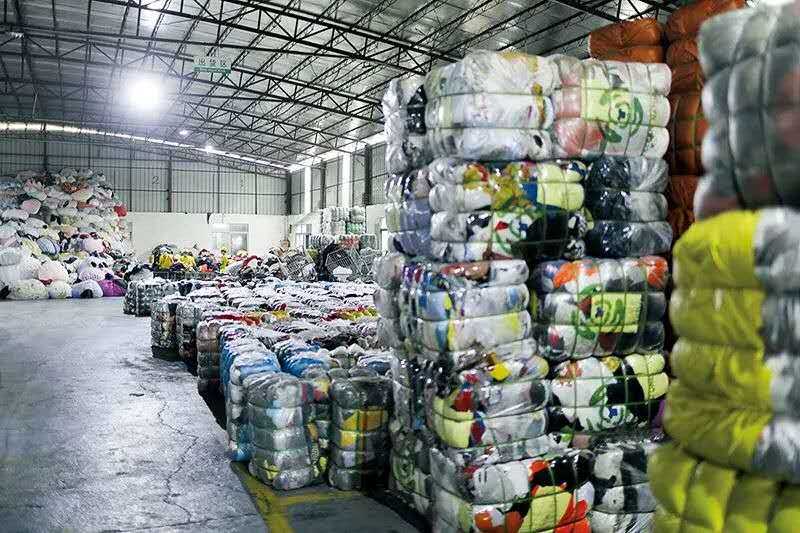
Before Input: Baled waste textiles and used garments, compacted by hydraulic baler.
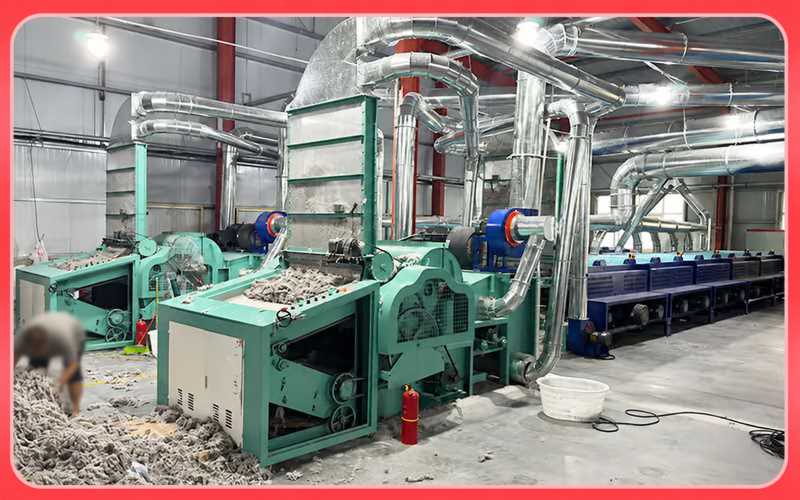
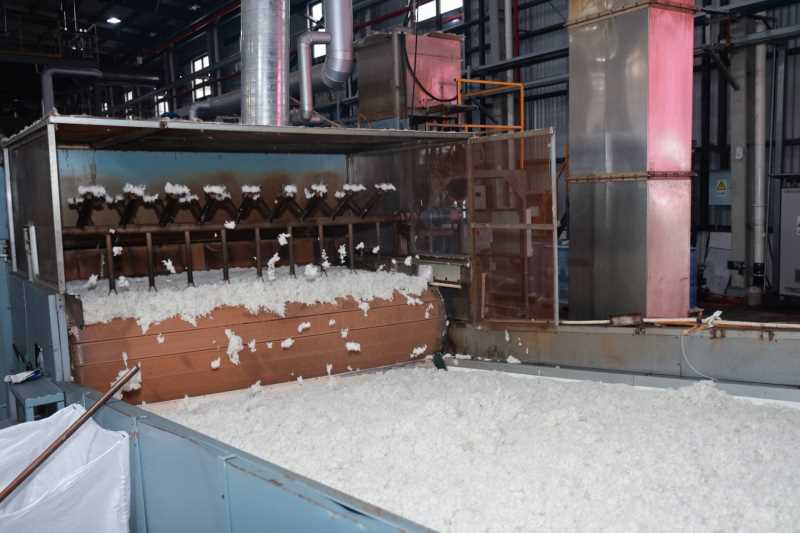
Processing: Shredding → Multi-roller opening → Cleaning & dedusting.
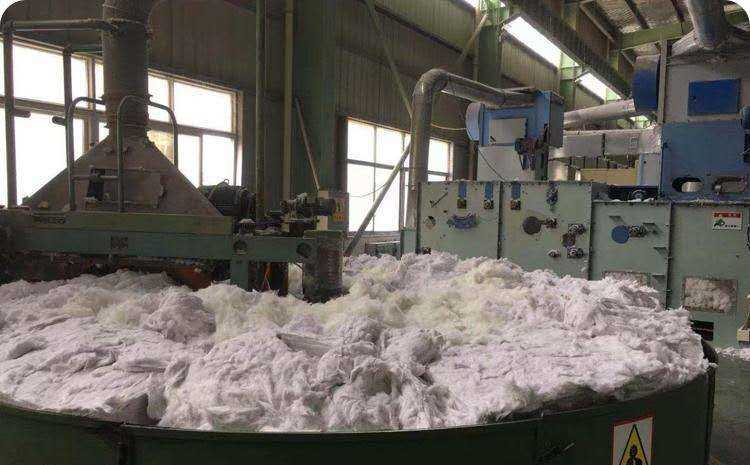
After Output: Recycled cotton fiber for non-woven fabric, felt, insulation and re-spinning.
Request a Project Evaluation
Share representative waste characterization, throughput range, required outputs, utilities, site constraints and compliance requirements.
Start the engineering evaluation