
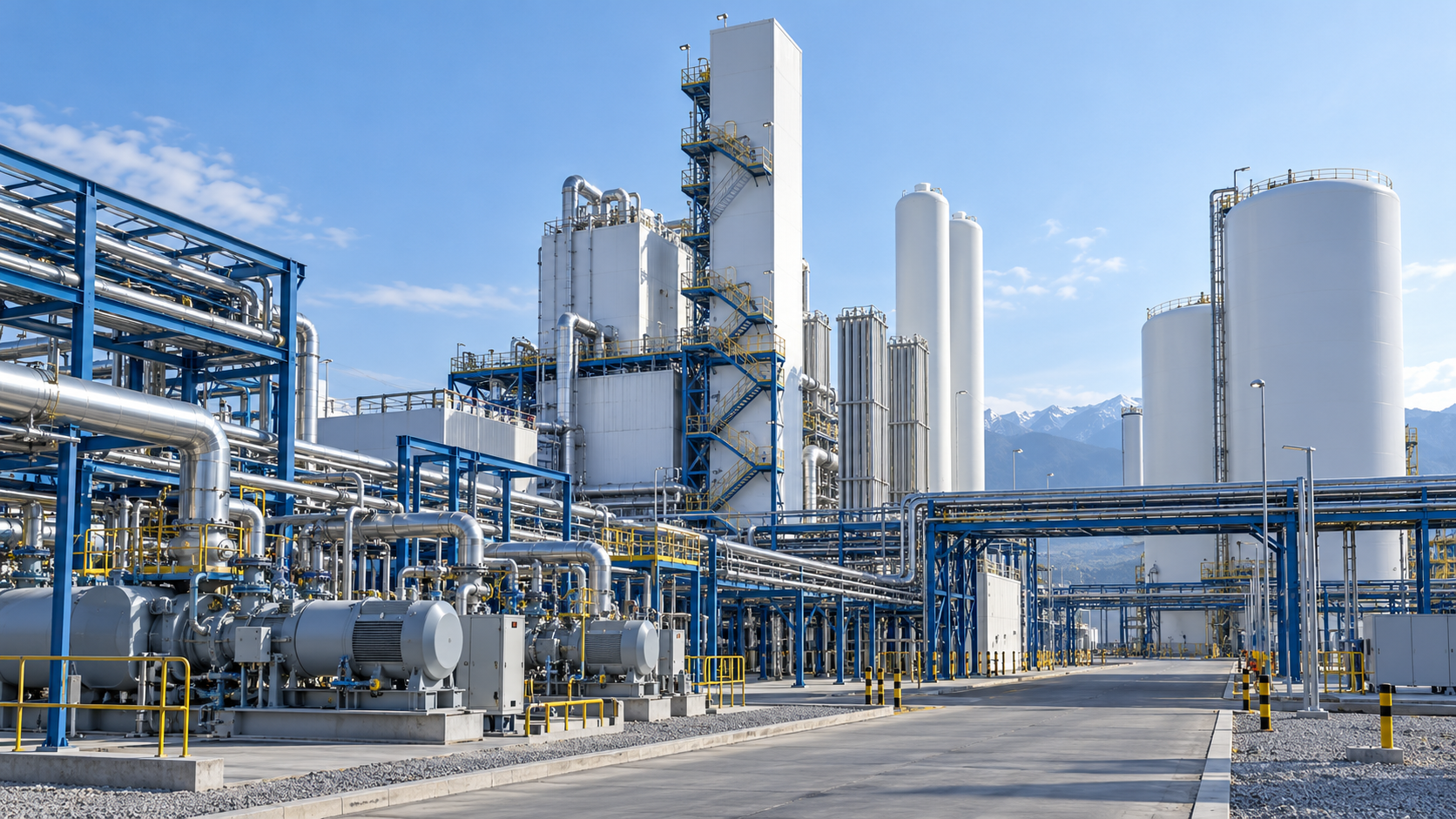
Feedstock-specific ethanol plants integrating preparation, conversion, separation, utilities and effluent treatment.
What it is
A complete production facility developed around the selected sugar, starch or other technically suitable feedstock route.
Suitable feedstock / applications
Molasses, sugar streams, grain, starch or other qualified feedstocks based on composition, contaminants and local product regulations.
Process flow
Main equipment and systems
- Milling or preparation packages
- Fermenters and CIP
- Distillation columns
- Dehydration and recovery systems
- Tank farm and loading
- Boiler, cooling, wastewater and controls
System and layout diagram
Design basis and required tests
Feed composition, fermentability, contamination risks, product grade, water balance, energy integration and local alcohol regulations.
Utilities and infrastructure
Power distribution, water, steam or thermal energy, cooling, compressed air, industrial gases, drainage, fire protection, buildings, roads, storage and maintenance access are sized from the verified design basis.
Environmental integration
Stillage, high-COD wastewater, CO2, odour, boiler emissions, water reuse and heat recovery are integrated from concept design. Relevant interfaces are coordinated with Turnkey Factory EPC · Waste Recycling · Difficult Wastewater · Renewable Energy · SMART Solutions.
CAPEX / OPEX drivers
Feed variability, process route, throughput, materials of construction, energy demand, emissions limits, automation, redundancy, local construction, logistics and product acceptance criteria drive lifecycle cost.
Outputs and acceptance basis
Product grade and co-products are defined by laboratory methods, legal requirements and the agreed performance test. No capacity, yield, quality or certification is assumed until supported by testing and an agreed design basis.
Customer engineering inputs
Representative samples and analyses, target products, operating schedule, site survey, climate, utility data, applicable codes, discharge limits, plot plan, logistics and acceptance protocol.
Delivery scope
Concept definition, feasibility, process and layout engineering, equipment selection, procurement, civil and construction interfaces, utilities, automation, environmental systems, installation support, FAT/SAT, commissioning, training, trial operation and lifecycle service can be included within the agreed boundary.
Frequently asked questions
What information is required to evaluate Alcohol / Ethanol Production Plant EPC?
Provide feedstock or product data, target throughput, operating hours, site conditions, utilities, local regulations, output specifications and available laboratory results.
Is one process route suitable for every project?
No. The route is selected from verified material characteristics, product requirements, environmental limits, local infrastructure and lifecycle economics.
How are capacity and equipment sizes confirmed?
They are established through a documented design basis, representative testing where needed, mass and energy balances, availability assumptions and agreed design margins.
Which utilities must be defined?
Electrical supply, process water, steam or heat, cooling, compressed air, industrial gases, drainage and clean utilities are confirmed for the selected process.
How are environmental systems integrated?
Wastewater, exhaust gas, dust, odour, residues, noise, heat recovery and water reuse are designed alongside the process rather than added after equipment selection.
Can automation be included?
Yes. PLC, HMI, SCADA, instrumentation, interlocks, traceability and optional MES interfaces are developed to the agreed operating philosophy.
What does acceptance cover?
Acceptance boundaries can include document review, FAT, installation checks, SAT, commissioning support, training and performance verification against agreed inputs and test methods.
How are CAPEX and OPEX controlled?
Major drivers are route complexity, materials of construction, utility demand, emissions controls, automation level, local construction, logistics, redundancy and output specification.