China Bente Industry Group logoCHINA BENTEINDUSTRY GROUP
Menu
China Bente Industry Group

Factory Upgrade & Production Line Retrofit

FOUNDRY AUTOMATION · INDUSTRY UPGRADE CASE

Sand Casting: From Manual Operations to an Automated Line

Before-and-after process images, automatic moulding equipment and the integrated production line.
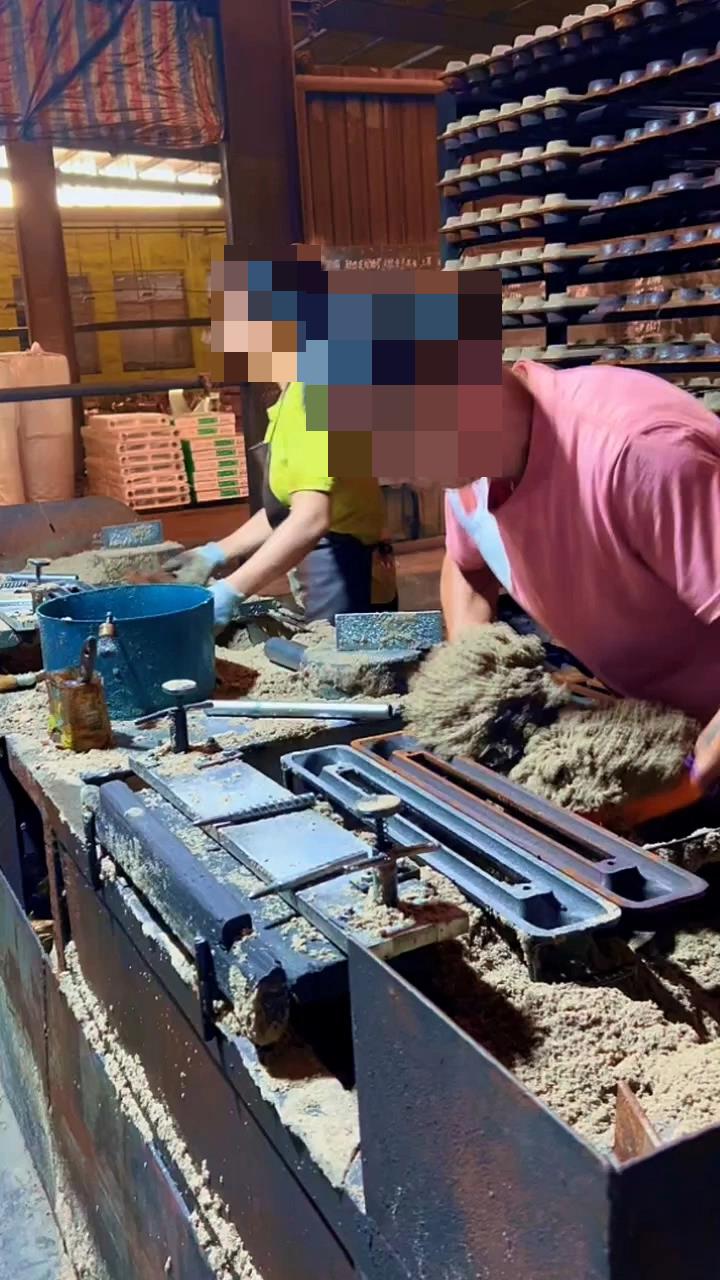
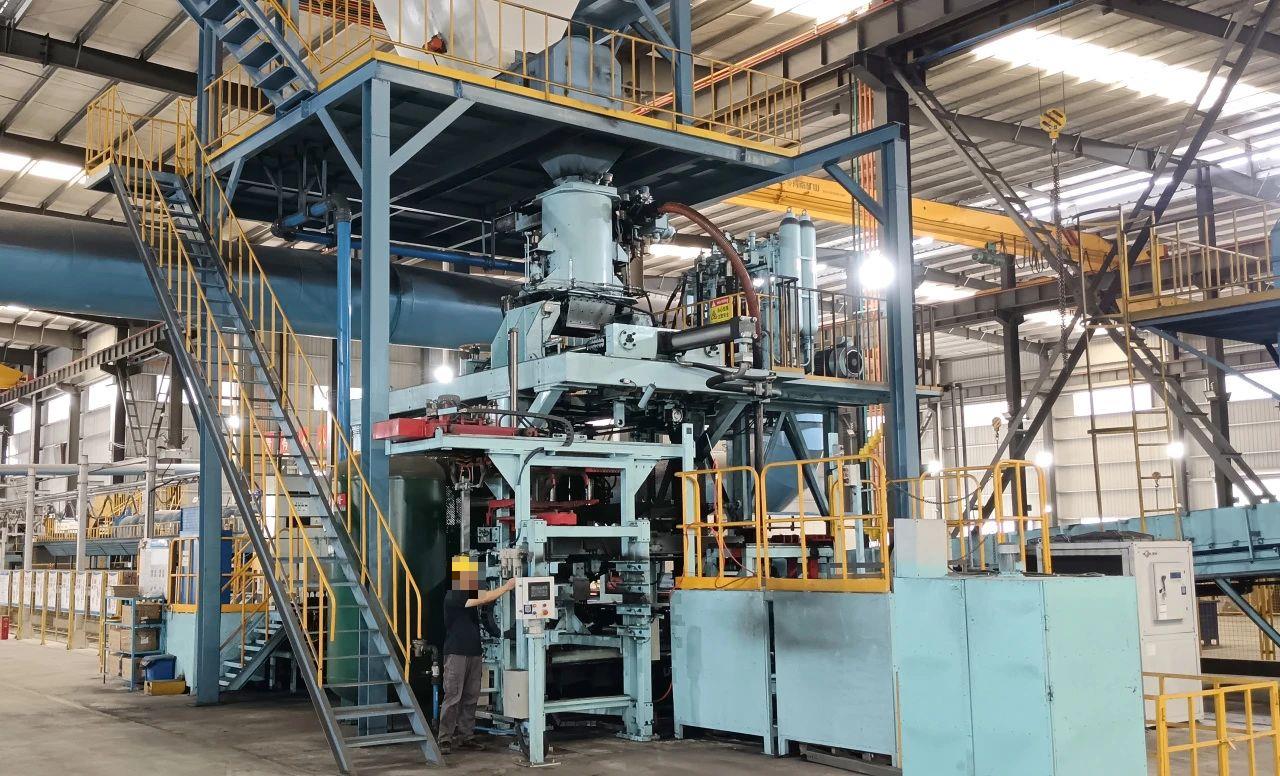
Before: Manual sand moulding
After: Automatic moulding equipment

View All 6 Foundry Photos & Upgrade Details →

Factory upgrade case images

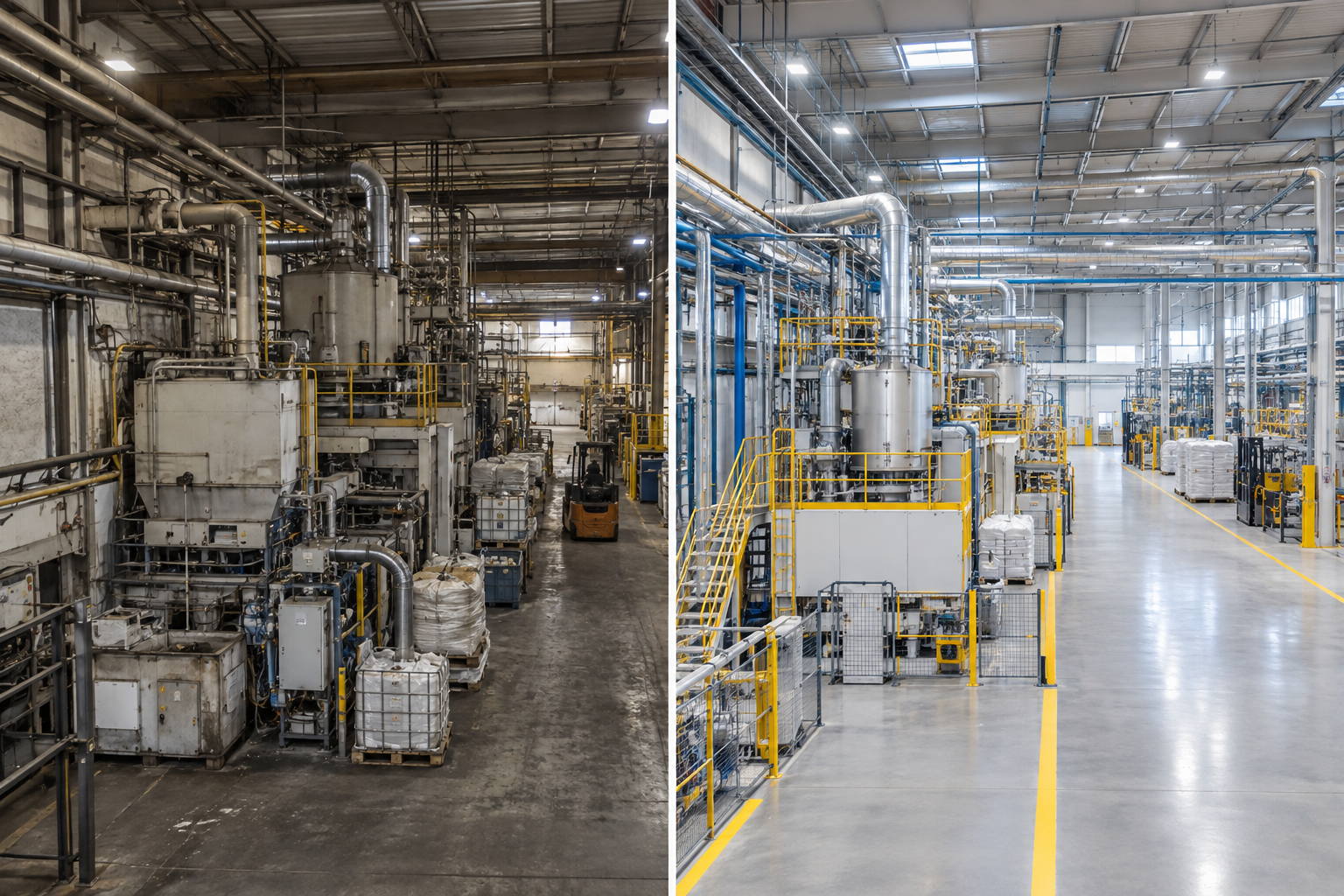
Egypt factory before modernization
China Bente project evidence — BEFORE modernization.
Egypt factory after modernization
China Bente project evidence — AFTER modernization.

Industry modernization pathways

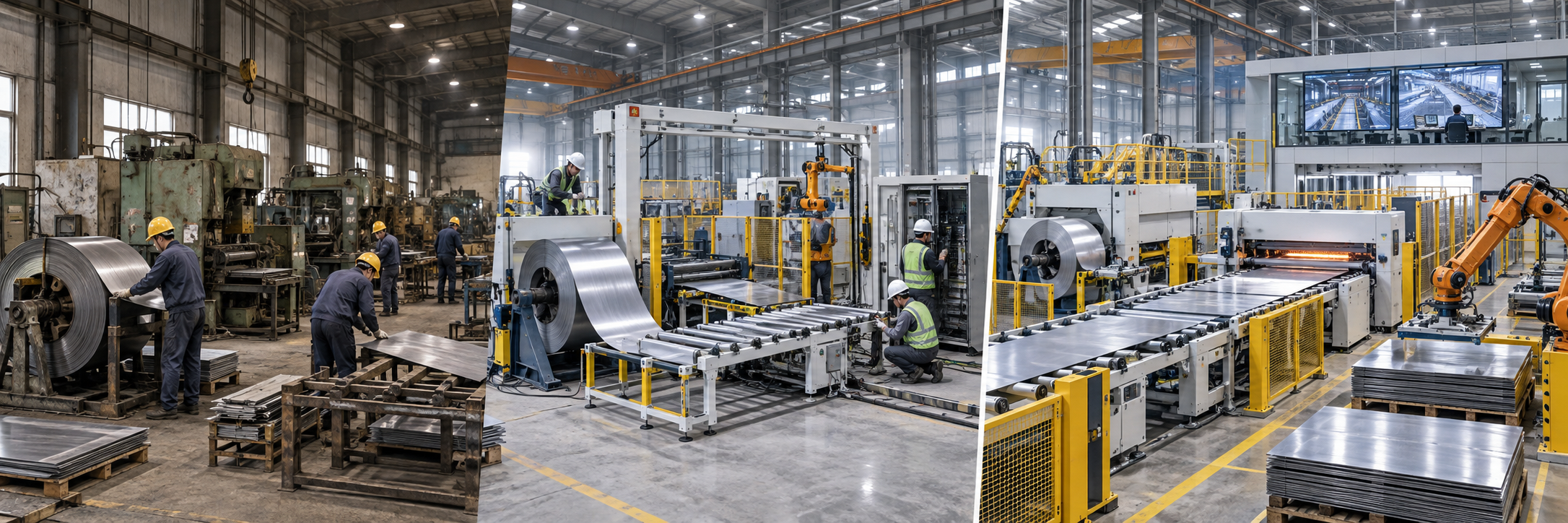
From Manual Operations to Fully Automated Production

Enter the industry-specific engineering page to review the legacy-system boundary, phased retrofit route, automated architecture, equipment and controls, customer inputs, utilities, shutdown plan and acceptance framework. These pathways complement the ten modernization directions below without replacing them.

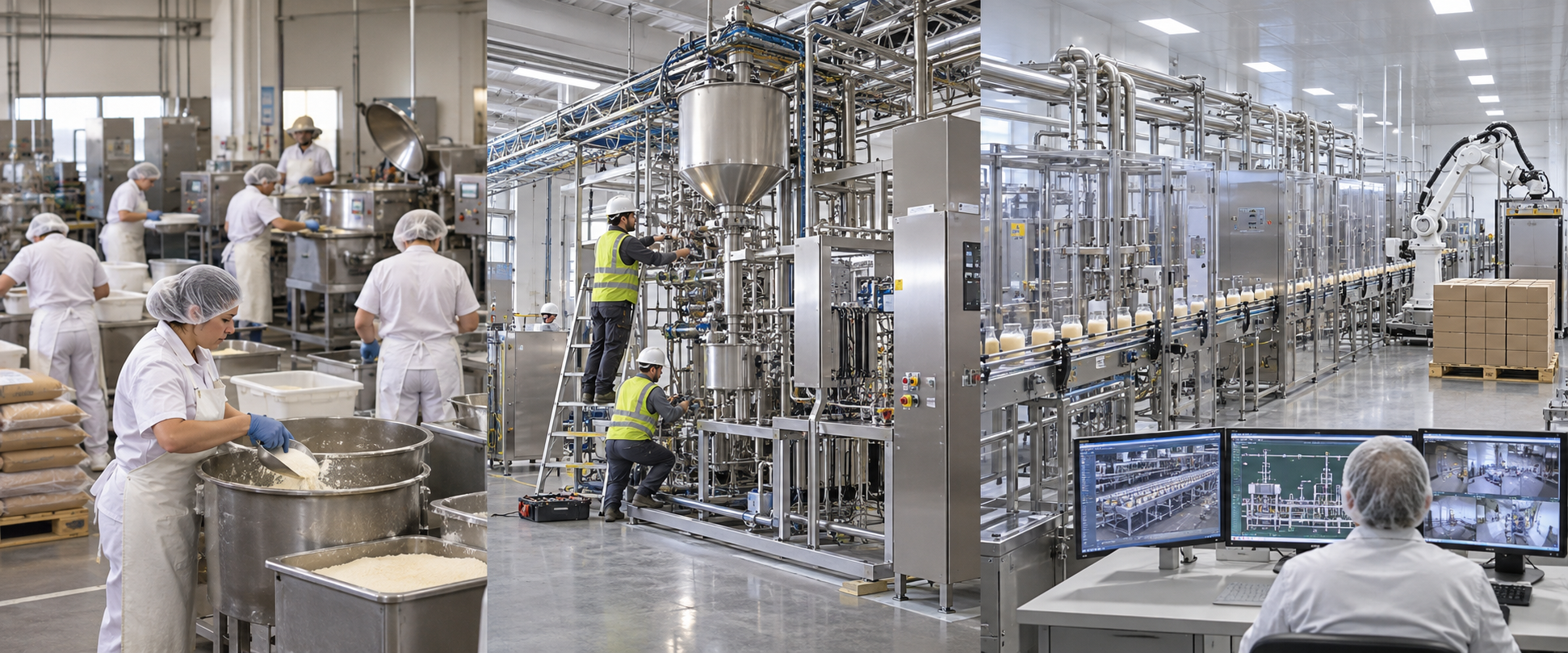
Agricultural & Food Processing

Food processing line transformation from manual production through retrofit to full automation

Hygienic receiving, dosing, processing, packaging, cleaning and traceability as one system.
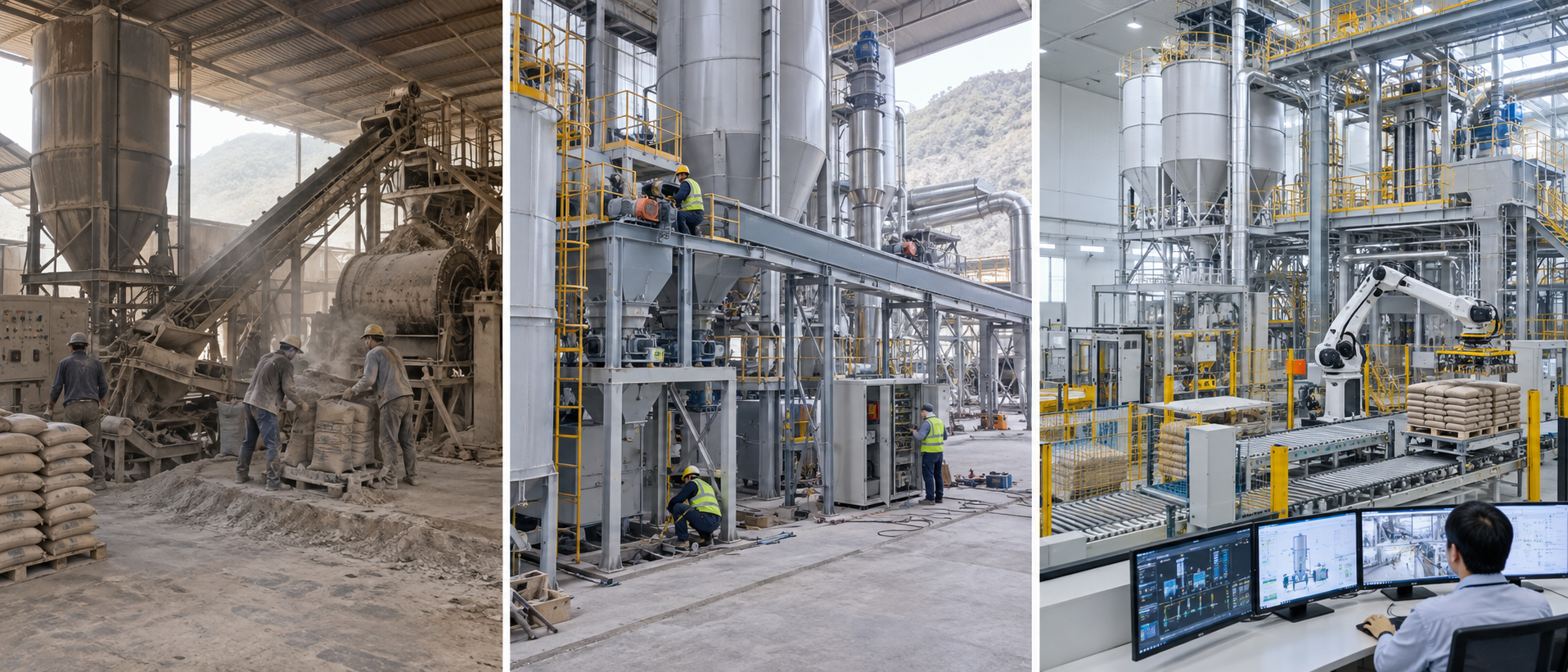
Explore food-line modernization

Ten defined modernization directions

Choose the upgrade scope that matches the operating constraint

Factory modernization is not one generic service. The engineering boundary changes according to whether the constraint is throughput, ageing equipment, controls, utilities, energy, quality, safety or the execution window itself. Each direction below identifies the typical starting condition, the work boundary and the expected engineering deliverable. Final capacity, performance and shutdown commitments remain project-specific until site data and acceptance conditions are confirmed.

01

Factory modernization direction

Capacity Expansion & Debottlenecking

Upgrade object: Increase effective plant throughput by locating the true constraint and upgrading only the process, handling, utility or control interfaces that limit the required product mix.
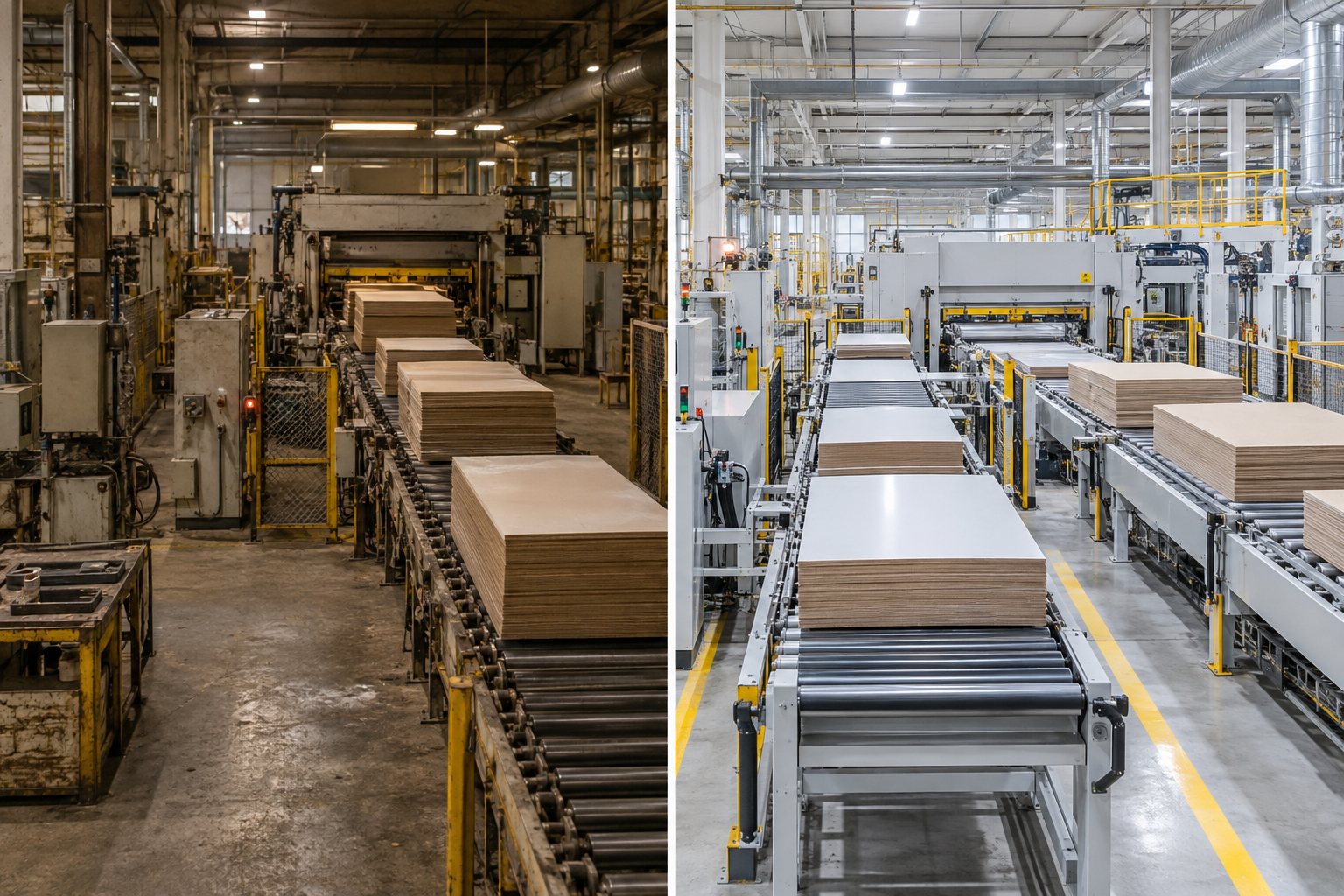
Conveyor system and material-buffer reference for capacity balancing
Typical before condition
Queues, starved downstream equipment, recurring stoppages or utilities that cannot support the intended operating rate.
Upgrade scope
Time study, loss analysis, line balancing, selective equipment changes, buffer and utility checks, controls changes and phased commissioning.
Engineering outcome
A defined capacity pathway with verified bottleneck logic, interface requirements and acceptance tests tied to agreed operating conditions.

Implementation preview

  1. Measure actual losses
  2. Confirm the binding constraint
  3. Model upgrade options
  4. Modify and rebalance
  5. Run acceptance trials

Main equipment / systems

Conveyors, buffers, feeders, drives, controls, utilities and the constrained process equipment.

02

Factory modernization direction

Production Line Retrofit

Upgrade object: Modernize an operating line while retaining serviceable assets and engineering every mechanical, electrical, process and control tie-in.
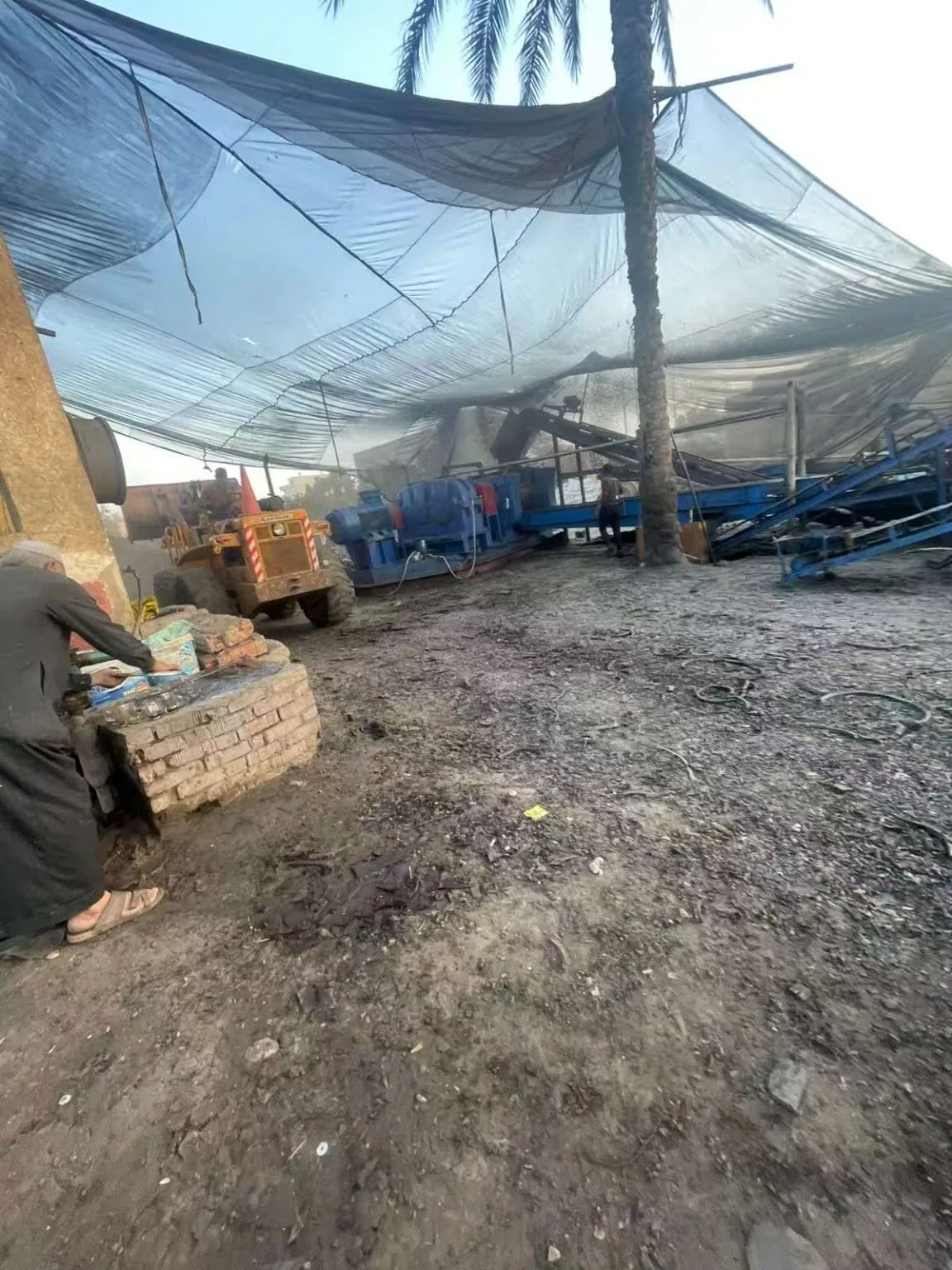
Verified Egypt production line before retrofit
China Bente project evidence — Egypt production-line retrofit, BEFORE condition.
Typical before condition
Obsolete machines, unreliable transfers, high changeover losses, inconsistent interfaces or a line that no longer supports the product requirement.
Upgrade scope
Condition survey, retained-asset definition, retrofit design, prefabrication, installation sequencing, integration testing and controlled restart.
Engineering outcome
An integrated line with documented boundaries, updated operating logic and commissioning evidence for the approved retrofit scope.

Implementation preview

  1. Survey retained assets
  2. Freeze interfaces
  3. Engineer retrofit modules
  4. Install during planned windows
  5. Commission the complete line

Main equipment / systems

Process machines, guarding, conveyors, drives, sensors, PLC I/O, safety circuits and changeover tooling.

03

Factory modernization direction

Automation / PLC / SCADA Upgrade

Upgrade object: Migrate obsolete or fragmented controls to a supportable architecture without losing validated sequences, interlocks, alarms or production data.
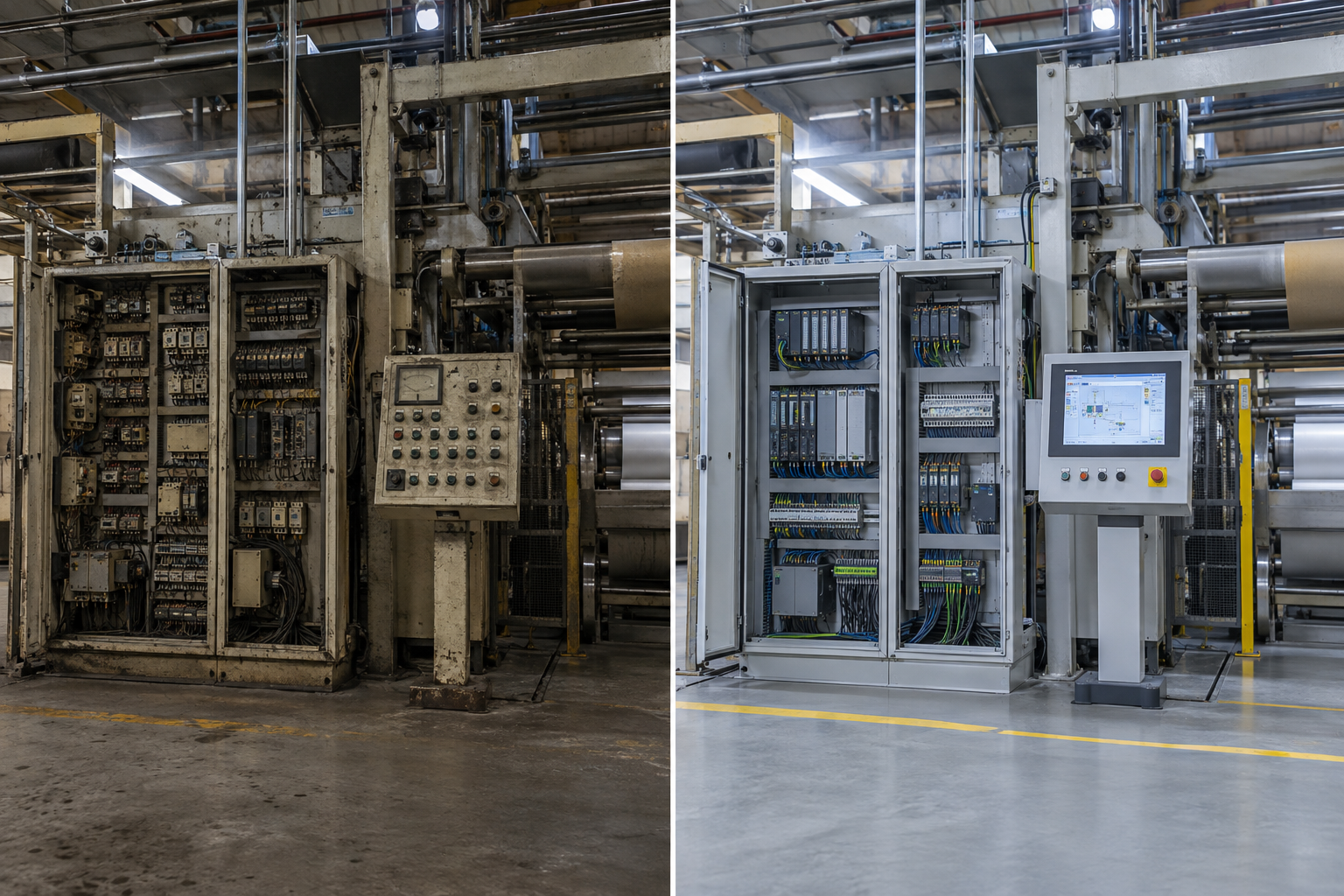
PLC control panel and industrial I/O reference
Typical before condition
Unsupported PLC hardware, undocumented code, isolated HMIs, nuisance alarms, weak historian coverage or difficult remote diagnostics.
Upgrade scope
I/O audit, backup and code review, network and cybersecurity design, simulation/FAT, staged migration, loop checks and operator validation.
Engineering outcome
A documented control platform with tested safety boundaries, recoverable software, actionable alarms and traceable operating data.

Implementation preview

  1. Audit code and I/O
  2. Back up and map dependencies
  3. Design the target architecture
  4. FAT and staged migration
  5. SAT and operator handover

Main equipment / systems

PLC, remote I/O, HMI, SCADA, historian, industrial networks, panels, instruments and safety interfaces.

04

Factory modernization direction

Energy Efficiency Retrofit

Upgrade object: Reduce measured energy losses through process-specific improvements that preserve production, quality, safety and environmental requirements.
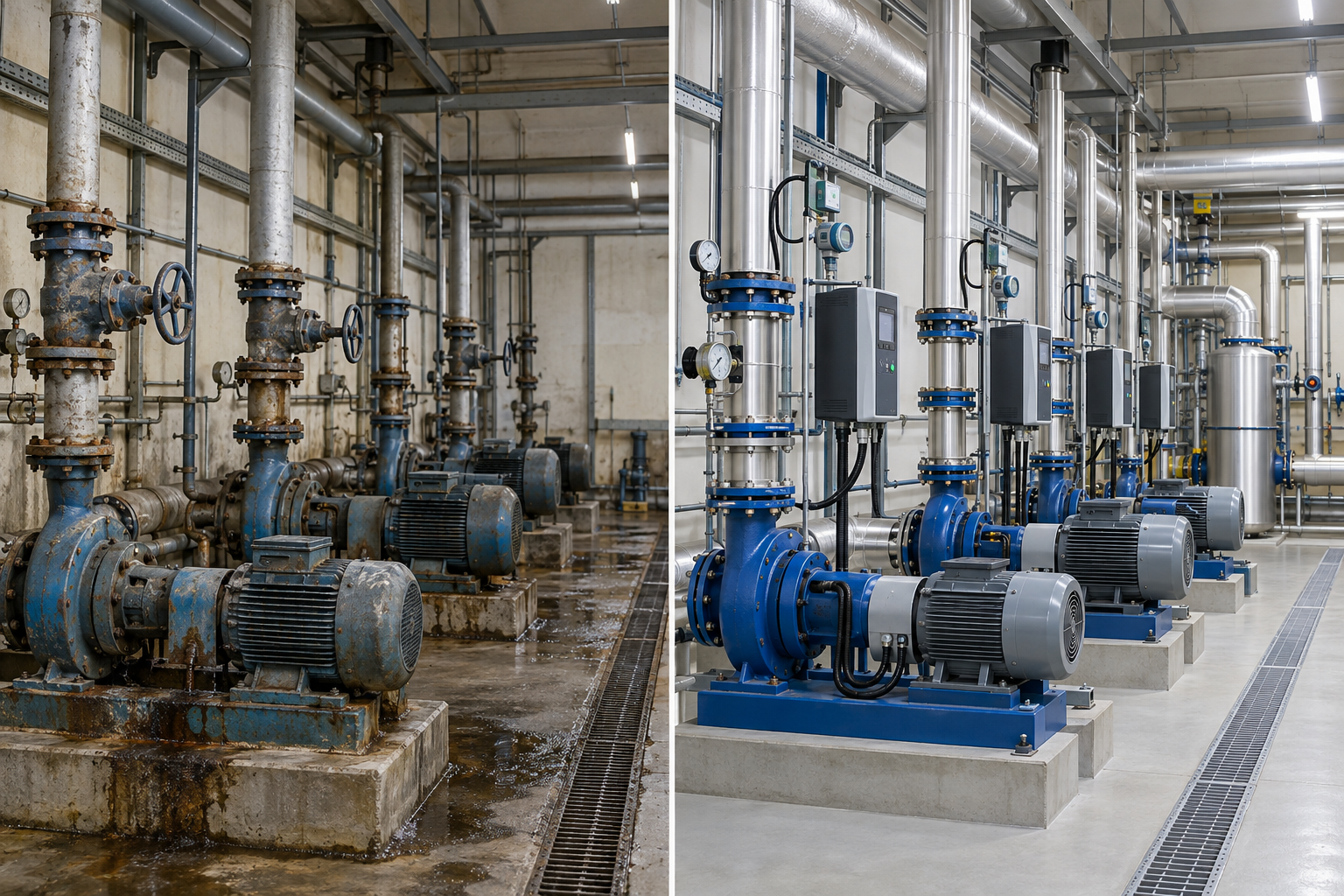
Variable-frequency drive reference for motor energy retrofit
Typical before condition
Unmetered loads, compressed-air leaks, throttled pumps, idle-running equipment, poor heat recovery or controls that ignore demand.
Upgrade scope
Baseline metering, significant-energy-use analysis, operating-profile review, technical option study, selected retrofit and measurement-and-verification plan.
Engineering outcome
An implemented efficiency scope with a defined baseline and a defensible method for confirming results under comparable production conditions.

Implementation preview

  1. Establish the baseline
  2. Locate measured losses
  3. Prioritize viable measures
  4. Install controls or equipment
  5. Verify against the baseline

Main equipment / systems

Meters, variable-speed drives, motors, pumps, compressors, boilers, heat exchangers, insulation and energy-management controls.

05

Factory modernization direction

Equipment Replacement & Integration

Upgrade object: Replace an end-of-life or performance-limiting machine and make the new unit function safely within the existing line and utilities.
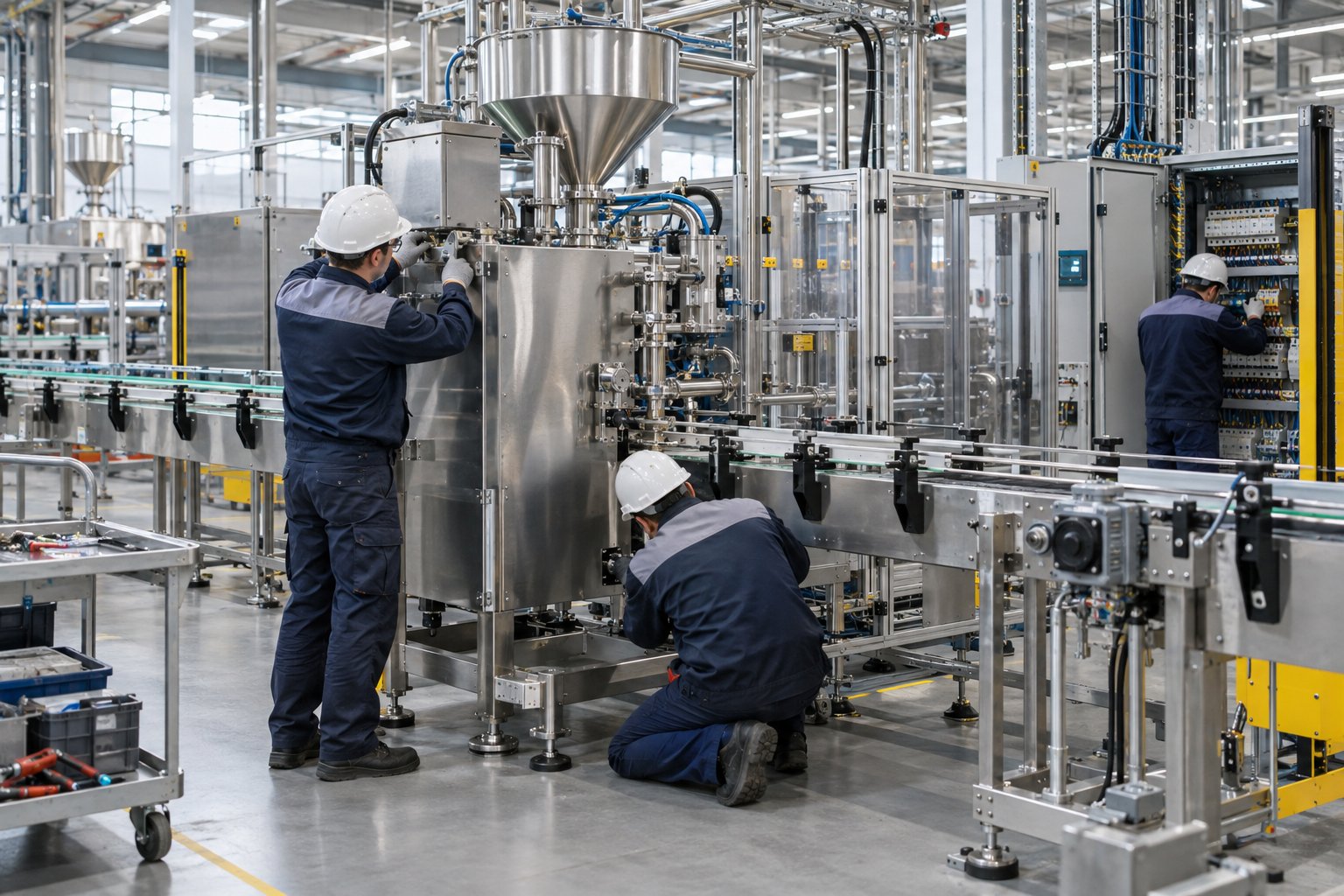
Factory equipment replacement and production-line integration
Equipment replacement, mechanical alignment and production-line integration.
Typical before condition
Frequent failures, unavailable spares, unsafe access, poor product compatibility or a machine that cannot communicate with adjacent assets.
Upgrade scope
Duty definition, dimensional and load survey, utility and data interface design, removal plan, foundations and tie-ins, integration testing and documentation.
Engineering outcome
A replacement asset accepted as part of the operating system—not an isolated machine—with verified interfaces and maintainable handover records.

Implementation preview

  1. Define duty and interfaces
  2. Survey space and loads
  3. Select and engineer the replacement
  4. Remove and install
  5. Integrate and prove operation

Main equipment / systems

Production equipment, foundations, material transfer, power distribution, utilities, controls, guarding and maintenance access.

06

Factory modernization direction

Brownfield Factory Expansion

Upgrade object: Add production, storage or utility capacity inside or beside an operating factory while controlling live-plant interfaces and construction disruption.
Steel-frame production-unit expansion reference
Typical before condition
Constrained floor area, congested logistics, insufficient utilities, undocumented buried services or expansion work adjacent to live operations.
Upgrade scope
Site verification, plot and material-flow study, tie-in register, temporary works, civil/structural design, phased construction and controlled handover.
Engineering outcome
An expansion that connects to the existing plant through planned interfaces, defined isolations and staged acceptance without overstating available capacity.

Implementation preview

  1. Survey the live site
  2. Define expansion boundaries
  3. Engineer tie-ins and temporary works
  4. Build in controlled phases
  5. Connect and commission

Main equipment / systems

Structures, foundations, utilities, roads, drainage, fire systems, material handling and production interfaces.

07

Factory modernization direction

Utility System Upgrade

Upgrade object: Upgrade the services that production depends on so capacity, redundancy, quality and distribution match the actual operating demand.
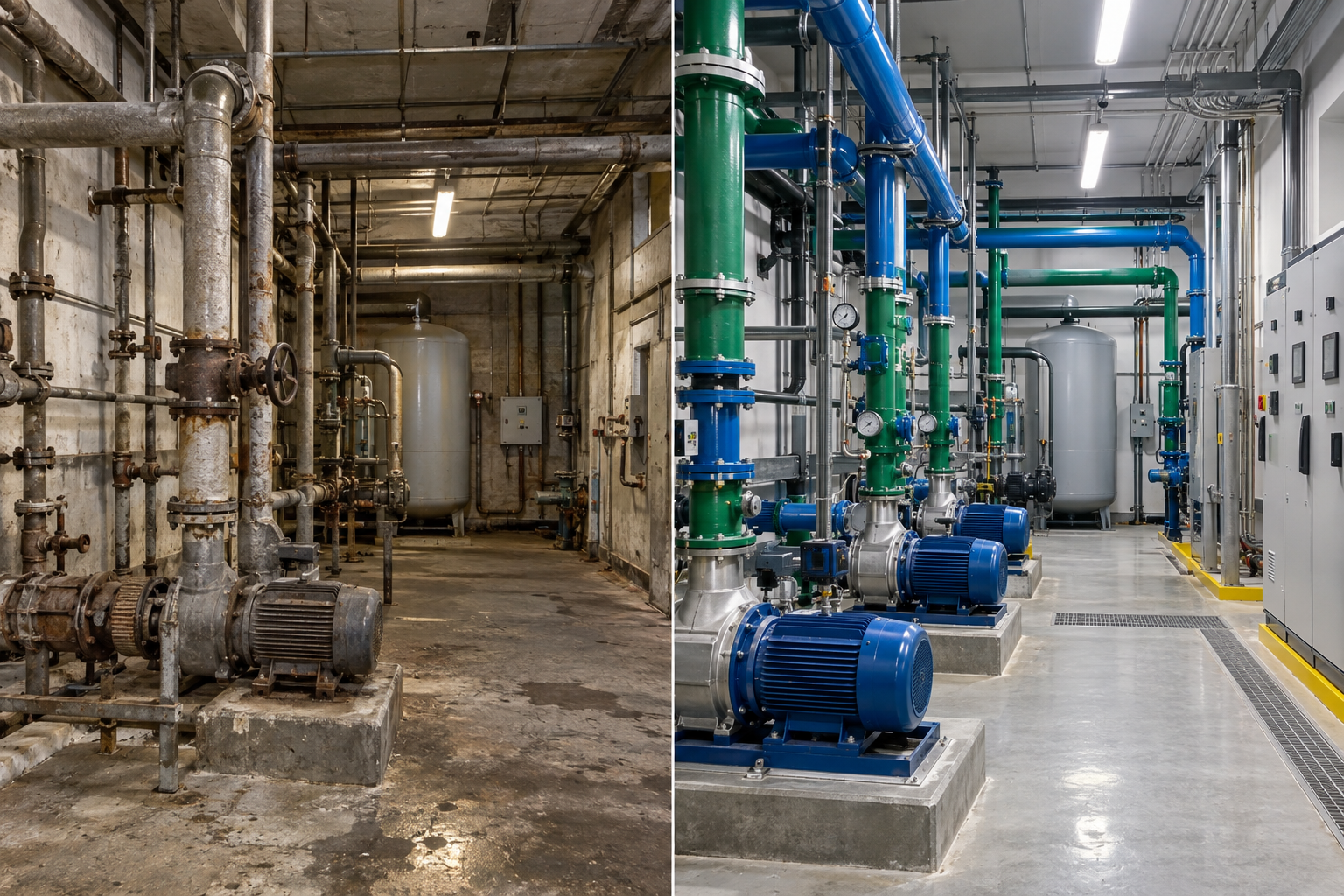
Industrial utility piping and distribution reference
Typical before condition
Low pressure, unstable temperature, poor power quality, insufficient redundancy, contaminated services or distribution losses.
Upgrade scope
Load profile, network survey, hydraulic/electrical/thermal checks, equipment and distribution upgrade, controls integration and performance testing.
Engineering outcome
A utility system with documented design basis, operating envelope, distribution balance and test criteria at the agreed points of use.

Implementation preview

  1. Map users and loads
  2. Measure supply performance
  3. Check generation and distribution
  4. Upgrade critical sections
  5. Balance and test at users

Main equipment / systems

Electrical distribution, compressed air, steam, chilled/cooling water, process water, gases, HVAC and utility monitoring.

08

Factory modernization direction

Quality & Yield Improvement

Upgrade object: Reduce repeatable defects, scrap and material loss by linking product evidence to process conditions, equipment capability and control points.
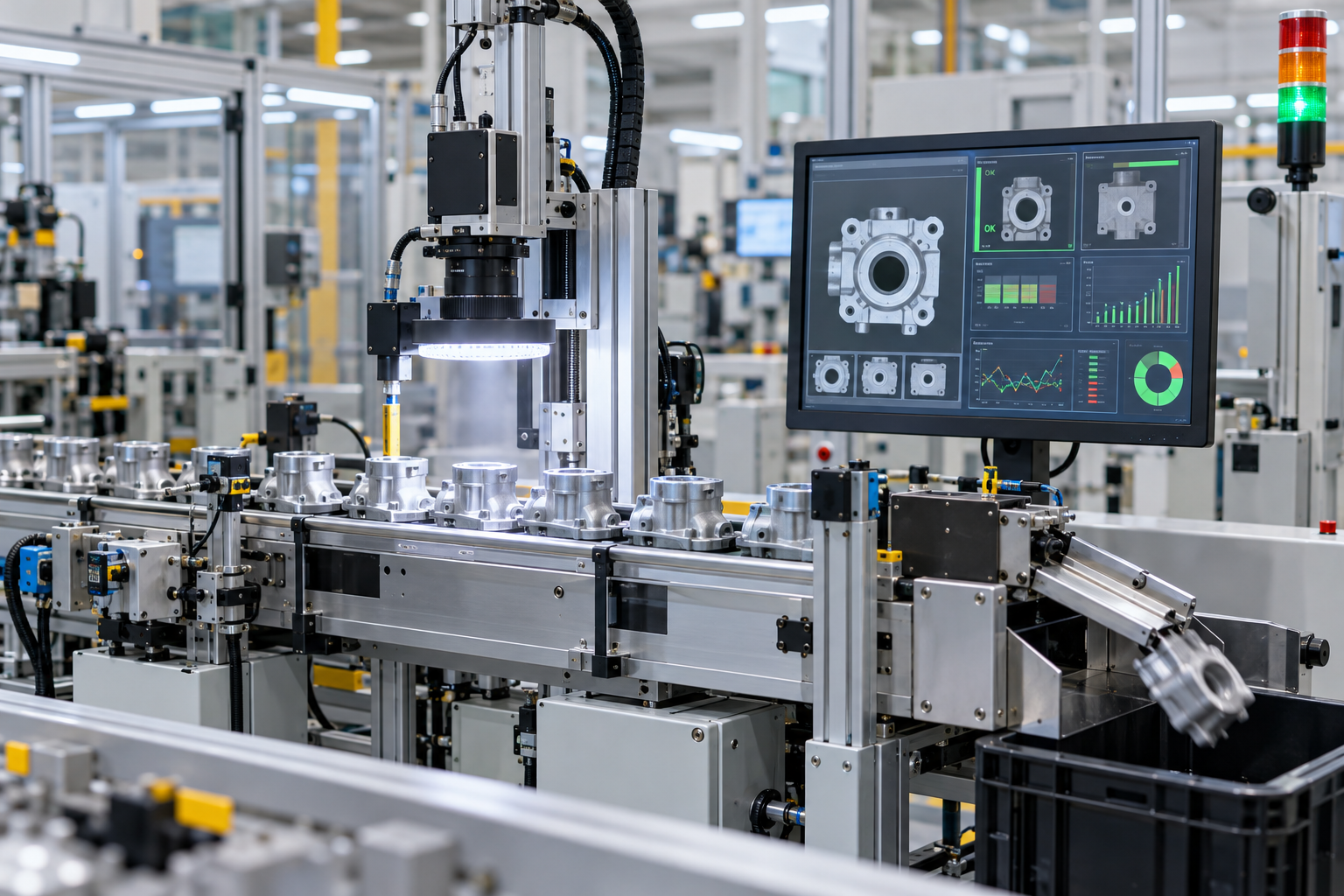
Machine-vision inspection for manufacturing quality and yield improvement
In-line machine vision, process measurement and automated quality control.
Typical before condition
Variable quality, high rework, unstable set-points, weak traceability, manual inspection gaps or losses concentrated at specific operations.
Upgrade scope
Defect stratification, measurement-system check, process capability review, root-cause trials, equipment/control changes and updated quality control plan.
Engineering outcome
A documented improvement with agreed product criteria, controlled process settings and acceptance based on representative production evidence.

Implementation preview

  1. Define defects and loss
  2. Validate measurement
  3. Locate process causes
  4. Implement targeted controls
  5. Confirm capability and handover

Main equipment / systems

Inspection stations, machine settings, dosing and weighing, sensors, vision systems, SPC/data collection and traceability.

09

Factory modernization direction

Safety & Compliance Upgrade

Upgrade object: Close defined machine, process, electrical, fire or environmental gaps through engineered safeguards and verifiable compliance evidence.
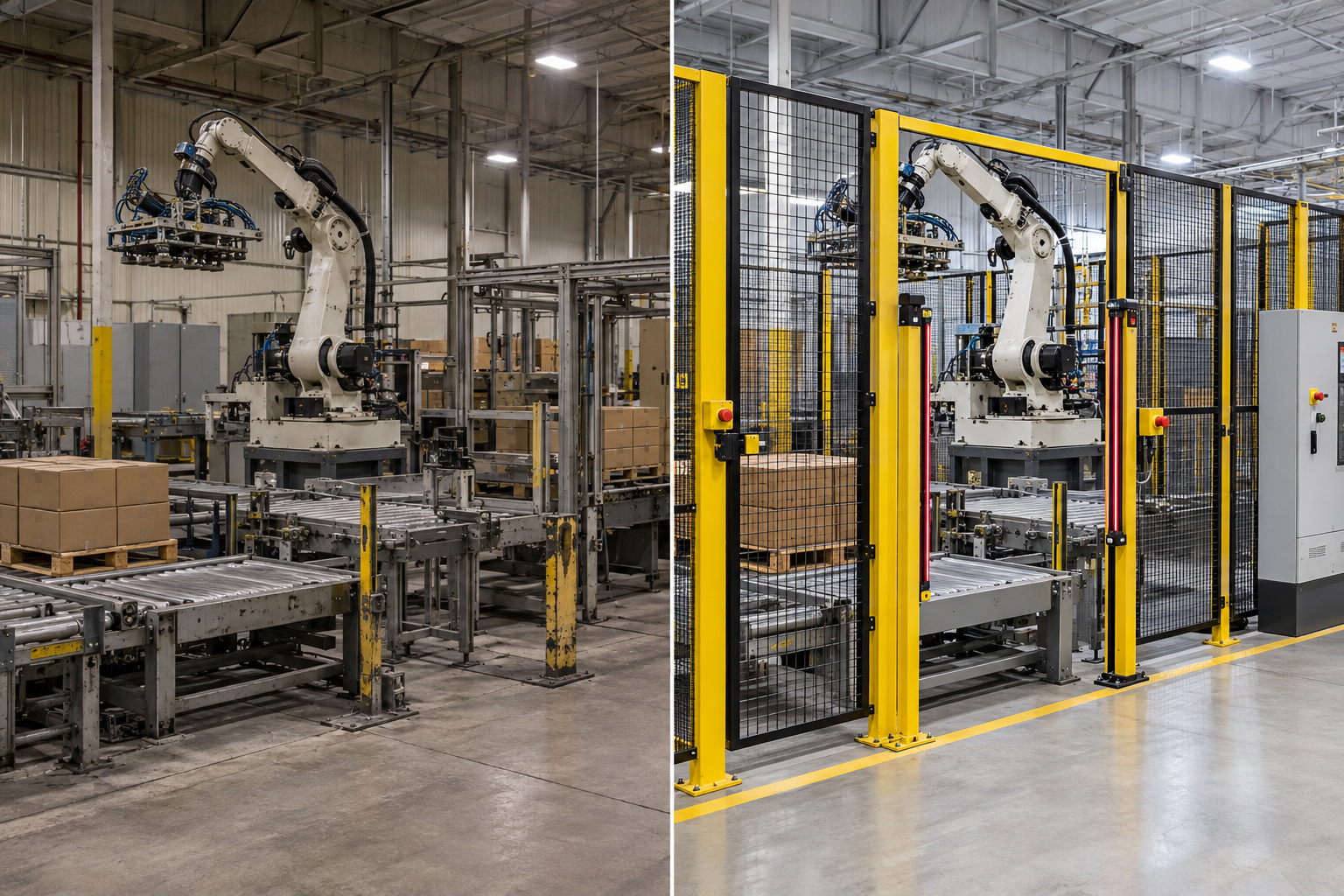
Machine perimeter guarding reference for safety retrofit
Typical before condition
Missing guarding, uncontrolled access, weak isolation, obsolete safety circuits, incomplete hazardous-area controls or undocumented statutory gaps.
Upgrade scope
Gap assessment against applicable requirements, risk reduction design, hardware and procedural controls, validation, training and technical file update.
Engineering outcome
Implemented safeguards with traceable risk decisions, tested protective functions and clearly defined residual responsibilities.

Implementation preview

  1. Confirm applicable requirements
  2. Assess hazards and gaps
  3. Engineer risk controls
  4. Install and validate
  5. Train and close the technical file

Main equipment / systems

Guarding, interlocks, safety PLC/relays, emergency stops, LOTO, fire detection, ventilation and environmental controls.

10

Factory modernization direction

Shutdown, Changeover & Commissioning Planning

Upgrade object: Plan the short, high-risk window in which an operating plant is isolated, modified, tested and returned safely to production.
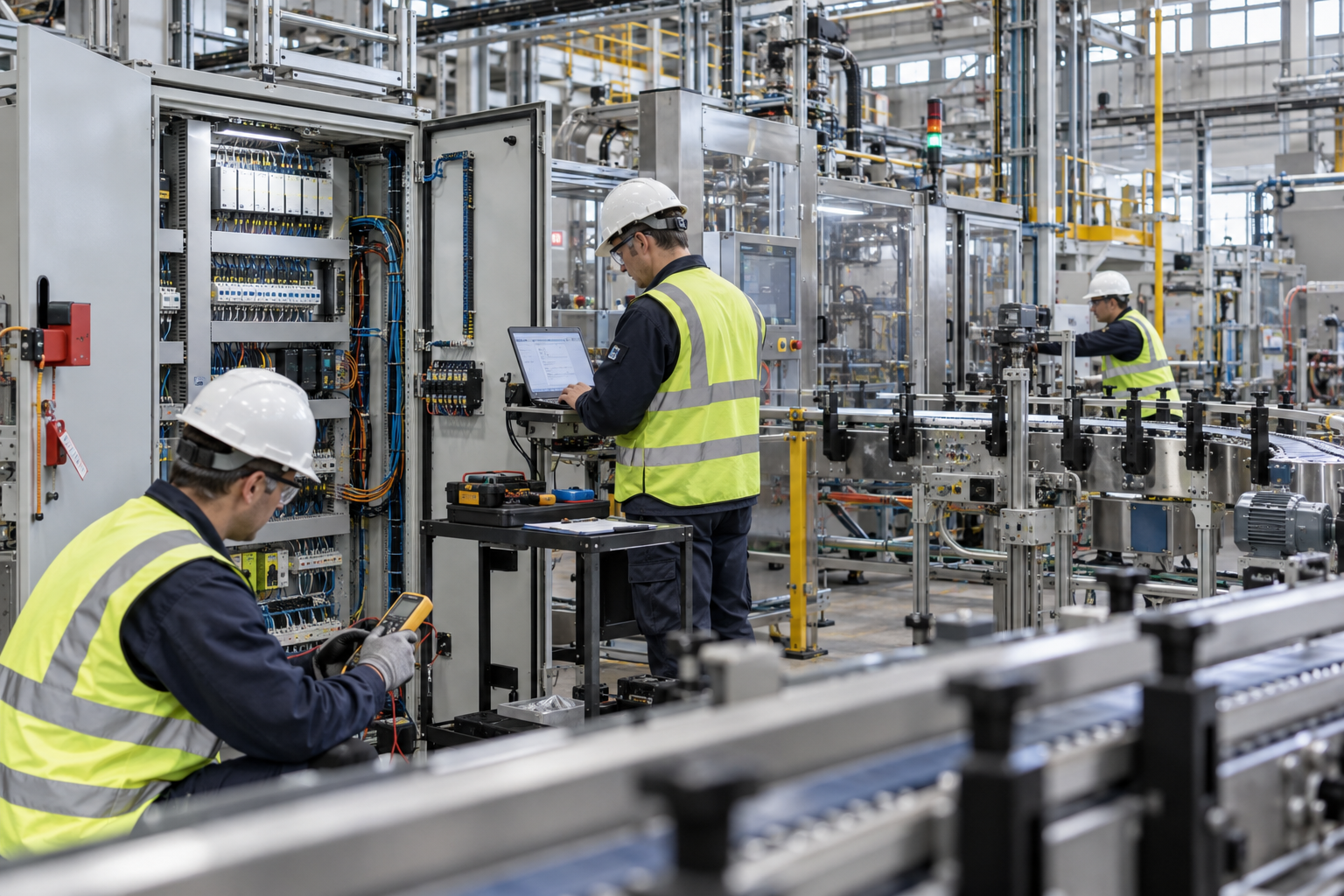
Factory production-line testing during shutdown and commissioning
Controlled electrical checks, functional testing and production-line commissioning.
Typical before condition
Compressed outage windows, competing work fronts, incomplete tie-in data, uncertain restart sequence or no agreed contingency for failed tests.
Upgrade scope
Work breakdown, interface and isolation register, prefabrication plan, resource loading, test packs, readiness reviews, startup sequence and fallback criteria.
Engineering outcome
An executable shutdown plan with owners, hold points, test evidence, go/no-go decisions and a controlled route back to stable operation.

Implementation preview

  1. Freeze scope and tie-ins
  2. Build the integrated schedule
  3. Prefabricate and rehearse
  4. Execute with hold points
  5. Commission and stabilize

Main equipment / systems

Isolation points, temporary services, lifting/access plans, commissioning instruments, test packs, spares and control-room coordination.

Factory Upgrade & Retrofit FAQ

What is factory modernization?

Factory modernization is the engineering improvement of an existing plant’s process, machinery, automation or infrastructure. It can retain usable assets while addressing capacity, reliability, quality or energy constraints.

How can an old production line be upgraded?

Start by assessing actual production losses, asset condition and product requirements. Compare process adjustments, selective replacement and controls upgrades, then define interfaces, installation stages and commissioning criteria.

When should an old production line be upgraded instead of replaced?

Upgrade it when the retained equipment and infrastructure can support the required products and performance at an acceptable lifecycle cost and risk. Compare full replacement where obsolescence, condition or process limitations affect much of the line.

How do you identify a production bottleneck?

Compare effective throughput, cycle times, queues, downtime and rejection losses at each production stage. Confirm the constraint using representative operating data and check whether it changes with product mix or shift conditions.

Can factory capacity be increased without expanding the building?

Sometimes. Line balancing, reduced production losses, selective machine upgrades or improved material flow may increase output within the existing footprint. Space, utilities, storage and downstream capacity must be checked before setting a target.

Can new equipment work with existing machines?

Yes, where the interfaces are compatible or can be engineered. Check product transfer, operating speeds, electrical supply, control communications, interlocks and utilities, then test the connected system under defined conditions.

How can PLC and SCADA systems be upgraded?

Audit the existing hardware, software, I/O, communication interfaces and control sequences. Prepare backups and a migration plan, test the new configuration and validate interlocks, alarms and operator functions before production release.

How can shutdown time be reduced during retrofit?

Move suitable surveying, engineering, fabrication and testing ahead of the shutdown. Prepare tie-ins, resources and restart procedures, and define contingencies. Some installation and commissioning work will still require production interruption.

What information is needed for a retrofit study?

Typical inputs include current and target output, product specifications, process flow, equipment condition, operating losses, utilities, layout and shutdown availability. The engineering team should define the necessary data for the specific scope.

How do factory upgrades reduce energy consumption?

They can address measured losses such as leaks, inefficient control, idle running and unnecessary thermal demand. Verify savings against a defined baseline that accounts for production volume, product mix and operating conditions.

Can a retrofit be implemented in phases?

Yes, if the phases have manageable process dependencies and interfaces. Each phase needs an installation boundary, isolation plan, commissioning procedure and clear conditions for returning equipment to service.

How is retrofit CAPEX estimated?

Estimate engineering, equipment, controls, utilities, civil modifications, installation and commissioning against a defined scope. Include appropriate allowances for unresolved site conditions, and identify exclusions and production-interruption assumptions.

What risks should be checked before modernization?

Check undocumented interfaces, hidden asset deterioration, inadequate utilities, obsolete controls, safety functions, building constraints and restart risks. Record uncertainties and resolve critical issues through surveys, testing and design review.

Define the right modernization boundary

Provide current production data, product requirements, equipment lists, layouts, utility information, operating losses and available shutdown windows. China Bente will identify the engineering inputs still marked UNKNOWN/TBC before confirming the evaluation scope.

Request a Project Evaluation

Further reading

Can an Old Factory Become a Green Factory? A Four-Step Upgrade Path

WhatsApp